.svg&w=384&q=75 "naujapitch logo")
Aston Villa's Remarkable Return to the Champions League
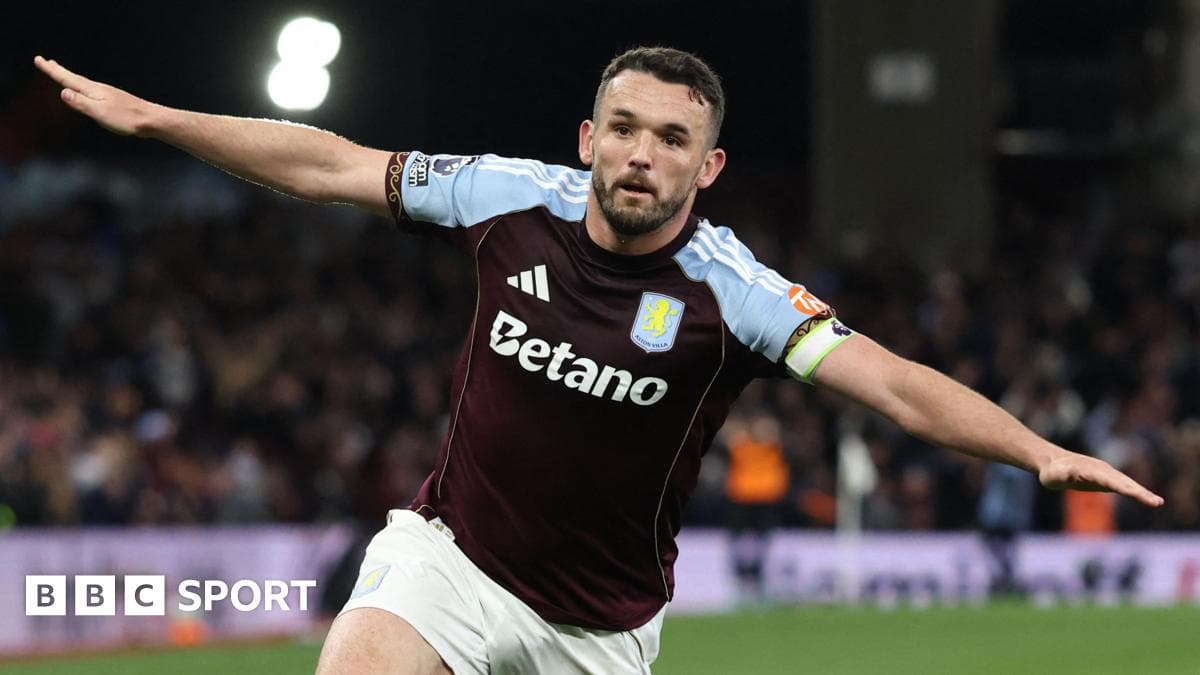
Aston Villa are back where they believe they belong – among Europe’s elite – and they have done it the hard way.
On Friday night they didn’t just beat Liverpool, they tore into last season’s champions, a 4-2 win sealing a return to the Champions League and underlining the scale of Unai Emery’s work in Birmingham. Villa didn’t creep over the line. They stormed it.
This is not a straight-line story, though. It starts with a scar.
From Old Trafford pain to Europe’s top table
Twelve months ago, Villa’s season ended in bitterness and disbelief. They missed out on the top five on goal difference on the final day, beaten 2-0 at Manchester United in a game that still rankles. Morgan Rogers saw an early strike ruled out after an error from referee Thomas Bramall, Emiliano Martinez was sent off, and the campaign collapsed in a swirl of anger and what-ifs.
That wound has driven them. You could feel it in the way they hunted Liverpool, in the way they refused to settle for “respectable” this time. The win lifted them above Jürgen Klopp’s side into fourth and clear of sixth-placed Bournemouth. No calculators, no caveats. Just confirmation.
Now comes Wednesday in Istanbul and a Europa League final against Freiburg, Villa’s first major European showpiece since lifting the European Cup in 1982. The club has been living in the Champions League places since November, but every metric says they should not be here.
They are, quite simply, the Premier League’s great overachievers.
Numbers that make no sense – and yet explain everything
Opta’s expected table says Villa should be 12th. Mid-table. Anonymous. Instead they sit eight places and 15 points better off, the most overperforming side in the division. Only Sunderland and Everton even come close to that kind of leap.
Look at the raw attacking data and the picture gets stranger. Their 54 league goals rank only seventh. They trail 10th-placed Chelsea, who have 55. They have taken 471 shots – just the ninth-highest total – fewer than any of the top six and fewer than Chelsea. Shots on target? Eighth in the league, behind the rest of the top six, Brighton and Newcastle United.
And yet Villa hurt you. They make chances count.
Their shot conversion rate sits at 11%, bettered only by Brentford (14%), Manchester City (13%) and Arsenal (13%). Only Tottenham have outstripped their expected goals (xG) more than Villa, with Spurs at +8.33. Emery’s side have an xG of 46.42 but have scored 7.58 goals more than that model predicts.
Crucially, their xG total is the lowest of any of the top six; all of their rivals have generated at least 58. Villa create less, but finish with a ruthless edge that has carried them into Europe’s top competition.
They also shoot from distance – and they score from there. Fifteen of their goals have come from outside the box, a remarkable 28% of their total. Only Bournemouth and Fulham, both at 21%, even clear the 20% mark.
Yet there is a twist in the data. Villa have carved out 84 “big chances” and scored just 24 of them. A 29% conversion rate – the worst in the league. Nottingham Forest, at the other end of the spectrum, have finished 46% of theirs.
So Villa overperform overall, but still leave chances behind. It is a strange cocktail: a team that feels clinical but statistically wastes gilt-edged opportunities, rescued by spectacular moments and sharp finishing from more modest positions.
Emery’s balancing act
All of this has been achieved while juggling a European run. Villa have not only battled on Thursdays and Sundays, they have thrived, reaching a first major European final in more than four decades.
“I am so demanding. Competing on Thursdays and Sundays are not excuses,” Emery said, summing up the relentless internal pressure he applies. “In our experience in three years, we have more or less achieved our objectives. There are lots of things we are trying to improve and the club is working for it.
“I want to build our own way and with our possibilities and our capacity to be facing the better teams in the league or in the world in Europe. I have a good balance in my mind about how we are doing.”
The “possibilities” he mentions are not limitless. Far from it.
Champions League football on a shoestring
Strip away the emotion and you find a club walking a financial tightrope. Since Emery’s appointment in 2022, only Wolves, Brentford, Brighton and Everton have a lower net spend than Villa’s £73.5m. For a side punching into the top four, that is lean.
The reason is simple: profit and sustainability rules. Villa have been forced to operate with the handbrake on, trimming where others have splurged.
The mood on the night they clinched Champions League football in May 2024 captured that tension. While players and fans revelled, Emery and head of football operations Damian Vidagany sat at the club’s end-of-season dinner with a different concern: how to avoid a PSR breach.
The solution was brutal but effective. Douglas Luiz was sold to Juventus for £43m in a hurried deal. The previous summer Jacob Ramsey had gone to Newcastle for £40m. Inside the club, there is a clear expectation another major name may have to depart this year.
Morgan Rogers, signed from Middlesbrough for £16m two years ago, has blossomed. A strong World Cup for England would turn him into a nine-figure asset. Villa know it. So does the market.
Champions League qualification strengthens their negotiating hand, but the pattern is obvious. Offloading one significant player each year remains the easiest, cleanest way to stay on the right side of the rules.
The financial impact of reaching Europe’s top tier is already visible. Villa reported a profit of £17m for 2024-25, the season they played in the Champions League, after posting a near £90m loss the previous year. Go back further and the picture was even darker: a £120m loss in 2022-23.
Champions League money is not a luxury at Villa. It is a lifeline.
Building a club to match the team
To close the gap on their rivals, Villa have chased revenue with the same aggression they show in transition. Ticket prices have risen, irritating sections of the fanbase, but the financial results are stark: income has climbed to £378m.
Villa Park is changing too. Work has started on rebuilding the North Stand, due to be finished by the end of next year, lifting capacity to just over 50,000. The new Warehouse entertainment venue at the ground is already complete. Every brick and beam is part of a plan to squeeze more from matchdays and shrink the financial gulf to the Premier League’s superclubs.
Even so, they have found themselves outgunned. A long pursuit of Conor Gallagher fell apart when Tottenham stepped in and produced the cash to sign the Atletico Madrid midfielder, despite Villa investing months in the chase. It was a reminder: they are still playing catch-up, even as they overtake teams on the pitch.
The club’s frustration with the financial landscape is no secret. Premier League and Uefa rules do not align, and Villa feel that clash more than most. England’s top-flight clubs have voted to introduce squad-cost ratio (SCR) limits next season, capping spending on player costs at 85% of income. Uefa’s own SCR limit sits at 70%. Two systems, two sets of constraints, one club trying to navigate both.
Vidagany has been clear that football needs regulation, but equally clear that the current domestic and European frameworks do not mesh. For a club trying to grow into a permanent Champions League presence, that friction bites.
Handbrake off?
And yet, here they are. Back in the Champions League for the second time in three years. Back in a European final. Back with a manager who has turned expected mid-table anonymity into sustained relevance.
Villa have done it while selling stars, while counting every pound, while staring at PSR spreadsheets on nights that should have been pure celebration. They have overperformed their data, their budget and their supposed ceiling.
The handbrake has been on. The question now is simple: with Champions League money secured and a club infrastructure expanding around them, what happens when they finally let it go?