.svg&w=384&q=75 "naujapitch logo")
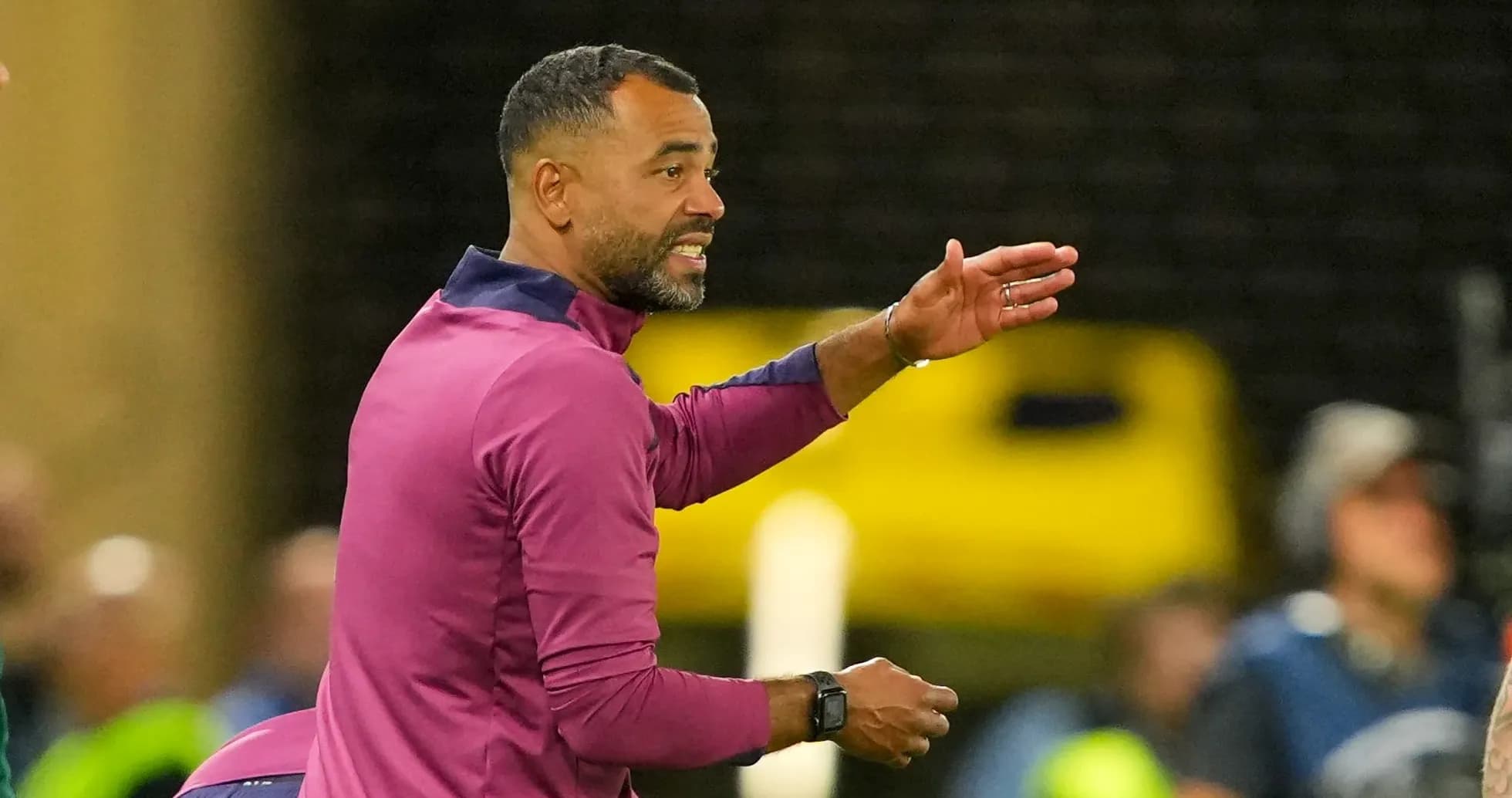
Ashley Cole Steps Down as Cesena Head Coach After Eight Games
Ashley Cole’s first job in the big chair has lasted just eight games.
The former Arsenal and Chelsea left-back has stepped down as head coach of Cesena, walking away from his debut role in senior management after a turbulent, short-lived spell in Serie B.
A brief Italian experiment
Cole arrived in March, a 45-year-old rookie head coach with an elite playing CV and a growing reputation on the training ground. He had served his apprenticeship as an assistant at Derby, Everton, Birmingham and with England U21s, and Cesena offered him a first crack at leading a team of his own.
The move carried a certain romance. Cole had already sampled Italian football with Roma between 2014 and 2016, and he spoke of bringing a “new identity” to a club with a passionate fanbase and ambitions of climbing back toward the top flight.
That vision never really had time to take root.
On Instagram, Cole confirmed his exit and chose his words carefully. He thanked “the players and staff for their hard work and commitment over the last few months,” and said he was “proud to bring my experience to such a passionate club” while “introducing a new identity and preparing for the season ahead.”
The season, for him, will now continue elsewhere.
Philosophy clash and a decisive call
This was not a sacking dressed up as a mutual parting. Cole made clear the decision to go was his, triggered by what he described as a change in the club’s strategy after talks with the hierarchy.
His deal had been short-term from the outset, laced with performance-related clauses that could have extended his stay. Instead, high-level discussions with the Sporting Director shifted the ground beneath him.
“Following recent discussions with the Sporting Director regarding a change in the club’s strategy, I have decided that it is best for me to move on,” Cole explained. He stressed he left “with great respect for all the people there, as well as the fans,” and spoke of looking forward to his “next challenge.”
The message was clear: the project he signed up for was not the one now on the table, and he was not prepared to compromise on that.
Results, resistance and a language wall
On the pitch, the numbers did him few favours. One win, three draws and four defeats from eight matches is a harsh platform on which to build authority in a demanding environment.
Doubts had already been swirling. Sections of the Cesena support were sceptical from the outset about a high-profile former Premier League star with no previous experience as a head coach. Reports also suggested parts of the dressing room were unconvinced by the new regime, a dangerous undercurrent for any manager, let alone a newcomer trying to impose fresh ideas.
Then came the most basic, and perhaps most damaging, barrier of all: language.
Despite his earlier spell in Italy with Roma, Cole admitted that getting complex tactical concepts across to a largely Italian-speaking squad proved a major obstacle. Training-ground nuance can evaporate if it has to travel through translation; subtle details become blunt instructions, and authority can drain away in the pause between a coach’s words and a player’s understanding.
As results stuttered and communication misfired, Cesena began to rethink their direction. The combination of a changing club strategy, a divided reception, and a coach battling to be heard in his second language left his position increasingly fragile.
Cole chose to walk before the situation made that choice for him.
Cesena look ahead, Cole back on the market
Cesena now turn to the next name on the list. Guido Pagliuca, Emanuele Troise and Stefano Vecchi are already being linked to the vacancy as the club searches for a coach more closely aligned with its revised plan.
Cole, meanwhile, steps back onto the coaching market with a bruising but invaluable first taste of frontline management behind him. His playing record remains formidable: 107 England caps, nearly 400 Premier League appearances, and a career that took in some of the biggest nights in European football.
The question now is simple and sharp: where does Ashley Cole’s coaching journey find its true starting point?