.svg&w=384&q=75 "naujapitch logo")
Argentina's Political Flashpoint at the World Cup: The Malvinas Banner
The World Cup has seen its share of political flashpoints. This one ignited the moment Argentina’s players unfurled a banner.
“Las Malvinas son Argentinas.”
Four words on white fabric after a World Cup semifinal win over England, and a long‑simmering sovereignty dispute roared back into the spotlight.
A Banner, a War, and a President
The image was impossible to miss. Argentina had just beaten England, emotions were raw, and in the middle of the celebrations came a slogan that has defined Argentine foreign policy for generations.
Within hours, the fallout had leapt from the pitch to the presidential palace.
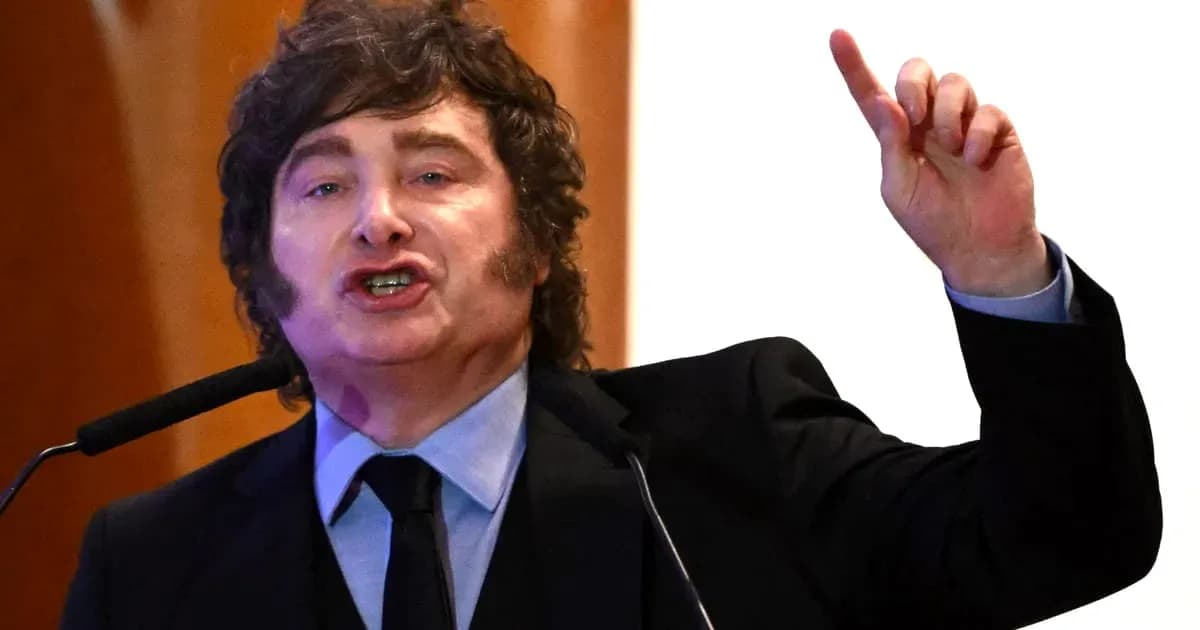
On Thursday, President Javier Milei used the moment to sharpen Argentina’s stance on the Falkland Islands, known at home as the Malvinas. Writing on X, he declared that his government is “getting closer every day” to recovering sovereignty over the islands and the surrounding South Atlantic territories.
Milei did not dial down the rhetoric. He mocked Britain’s anger at the celebrations, sneering at what he called tantrums “befitting a terminally mononeuronal teenager,” and cast Argentina as patiently advancing its cause “through the diplomatic route” toward the recovery of the Malvinas, Georgias, South Sandwich Islands and nearby maritime space.
The message was clear: Argentina, in Milei’s telling, is playing a long diplomatic game. And it is not backing away.
London Bristles, FIFA Watches
In London, the reaction was swift and stern.
Business Secretary Peter Kyle branded the banner “entirely inappropriate” and called on FIFA to investigate. Downing Street followed up with a line that cut straight to the heart of the dispute. A spokesperson for Prime Minister Keir Starmer insisted: “The World Cup might not be ours, but the Falkland Islands definitely are.”
The political language matched the stakes. For Britain, the islands remain non‑negotiable. For Argentina, the Malvinas question is a national cause that transcends governments.
FIFA suddenly found itself dragged into a geopolitical tug‑of‑war. On Thursday, football’s governing body confirmed that its independent disciplinary committee is reviewing the match reports and the circumstances around the banner before deciding whether to open proceedings.
This is not uncharted territory. In 2014, Argentina’s football association was fined after players displayed the same slogan before a friendly against Slovenia. The message has not changed. The stage is simply bigger now.
Old Wounds, New Flashpoint
The Falklands/Malvinas dispute is never far from the surface.
Britain and Argentina went to war over the archipelago in 1982. The conflict was short, brutal, and decisive. British forces retained control of the islands, and London has held them ever since. The political scars, particularly in Argentina, have never fully healed.
That history framed every frame of television coverage as the Argentine players held up their banner after beating England. For many Argentines, it was an act of pride. For many in Britain, a provocation.
The rhetoric around the match had already been heating up. Before kick‑off, Argentine Vice President Victoria Villarruel had described Britain as “usurping pirates,” language that left little room for nuance.
The semifinal, on paper, was about football. In reality, it was carrying the weight of a 42‑year grievance.
Milei’s Double Message
Milei’s response has been striking not just for its intensity, but for its timing.
Only a day earlier, he had urged Argentines not to mix football with the sovereignty dispute, dismissing such displays as “cheap gestures of patriotism.” It was a call for restraint, an attempt to separate the emotional theatre of the World Cup from the slow grind of diplomacy.
Then came the banner, the British backlash, and a different tone.
On Thursday, the president moved to defend the players. He called their gesture a legitimate expression of national feeling and doubled down on Argentina’s claim. “The Malvinas are Argentine, we are going to recover them and we are going to do it at the diplomatic level,” he told Radio El Observador.
The shift underlined the political sensitivity of the issue. At home, no leader can afford to look indifferent to the Malvinas question. On the world stage, Milei is trying to project a tougher, more assertive Argentina while insisting that the battle will be fought with words and treaties, not weapons.
A Row That Won’t Stay Off the Pitch
What began as a post‑match celebration has become another chapter in a dispute that predates most of the players on the field.
Milei’s public claim that Argentina is “getting closer every day” to recovering the islands is not backed by any announced breakthrough or concrete diplomatic shift, but it signals intent and plays directly to a domestic audience that sees the Malvinas as unfinished business.
On the other side, Britain’s response leaves no room for ambiguity. The islands, London insists, “definitely” remain British.
Now FIFA must decide how far political expression can go on football’s biggest stage, and where it will draw the line between national sentiment and prohibited messaging.
The World Cup will move on. The sovereignty dispute will not.