.svg&w=384&q=75 "naujapitch logo")
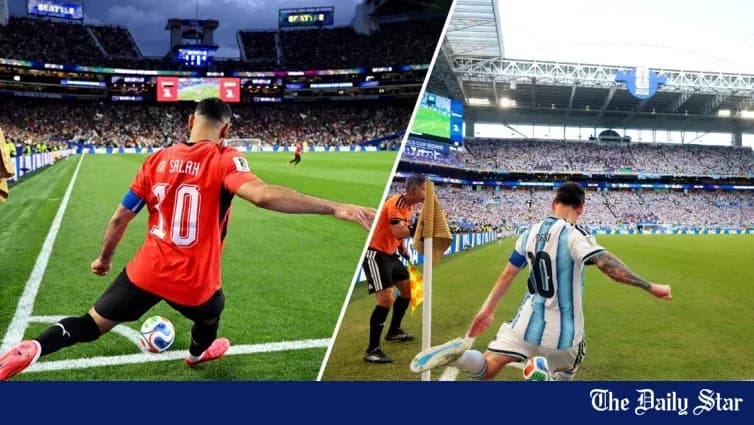
Argentina vs Egypt: World Cup Quarterfinal Showdown
Two left-footed geniuses. Two exhausted squads. One ticket to the World Cup quarterfinals.
On Tuesday night in Atlanta, Lionel Messi and Mohamed Salah will walk out at Mercedes-Benz Stadium carrying not just their nations’ hopes, but the weight of 120 bruising minutes that still cling to their legs.
Argentina shaken, not yet cracked
Argentina arrive as defending champions, but the aura flickered on Friday.
Cape Verde, on their World Cup debut, pushed them to the brink. Sixteen shots rained down on the holders. The underdogs dragged them into extra time, refused to bow, and only an agonising 111th-minute own goal from Diony Borges finally tilted the tie 3-2 in Argentina’s favour.
For the first time this tournament, Lionel Scaloni’s side looked vulnerable. The smooth, almost routine march through the group stage gave way to a night where Argentina struggled to control the tempo or pin their opponents back. It was a jolt. The question now: one bad night, or the first real sign of fatigue and tactical strain?
Messi did not hide from it. The captain admitted he was tired, and he lamented Argentina’s inability to press high. That detail cuts to the core of their approach. This version of Argentina is built around his genius but also his limitations off the ball. When the collective press drops, the burden on a 38-year-old to keep deciding games grows heavier.
He has still carried them. Messi has scored seven of Argentina’s 11 goals at this World Cup, with an own goal padding the team’s tally. When they have needed a moment, he has supplied it. But the reliance is stark.
Scaloni’s problems are not confined to his No 10.
Facundo Medina limped off with severe cramp against Cape Verde. Enzo Fernández also cramped up. Nicolás González played on through an ankle issue after all substitutions had been used, grimacing his way to the final whistle. The following day’s recovery session brought more concern: Nahuel Molina, Fernández and Medina were all unable to complete it. Medina’s issue has been downplayed as cramp, yet the picture is clear — Argentina are feeling the schedule.
There are options. Nicolás Tagliafico stands ready if Scaloni opts for a change at left-back. González, with a reported ankle sprain, remains the biggest doubt. Every decision now is a calculation between freshness and continuity, between protecting legs and preserving rhythm.
Egypt’s chance to pounce
Egypt watched the Cape Verde game with interest, and probably with a touch of encouragement.
The Pharaohs know their path. Defensive organisation first, then Salah and Omar Marmoush unleashed on the counter. They lived that plan against Australia, surviving another gruelling 120 minutes before holding their nerve in a 4-2 penalty shootout after a 1-1 draw. That victory delivered Egypt to the last 16 for the first time in 92 years — a milestone that underlines how rare this opportunity is.
Salah remains the pivot of everything. A fully fit Salah can rip open any back line on the break. Yet he entered the Australia match nursing a hamstring concern and, at times, looked reluctant to hit full sprint. Another draining extra-time outing will not have helped.
Even so, his presence alone alters the geometry of a game. Argentina’s back four cannot push too high with Salah lurking. Their midfield cannot lose the ball cheaply with Marmoush ready to surge into space. One loose pass, one tired touch, and Egypt’s front line will be running into green grass.
Egypt’s strength lies in their discipline. Compact lines, clear roles, patience without the ball. Cape Verde showed that if you stand up to Argentina and refuse to be overawed, chances will come. Egypt, unlike World Cup debutants, bring a different kind of experience — years of continental pressure, of tournament football, of nights where one moment decides everything.
Masters of the long game
If this tie drags into extra time again, history leans towards the champions.
Argentina are masters of survival once the clock ticks past 90. Across all World Cups, they have won 10 of their 12 matches that extended beyond regulation, with four decided before penalties and six claimed in shootouts. When games become tests of nerve and habit, they rarely blink.
That record will not intimidate Egypt, but it does hang over the contest. The longer it stays tight, the more both benches will be measuring substitutions not just in terms of tactics, but in terms of who they trust from the spot.
Fatigue will frame everything. Both teams are coming off 120-minute battles. Both have key players nursing knocks. Recovery has become as crucial as any tactical tweak. The sports scientists and physios have had as big a role in these three days as the analysts.
Yet for all the data, all the planning, this tie still feels like it circles back to two left feet.
Messi, chasing one more deep run, perhaps one last World Cup knockout charge. Salah, finally at the heart of a meaningful World Cup campaign for Egypt, carrying a nation that has waited nearly a century to see its team this far again.
Only one of them will walk out in Kansas City on July 11 to face Switzerland or Colombia.
The other will leave Atlanta knowing that, on a night when tired legs and thin margins ruled, even genius was not enough.