.svg&w=384&q=75 "naujapitch logo")
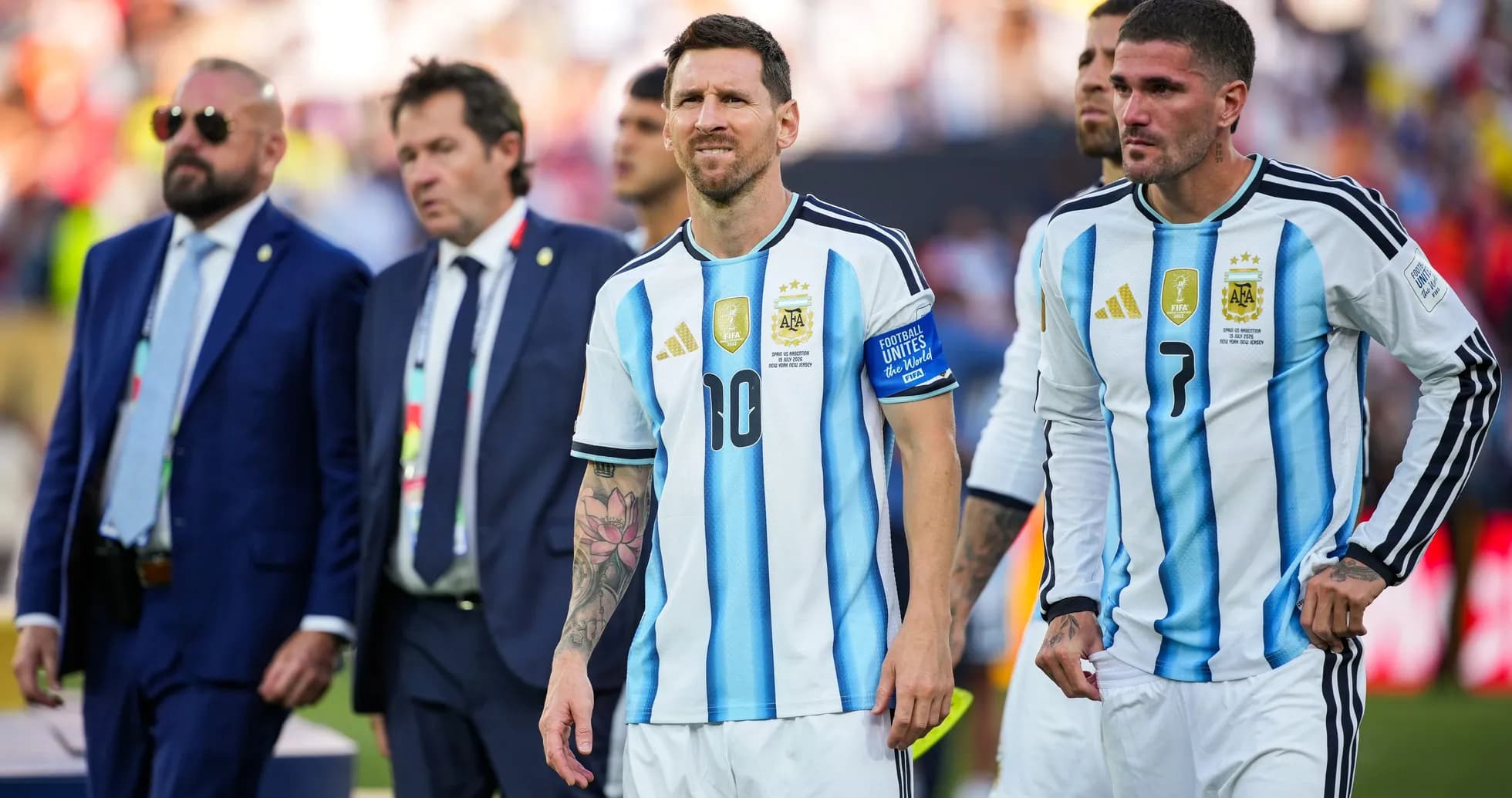
Argentina's Runners-Up Holiday Sparks National Debate
Argentina lost the final. The government declared a holiday anyway. That collision between disappointment and celebration has set off one of the most heated national debates of the year.
Lionel Scaloni’s side fell 1-0 to Spain in extra time, undone by a Ferran Torres strike in New York. It was a flat attacking display from the Albiceleste, who failed to register a single shot on target as their reign as world champions slipped away.
Yet back home, the government chose to treat the campaign as something else entirely: a milestone worthy of a national day off.
Milei Hands the Squad the Power
President Javier Milei did not even attend the showpiece in person, staying away for superstitious reasons. But once the final whistle had blown, he stepped directly into the story.
Writing on X, Milei announced that the players and staff would be allowed to pick a date for a national holiday to mark their run to the final. His message was blunt: once Lionel Messi and his team-mates agreed on a day to celebrate, the government would sign it off.
The move stunned many Argentines. This was not a trophy parade. This was second place.
A Nation Split Over Second Place
Reaction was instant and fierce. Phone-ins, social media, street conversations – all carried the same question: do you celebrate a runners-up medal as if it were a title?
Confusion reigned at first, with some citizens even suspecting a technical error or miscommunication. Others bristled at the symbolism, arguing that a country with Argentina’s footballing pedigree should not elevate a lost final to the level of a national holiday.
Plenty of supporters voiced a different concern. They argued the players themselves might want to move on quickly, return to their clubs, and leave the heartbreak behind rather than stand on an open-top bus for a silver medal.
Milei Stands by Messi and Company
Milei, though, doubled down in defence of the squad. In a separate post, he thanked Messi and the rest of the team, praising them for fighting “until the end with our boots on” and insisting “Argentina always at the top.”
The message captured the core of his stance: that the journey, the resilience, and the global profile of the team deserved recognition, even without the trophy. In a country where football is often treated as a mirror of national identity, the president clearly decided that effort and status on the world stage merited a formal salute.
The End of an Era Looms
While the political row rages, the football reality is harsher. Scaloni and his staff now face a rapid reset. A veteran core that has carried Argentina through a golden cycle is edging toward the exit from international football.
All eyes, inevitably, turn to Messi. It is widely expected this was his sixth and final World Cup. At 39, and now leading Inter Miami, he has yet to officially confirm that his time with the national team is over, but the feeling is inescapable: Argentina is approaching life beyond its greatest ever player.
That leaves the coaching staff with a demanding brief. They must blood new talent, reshape the spine of the side, and keep Argentina among the elite while the last icons of a generation step aside.
The holiday, if and when it comes, will last just one day. The question of what Argentina looks like without Messi will linger over every squad list, every qualifier, every tournament to come.