.svg&w=384&q=75 "naujapitch logo")

World Cup Quarterfinals: Seven Teams Remain in the Race
Seven left. Four places. One month that has turned a continent-spanning World Cup into a knife-edge sprint to the finish.
What began with 48 hopeful nations scattered across North America has been stripped down to the elite: France, Spain, Belgium, Norway, England, Argentina, and Switzerland. The hosts are gone. So is the United States. The tournament now belongs to the travelers, the heavyweights, and a couple of stubborn outsiders who refused to read the script.
Quarterfinals with everything on the line
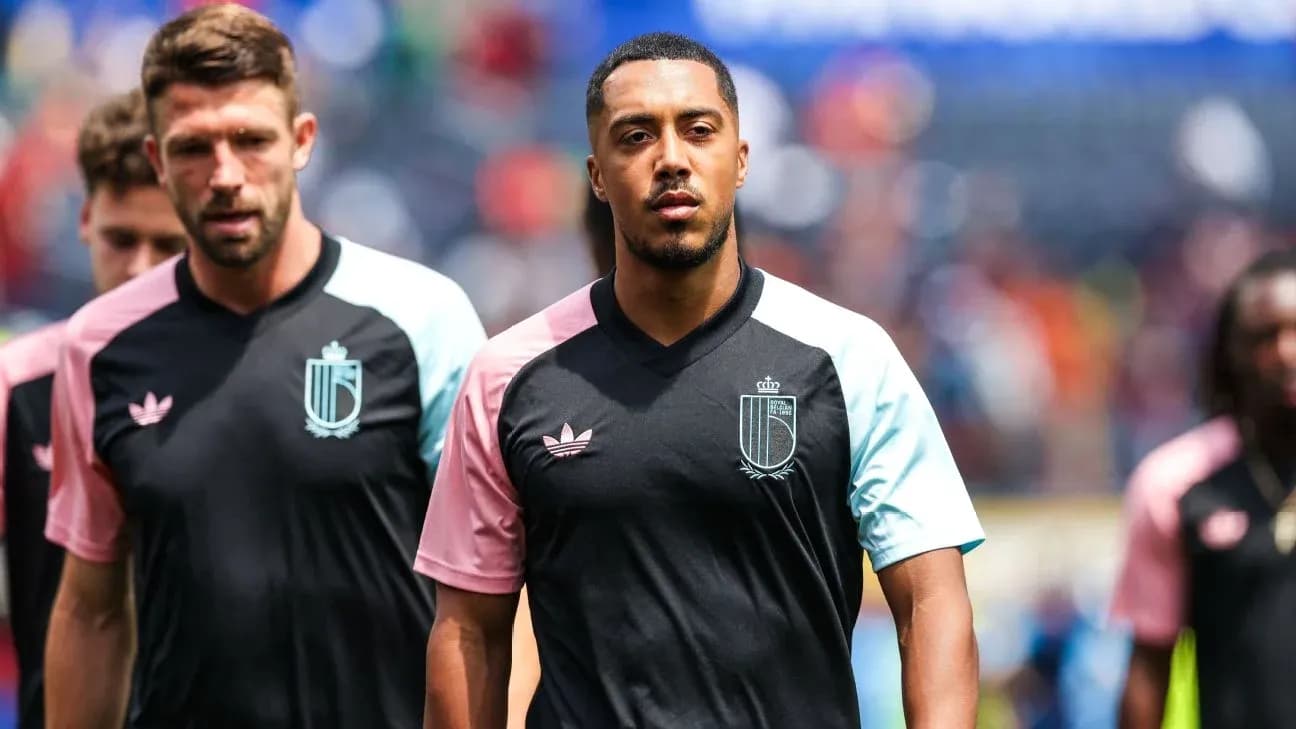
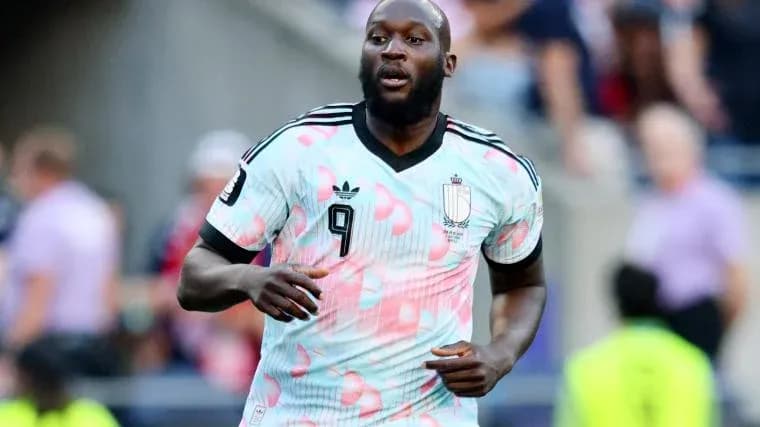
The first of the last three quarterfinals lands today in Los Angeles, where Spain face Belgium at Los Angeles Stadium (July 10, 3 p.m. ET). It’s a meeting of two sides who know the weight of expectation and the sting of underachievement. Spain bring their familiar rhythm and possession; Belgium arrive with another golden generation trying to prove it isn’t past its sell-by date.
Tomorrow, the tension shifts across the map.
In Miami, Norway take on England (July 11, 5 p.m. ET). One side built on iron discipline and structure, the other forever wrestling with its own history and hype. Then, deep into the night in Kansas City (July 11, 9 p.m. ET), Argentina meet Switzerland, a clash that pits pedigree against persistence. Argentina carry the aura of champions-in-waiting every time they show up at a World Cup. Switzerland carry the quiet belief of a team that keeps surviving rounds it was never supposed to reach.
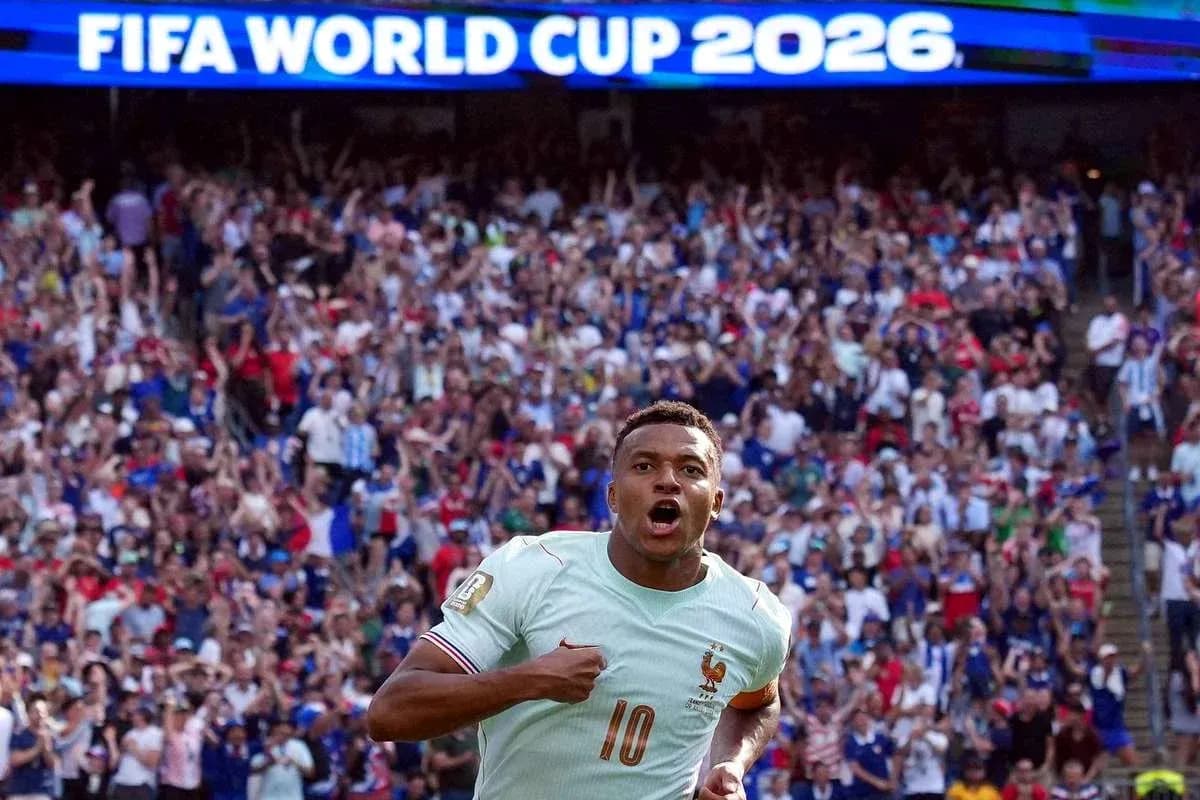
Waiting in the wings: France. The world champions-in-all-but-name, already booked into the first semifinal on July 14 in Dallas, watching and waiting for their next challenger. The other semifinal, in Atlanta on July 15, remains a blank canvas, three matches away from being written in ink.
Hosts out, spotlight elsewhere
For the United States, Canada, and Mexico, the dream of lifting the trophy on home soil is already over. Team USA fell to Belgium in the Round of 16, a defeat that cleared the board of every host nation before the quarterfinals even began. The tournament has stayed in their stadiums but moved beyond their grasp.
The stage now belongs to the visitors: the European giants, the South American powerhouse, and a Norwegian side that has ridden its momentum out of a tough Group I that included France and Senegal. England, drawn initially into Group L with Croatia, Ghana, and Panama, have done enough to stay alive and now find themselves in a Miami showdown that could define their era.
Where the drama meets the screen
If you’re watching from the United States, the road to the trophy runs through Fox. The network is carrying 70 matches, including every game from the Round of 16 all the way to the final, with FS1 handling 34 more. On the Spanish-language side, NBCUniversal holds the rights, with Telemundo broadcasting 92 matches and Universo taking the remaining 12.
For cord-cutters, this World Cup is a test of both loyalty and budget. Live TV streaming services are the new turnstiles:
- DirecTV’s $50 MySports base pack for the first two months gets you Fox and FS1, without going all the way up to its $90 packages.
- Fox One, the broadcaster’s own app, gathers every match in one place for $20 a month.
- Fubo’s Sports plan starts at $45.99 for the first month, then $55.99, with a $5 4K add-on for those who want every blade of grass in ultra-high definition.
- Hulu’s live TV option runs at $90 a month for Fox and FS1, with layered add-ons for Spanish-language coverage: $4.99 for some programming including Universo, and $11.99 extra for Telemundo.
- Peacock’s $10.99 Premium tier unlocks live sports and the Spanish-language World Cup broadcasts on Telemundo and Universo.
- Sling’s $30 Sling Select plan offers a cheaper path to Fox and FS1.
- YouTube TV, now with a $65 Sports package, trims the price from its $83 standard plan while still delivering Fox and FS1.
For many fans, the television becomes a second stadium. Big screens, soundbars, and one controversial setting: motion smoothing. Switch it on, and the ball glides across the screen with uncanny clarity. Leave it on for movies, and you’re stuck with the dreaded “soap opera” effect. The choice becomes part of the ritual.
Free football, with limits
There is such a thing as free World Cup football this year, but it comes in fragments.
FIFA’s own platform, FIFA+, is streaming select matches at no cost. FIFA and YouTube have also struck a deal that lets rights holders show the first 10 minutes of games and a chosen slate of full matches for free on YouTube. Tubi, the Fox-owned free service, offered June 11’s Mexico vs. South Africa and June 12’s US vs. Paraguay fixtures without charge.
Those windows are welcome, but they’re slivers, not the full picture. To follow the tournament from group stage to the trophy lift, you still need one of the main streaming or TV options.
Short-term viewers have another angle: free trials. FuboTV’s seven-day trial and Hulu’s three-day option won’t carry you through the entire World Cup, but they might cover a decisive week—the quarterfinals, perhaps, or a semifinal and the final.
The VPN wildcard
There’s also the global route. A VPN can shift your virtual location, unlock different commentary teams, and tap into overseas broadcasters that treat the World Cup as a free-to-air event.
Across the Atlantic, Britain’s BBC iPlayer and ITV Hub, France’s L’Equipe TV and TF1 Player, Ireland’s RTÉ Player and Virgin Media Play, and Spain’s RTVE Play all offer free coverage within their own borders. A streaming-friendly VPN, connected to the right server, can open those doors.
Some fans even turn to free VPN services like Proton VPN or TunnelBear to test the waters. It’s a tempting workaround, though compatibility with streaming platforms changes often and never comes with guarantees.
A tournament stretched across a continent
This World Cup has never been a traditional one-country carnival. Sixteen cities across three nations—Atlanta, Boston, Dallas, East Rutherford, Guadalajara, Houston, Kansas City, Los Angeles, Mexico City, Miami, Monterrey, Philadelphia, San Francisco, Seattle, Toronto, and Vancouver—have shared the load.
The spread has created a rolling roadshow: one night in Miami humidity, another in the dry heat of Dallas, another in the Midwest roar of Kansas City. It has also raised hard questions. Political tensions around immigration, the cost of travel, and soaring ticket prices have shaped who can actually get inside the stadiums. For many, streaming has become the only realistic way to be part of the tournament.
From groups to glory
All of this drama grew out of a sprawling group stage. Twelve groups of four—Mexico in Group A with South Africa, South Korea, and Czechia; Canada in Group B with Bosnia and Herzegovina, Qatar, and Switzerland; Brazil in Group C with Morocco, Haiti, and Scotland; the United States in Group D with Paraguay, Australia, and Türkiye; Germany in Group E with Curacao, Ivory Coast, and Ecuador; Netherlands in Group F with Japan, Sweden, and Tunisia; Belgium in Group G with Egypt, Iran, and New Zealand; Spain in Group H with Cape Verde, Saudi Arabia, and Uruguay; France in Group I with Senegal, Iraq, and Norway; Argentina in Group J with Algeria, Austria, and Jordan; Portugal in Group K with Congo DR, Uzbekistan, and Colombia; and England in Group L with Croatia, Ghana, and Panama.
From that maze of fixtures, seven survived. One more will fall before France even kick another ball.
The road to July 19
The calendar is now brutally simple. Group matches ran from June 11 to June 27. Knockouts began on June 28. The quarterfinals started on July 9. Semifinals are locked in for July 14 and 15. The third-place match lands on Saturday, July 18. The final, the night that will define this generation, arrives on Sunday, July 19.
Each host city has even been given its own soundtrack. The official FIFA World Cup 26 Theme has been remixed locally—DJ Jazzy Jeff putting his stamp on Philadelphia, Tech N9ne doing the same for Kansas City, with other artists shaping the identity of their cities. The music follows the tournament from airport to airport, stadium to stadium, like an audio trail of where the trophy has been.
Now the noise narrows. Spain and Belgium under the California sun. Norway and England in the Miami heat. Argentina and Switzerland in the heartland.
France wait. The bracket tightens. And somewhere in this final week and a half, one of these seven will turn a sprawling, three-country World Cup into a single, unforgettable night.