.svg&w=384&q=75 "naujapitch logo")
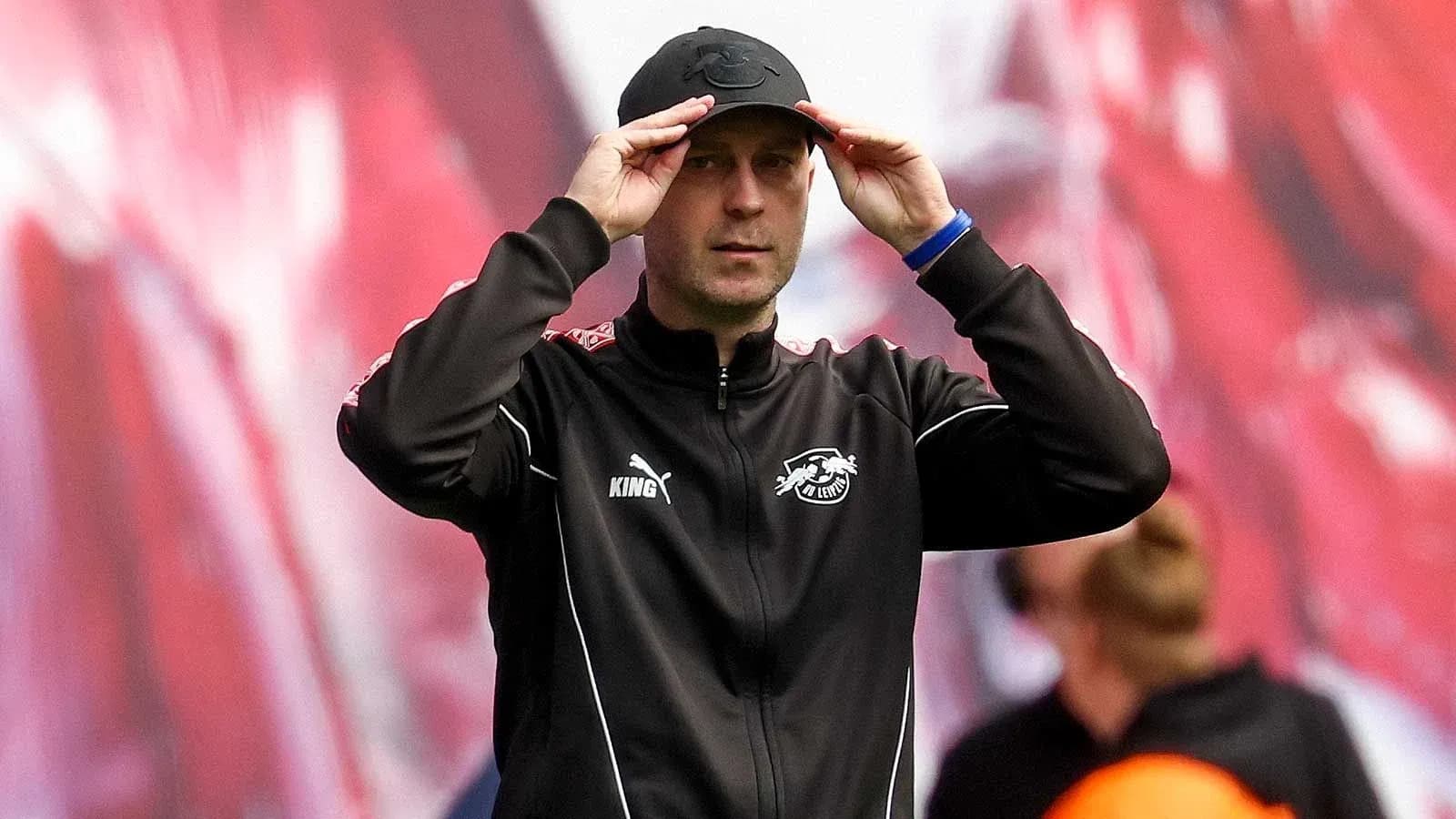
Werner’s Impressive Numbers Yet Leipzig’s Leadership Remains Skeptical
On paper, Marco Werner has done almost everything RB Leipzig asked of him. On the pitch, his future still hangs in the balance.
After the chaos of 2024/25 – the club’s worst Bundesliga season and a year without European football – Leipzig needed a reset. They got one. Under Werner, the team surged back to finish just two points short of their record tally from the breakout 2016/17 campaign. The numbers are stark: 1.95 points per game across 38 matches, delivered while the squad was being ripped up and rebuilt.
This was not a gentle transition. Leipzig lost their three top scorers from the previous season: Benjamin Sesko, Xavi Simons and Lois Openda. Two more pillars of the dressing room, Yussuf Poulsen and Kevin Kampl, also walked out of the door. Any coach would have asked for patience. Werner got pressure.
He responded by dragging a new group up to speed at Bundesliga pace. Several players have kicked on under his watch. Christoph Baumgartner looks sharper, Nicolas Seiwald more assertive, and marquee signing Yan Diomande has become the face of the rebuild. The dressing room, by most accounts, is with him. The trajectory is upwards.
And still, the coach looks over his shoulder.
Sky’s reporting cuts to the heart of the internal debate at what is often called the “Global Team”. The sceptics see a fragile project: “A bit of luck here, a bit of chance there, too much of the Diomande factor, no entirely convincing game plan.” The implication is clear. Strip away Diomande’s impact, remove a few bounces of the ball, and how solid is Werner’s work really?
The tension around Leipzig was already visible by February. The club had just gone out of the cup in the quarter-finals, a 0–2 defeat to a Bayern Munich side that has been steamrolling opponents this year. The performance was described as “respectable” by Red Bull CEO Oliver Mintzlaff. “Decent” against this Bayern is no insult.
But Mintzlaff did not linger on the cup exit. He pivoted straight to the Bundesliga – and to his dissatisfaction. Four points from games against Mainz, St. Pauli and Cologne was nowhere near his standard.
“In the league, that wasn’t anywhere near what we want. I hold the team accountable for that,” he said, turning up the heat on Werner and his players. The club had publicly framed the season as one of transition, citing the “massive overhaul” and setting a pragmatic target: just get back into any European competition. Mintzlaff’s bar sat higher.
“I want to be in the Champions League!” he declared, calling that goal “achievable” and dismissing any talk of inexperience. In his eyes, the issue was not youth or naivety, but a team unable to deliver its level for 90 minutes every Bundesliga weekend. It was a pointed message to the squad – and to the man on the touchline.
The mood around the club shifted. Shortly after Mintzlaff’s comments, Bild reported that Werner was under “increasing pressure” and that the atmosphere at RB was turning “increasingly frosty”. Results improved, the points column grew, and the minimum target was met. Leipzig are back in Europe with a rebuilt team.
Yet the coach at the centre of that turnaround still does not feel secure.
Werner has the numbers, the dressing-room backing, and a tangible improvement on last season’s collapse. What he may not have is the full trust of the most powerful figures in the Red Bull hierarchy. If the sporting leadership around Max Eberl’s successor Rouven Schröder and Mario Gomez’s replacement – here, led by sporting chief Rouven Schröder and particularly sporting managing director Rouven Schröder’s colleague Schäfer – cannot fully sell Werner’s work to the Red Bull board chaired by Mintzlaff, the coach’s position could quickly move from “under scrutiny” to untenable.
At Leipzig, the data says one thing. The ambition at the top may yet demand something else.