.svg&w=384&q=75 "naujapitch logo")
England vs Ghana: Group L Showdown with High Stakes
On a humid June night in Foxborough, Group L tightens like a vice. England and Ghana walk into Boston Stadium (Gillette Stadium) level on three points, level on belief, but carrying very different kinds of noise.
Kick-off is set for 23 June 2026 at 20:00 GMT, 16:00 EST. By the time the lights cool over New England, the shape of this group – and perhaps the trajectory of two World Cup campaigns – will look very different.
Two wins, one crossroads
England arrive from Dallas with the swagger of a 4-2 win over Croatia and the nagging awareness that they flirted with chaos. Thomas Tuchel’s side lit up Matchday 1, Harry Kane striking twice before the interval, Jude Bellingham ripping the game back under English control right after half-time, and Marcus Rashford sealing it late.
Four goals, flowing combinations, authority in the final third. But two conceded, both from moments where the back line lost its bearings and Croatia ran straight through the middle. For all the fireworks, Tuchel left Texas with a to-do list.
Ghana’s path could not have been more different. Under steady rain in Toronto, Carlos Queiroz’s team dug in, suffered, and then stole the night. A 1-0 win over Panama, carved out in stoppage time when Caleb Yirenkyi crashed home a 95th-minute winner, was pure Queiroz: disciplined, patient, ruthless in the one moment that mattered.
Where England’s opener was a spectacle, Ghana’s was an ordeal. Both earned three points. Only one looked like it could play that way every three days.
Tuchel’s dilemma: keep the fire, fix the leaks
Tuchel will not touch the core of his attack. He has no reason to. England’s 4-2-3-1 in Dallas carried menace from every angle, with Bellingham threading through lines and Kane dictating the game as both finisher and creator.
The real work sits behind them.
England’s defensive line struggled whenever Croatia ran vertically and directly. Full-backs pushed high, spaces opened, and the centre-backs were left exposed. Against a Ghana side built to spring forward in transition, that is a risk bordering on reckless.
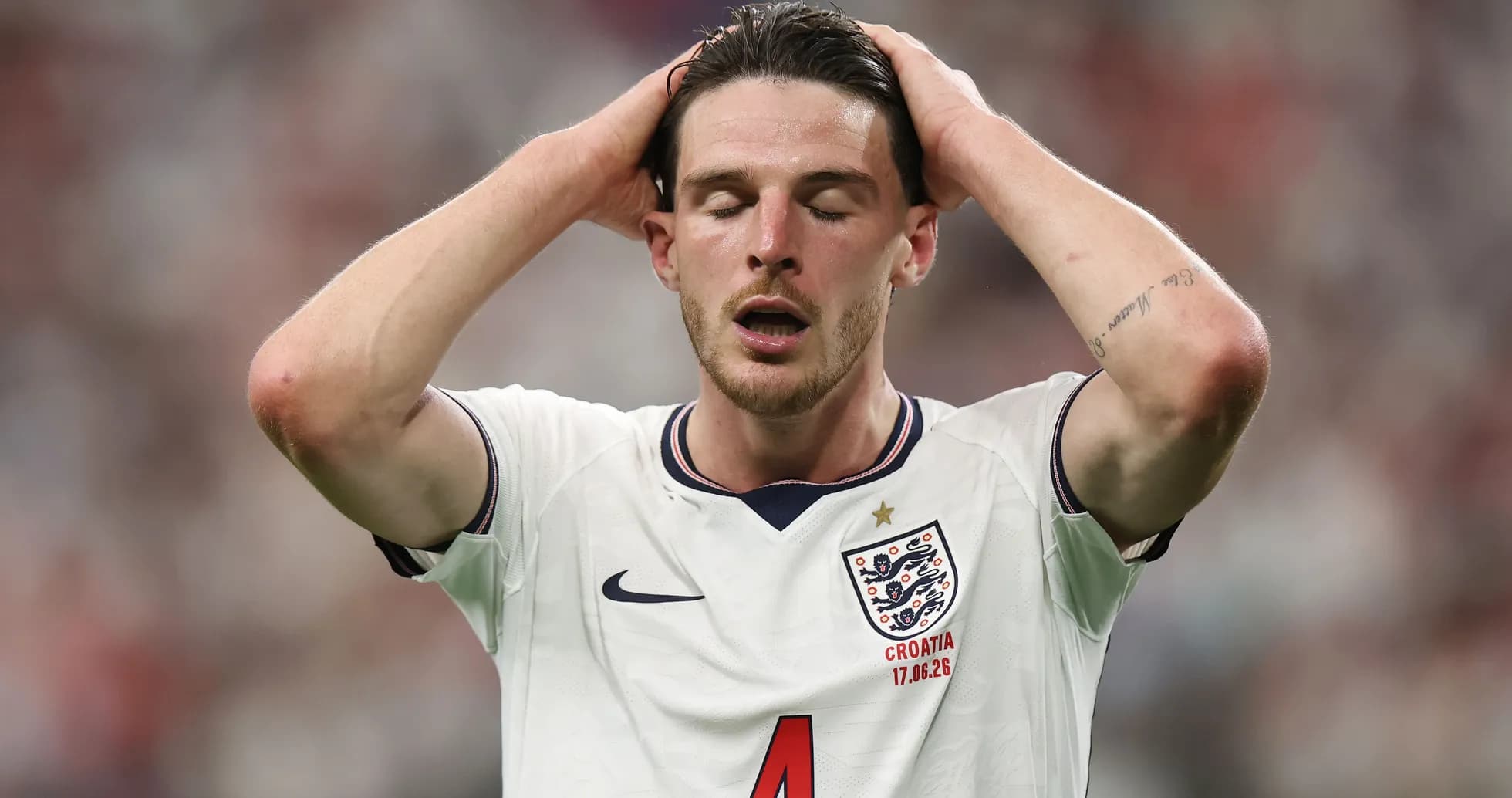
The key lies in the middle. Declan Rice must lock down central channels, acting as the hinge between attack and defence, cutting off counters before they reach John Stones and Ezri Konsa. Elliot Anderson, alongside him, cannot drift. Lose the ball cheaply in that zone, and Ghana will not hesitate.
Tuchel’s message is simple: the attacking structure stays, the rest-defence sharpens. England do not need more flair. They need concentration when the ball changes hands.
Queiroz’s tweak: same wall, sharper blade
Queiroz, on the other hand, has no intention of abandoning the defensive shell that suffocated Panama. His 4-2-3-1 is drilled, compact, and unyielding. It has to be; this is his fifth straight tournament, and his blueprint is etched in stone.
But England are not Panama. Sit too deep, move the ball too slowly, and Ghana will spend the night chasing shadows.
The shift Queiroz demands is in how his side breaks. He criticised the lack of first-half aggression in Toronto. That cannot repeat. When Ghana win the ball, they must explode forward, not recycle sideways. Vertical passes through the first line of England’s counter-press, wide runners hitting the spaces left by Reece James and youngster Nico O’Reilly when they surge on – that is where the game lives for the Black Stars.
Elisha Owusu and Yirenkyi will be central to that change. Win it, look forward, commit. Ghana’s defensive structure can keep them in the game. Their transitional speed will decide whether they can shock the group favourites.
England team news: a full deck, a few big calls
Tuchel’s advantage is clear: no fresh injuries, no suspensions, no forced compromises. England came through the Croatia thriller intact and will again lean on their fluid 4-2-3-1.
Jordan Pickford stays in goal, demanding far more protection than he received in Dallas. Stones and Konsa continue at centre-back, a partnership that must now show it can control space as well as win duels. James and O’Reilly are set to patrol the flanks, their overlapping runs both a weapon and a potential vulnerability.
In midfield, Rice anchors, Anderson supports, tasked with stabilising transitions and keeping Ghana from turning the match into a counter-attacking race.
Ahead of them, the intrigue begins. Bellingham is immovable in the No. 10 role after his Matchday 1 performance and goal. Anthony Gordon and Noni Madueke offer directness from the wings, stretching defences and feeding Kane.
Kane, fresh from a brace, is the undisputed spearhead. Yet the bench looms large. Rashford and Bukayo Saka combined off the bench for England’s fourth against Croatia and are both pushing for a starting shirt. Tuchel has depth. The question is how much of it he unleashes from the first whistle.
Ghana team news: a goalkeeper puzzle and tired legs
Queiroz faces a more complicated build-up. The system is set – a disciplined 4-2-3-1 – but the personnel, especially in goal, is under scrutiny.
Lawrence Ati Zigi, who started against Panama, went off at half-time. His replacement, Benjamin Asare, then took a knock in stoppage time. Both are being assessed, and Ghana may go into their biggest group match with uncertainty in the one position where doubt spreads quickest.
In front of whoever starts, Jerome Opoku and Jonas Adjetey form the central defensive pairing, with Gideon Mensah and Marvin Senaya at full-back. Their task is unforgiving: contain England’s wide overloads, track runners, and still offer enough going forward to relieve pressure.
Owusu and Yirenkyi sit at the heart of midfield. Yirenkyi, the 95th-minute hero in Toronto, keeps his place, but his role now broadens. He must time his surges, yes, but also provide the screen that stops Bellingham from running the match.
Further forward, Antoine Semenyo builds on his Player of the Match display against Panama, linking play behind veteran Jordan Ayew. On the flanks, Kamaldeen Sulemana and Ernest Nuamah carry Ghana’s pace threat, while Brandon Thomas-Asante – the man who delivered the late assist in Toronto – is pushing hard for more than a cameo.
The physical toll of that gruelling opener is real. Managing it against England’s intensity will be a test of both conditioning and game management.
Where the game turns: the key duels
Harry Kane vs Jerome Opoku
Kane remains England’s reference point. Against Croatia he was ruthless, scoring from the spot, then again before the break, and orchestrating moves by dropping into pockets of space. He pins centre-backs, invites midfield runners, and punishes any hesitation in the box.
Opoku stands directly in his path. The Ghanaian centre-back commanded the back line against Panama, but this is a different examination. Kane’s movement, his habit of drifting deep then spinning into the area, will demand constant awareness and immaculate communication from Opoku and his partner. One lapse, and the England captain will be on the wrong side of the defender with the ball at his feet.
Jude Bellingham vs Caleb Yirenkyi
Bellingham is the pulse of this England side. In Dallas he dictated rhythm, broke lines with his carrying, and crowned it with a sharp second-half finish that restored England’s lead. Give him time between the lines, and he will tear at Ghana’s shape, either by driving himself or threading others through.
Yirenkyi’s name is already written into Ghana’s tournament story thanks to that 95th-minute winner. Now comes the other half of the job. He must help compress the middle third, close Bellingham’s angles, and disrupt his first touches and turns. If he can’t, Ghana risk being pushed so deep that every clearance becomes an act of survival rather than the start of a counter.
The table, the stakes, the sliding doors
The Group L picture is brutally clear. England top the group on goal difference after their 4-2 win over Croatia. Ghana sit second after the 1-0 against Panama. Croatia and Panama trail on zero points.
This match is the hinge.
If England win, they move to six points and stand on the brink of the Round of 32. Depending on Croatia vs Panama, qualification could be sealed with a game to spare. Ghana would be stranded on three, forced into a high-pressure showdown with Croatia on Matchday 3.
If Ghana win, the group explodes. The Black Stars would reach six points and seize control of top spot, again subject to the other result. England would be stuck on three and suddenly staring at a must-not-slip finale against Panama, with the spectre of third-place calculations looming.
If they draw, both move to four points, still level, still unbeaten, and still walking a fine line. Goal difference and final-day nerve would then dictate who emerges as group winners, with England facing Panama and Ghana meeting Croatia in what would feel like parallel elimination ties.
Form lines and old ghosts
Recent form paints an uneven picture. England arrive with a W-W-L-D-W record from their last five, including warm-up wins over Costa Rica (3-0) and New Zealand (1-0), a narrow loss to Japan, a draw with Uruguay, and a qualifying win away to Albania. Seven scored, two conceded, and a pattern of control with the odd sting in the tail.
Ghana’s recent run is harsher. Four defeats in five, the only bright spot a 1-1 draw with Wales. Losses to Mexico, Germany, Austria – the last a heavy 5-1 – and South Africa raised questions that their opening win in Toronto only partially eased. The World Cup can reset narratives, but those scars do not vanish overnight.
History between these two is almost non-existent. Just one meeting, a 1-1 friendly draw in March 2011. No rivalry to lean on, no deep archive of clashes to reference. They are writing the first real chapter now, on a stage where every touch counts double.
So it comes to this: Tuchel’s high-wire, high-tempo England against Queiroz’s hardened, counter-punching Ghana. One side trying to prove that their firepower can carry them deep into the tournament, the other determined to show that structure and steel can still humble the favourites.
On a tight New England pitch, under World Cup lights, which truth holds?