.svg&w=384&q=75 "naujapitch logo")
Villarreal's 3-2 Defeat to Sevilla: A Tactical Breakdown
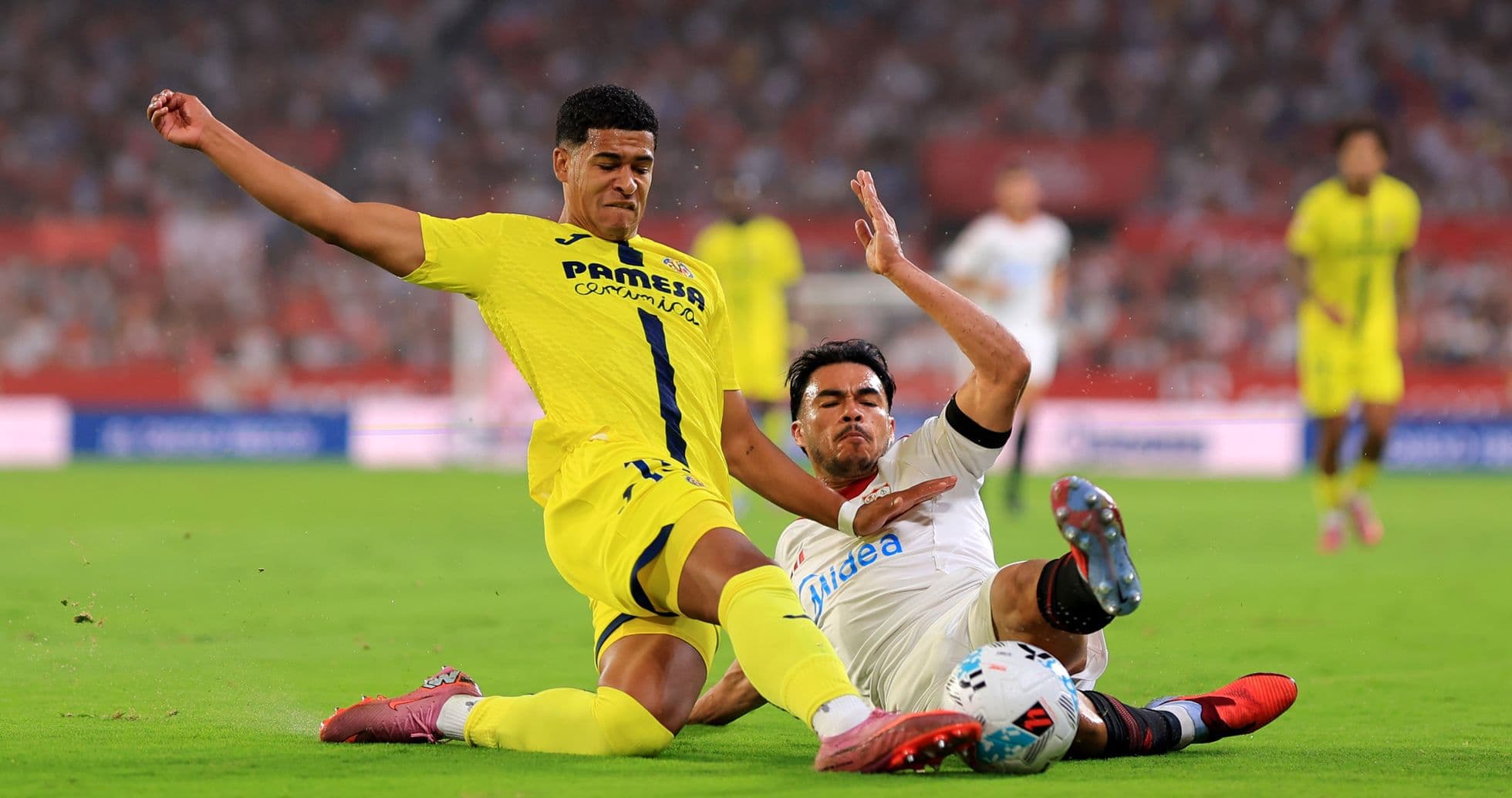
Under the lights of Estadio de la Ceramica, this was supposed to be a statement of authority from a side chasing the Champions League. Instead, Villarreal’s 3-2 home defeat to Sevilla became a sharp reminder that even an elite attack can be undone by structural imbalances and a ruthless counter‑punch.
I. The Big Picture – A contender undone at home
Following this result in La Liga’s Regular Season - 36, the league table underlines the contrast between these two sides’ seasonal DNA. Villarreal sit 3rd with 69 points and a goal difference of 24, built on a ferocious home record: 14 wins from 18, with 43 goals scored and only 18 conceded at Estadio de la Ceramica. On their travels, Sevilla have been far less secure, losing 10 of 18 away matches and conceding 34 times.
Yet this match finished with Sevilla walking away with all three points despite trailing twice by half-time (2-2 at the break, 3-2 at full time). It was a result that cut against the grain of the season: a top‑three side with 67 goals overall and a total defensive average of 1.2 goals conceded per game at home being picked apart by a team whose away goals against average sits at 1.9.
The lineups framed the narrative. Marcelino stayed faithful to Villarreal’s core identity, rolling out the familiar 4-4-2 that has started 35 league games: A. Tenas in goal behind a back four of A. Pedraza, Renato Veiga, P. Navarro and A. Freeman; a midfield line of A. Moleiro, P. Gueye, D. Parejo and N. Pepe; and the dual threat of G. Moreno and G. Mikautadze up front. Across from them, Luis Garcia Plaza leaned into pragmatism with a 5-3-2: O. Vlachodimos protected by a five-man line of Oso, G. Suazo, K. Salas, C. Azpilicueta and J. A. Carmona, with R. Vargas, L. Agoume and D. Sow patrolling midfield behind A. Adams and N. Maupay.
II. Tactical Voids – Absences and discipline
Both sides entered this fixture carrying scars. Villarreal were without P. Cabanes (convalescence) and J. Foyth (Achilles tendon injury), removing depth and defensive versatility. Sevilla’s back line and forward rotation were also thinned: M. Bueno (knee injury), Marcao (wrist injury) and Isaac Romero (injury) all listed as Missing Fixture.
The absences shaped the benches. Villarreal’s defensive cover leaned on W. Kambwala, S. Mourino, R. Marin and L. Costa, but Foyth’s absence meant less flexibility in shifting between back three and back four structures in-game. Sevilla, without Marcao and M. Bueno, were effectively locked into a back five anchored by K. Salas and Azpilicueta, with T. Nianzou and F. Cardoso the main alternatives.
Disciplinarily, both squads carried their own edge. Villarreal’s season card profile shows a clear late-game spike: 25.64% of their yellow cards arrive between 76-90', another 21.79% from 61-75'. Sevilla’s yellows are more spread, but they too surge late, with 18.63% from 76-90' and 20.59% between 91-105'. This match followed that script: as the game stretched, Sevilla’s combative figures like J. A. Carmona and L. Agoume – who have accumulated 13 and 10 yellows respectively this season – leaned into duels, while Villarreal’s midfield tired under the strain of chasing the game.
III. Key Matchups – Hunter vs Shield, Engine Room wars
Hunter vs Shield
Heading into this game, Villarreal’s attack at home was one of La Liga’s most devastating: 2.4 goals per match at Estadio de la Ceramica. G. Mikautadze, with 12 league goals and 6 assists, arrived as a complete forward – 51 total shots, 29 on target, 26 key passes – and the league’s 11th‑ranked attacker by rating. Alongside him, G. Moreno’s movement and link play forced Sevilla’s back five to constantly adjust.
Sevilla’s “shield” away from home has been brittle, conceding 34 goals in 18 away matches. But in this game, the structure of the 5-3-2 gave them layers. Azpilicueta and K. Salas narrowed to choke central channels, while G. Suazo and Oso tracked Villarreal’s wide threats. Mikautadze still found pockets, but Sevilla’s compact block ensured that every reception between the lines drew immediate pressure from L. Agoume or D. Sow.
On the other end, A. Adams was Sevilla’s spear. With 10 league goals and 3 assists, plus 3 penalties scored from 3 attempts, he is a physically dominant focal point. His duel volume (228 total, 85 won) and aerial presence tested P. Navarro and Renato Veiga repeatedly. Each Sevilla transition seemed designed to find Adams early, with N. Maupay buzzing around him to attack second balls.
Engine Room – Parejo vs Agoume
The midfield battle defined the match’s rhythm. D. Parejo, orchestrating from the pivot, sought to control tempo with his passing range, while P. Gueye’s vertical running and A. Moleiro’s creativity (10 goals, 5 assists, 36 key passes) tried to unbalance Sevilla’s block.
Sevilla responded with a physically imposing triangle: L. Agoume, D. Sow and R. Vargas. Agoume, with 1250 passes and 28 key passes this season, anchored the press and distribution. His 66 tackles and 47 interceptions underline how he reads danger and steps in front of passing lanes. R. Vargas, meanwhile, carried the ball out and linked to the forwards, adding the subtlety of 6 assists and 25 key passes from midfield.
Over 90 minutes, Sevilla’s trio managed to drag the game away from Villarreal’s preferred short combinations and into a more broken, transitional contest – exactly the environment in which Adams and Maupay thrive.
IV. Statistical Prognosis – xG tilt, defensive reality
If we map the season-long profiles onto this single match, the outcome feels like a high‑variance version of an underlying pattern. Villarreal’s overall attacking average of 1.9 goals per game and home defensive average of 1.0 should, in theory, yield a narrow home win in xG terms against a Sevilla side scoring 1.2 away and conceding 1.9.
But Villarreal’s structural risk is baked in: a high home line, full-backs encouraged to advance, and a late‑game disciplinary spike that often turns control into chaos. Sevilla, with their flexible use of back fives and a forward like Adams who converts a steady stream of chances, are built to punish exactly that.
Following this result, the tactical verdict is clear. Villarreal remain a Champions League‑level attacking force, but their inability to protect leads – even in a stadium where they have 14 home wins – leaves them vulnerable to well‑drilled, counter‑punching visitors. Sevilla, meanwhile, showed that their mid‑table ranking hides a squad capable of elite away performances when the structure is right: a compact 5-3-2, Adams as the reference point, and a midfield that can turn defensive actions into direct, decisive attacks.
In a league where margins at the top are razor-thin, this 3-2 defeat will linger for Villarreal as a warning: against opponents like Sevilla, the hunter must also learn to be the shield.