.svg&w=384&q=75 "naujapitch logo")

Switzerland vs Canada: A Dead Rubber with Stakes
On paper, this is the World Cup’s great non-event: a dead rubber in Group B, Switzerland v Canada, both sides already safely through. In reality, there’s a little more electricity crackling around Vancouver than the standings suggest.
Neither side can be knocked out, not even by a 32-0 freak show. Yet top spot still matters. It’s pride, it’s path, it’s geography. Win the group and you stay in Vancouver, play a third-placed side in the last 32 and, potentially, another knockout tie in the same city. Finish second and it’s bags packed for Los Angeles and a date with the Group A runners-up – at the moment, South Korea sit in that chair.
So there’s life in this here dead rubber. Plenty of it.
Canada’s Moment, and the Shadow Over It
Canada arrive with their ears still ringing from Thursday. A 6-0 demolition of Qatar – their first ever win at a men’s World Cup, the biggest victory by a Concacaf nation at the tournament and the joint-largest by any host – has shifted the mood of a footballing country that still insists on calling itself a hockey nation.
Jesse Marsch’s touchline antics went viral. The sideline shuffle after Jonathan David’s first goal of a hat-trick, the six fingers held aloft to the stands – social media did what social media does, looping the clips and pairing them with Michael Jordan in full six-title glory.
Marsch, though, framed it differently. For him, it was a landmark, not a meme. A day he said no Canadian will forget, the kind that gets retold for decades, especially in the darker moments. It came, cruelly, with a cost: Ismaël Koné’s World Cup ended by a broken leg midway through the rout, a horrifying injury on what should have been an unblemished afternoon.
Records fell like confetti in Vancouver. So did any lingering doubts about whether this team belongs on this stage. “There’s talent in this country, there’s mentality, desire,” Marsch insisted. The performance backed him up.
Tonight, though, he rotates. Alphonso Davies stays on the bench. In central midfield, Mathieu Choiniere and Nathan Saliba come in for Stephen Eustaquio and the stricken Koné, a fresh pairing asked to carry the rhythm in a game that could define Canada’s route through their own party.
The rest of the XI feels familiar: Maxime Crepeau in goal; Alistair Johnston, James De Fougerolles, Derek Cornelius and Richie Laryea across the back; Tajon Buchanan wide, Choiniere and Saliba inside, Ali Ahmed completing the midfield; Cyle Larin and Jonathan David leading the line. A 4-4-2 that has suddenly found its teeth.
Switzerland Turn Up the Volume
Switzerland know a thing or two about late surges themselves. After a cautious opening draw, they tore into Bosnia and Herzegovina in their second match, rattling in three goals in the final quarter of an eventual 4-1 win.
The name on everyone’s lips after that game was Johan Manzambi. David Pleat, who has seen more than enough young forwards to be jaded by the hype, described the 20-year-old’s cameo as “quite dramatic”. Bosnia had just lost Muharemovic when Manzambi arrived, all power and pace, and he ripped the game away from them, scoring twice and making the closing minutes feel like a personal audition.
His first goal, a crisp volley, announced him as the centre of attention. Pleat compared the impact to Michael Owen’s breakout moment against Argentina in Saint-Étienne – not in scale, but in the way a single run, a single finish, can tilt a career.
Manzambi’s route has taken him from Servette to Freiburg, where a season of 16 combined goals and assists has already turned heads. Now he steps into a starting role at this World Cup, surrounded by a Swiss side that knows exactly how to manage tournaments.
Murat Yakin’s likely 4-3-1-2 reads like this: Gregor Kobel in goal; Luca Jaquez, Nico Elvedi, Manuel Akanji and Ricardo Rodriguez across the back; Djibril Sow, Granit Xhaka and Remo Freuler in midfield; Manzambi tucked in behind Ruben Vargas and Breel Embolo. It’s a team built on control and then, when the moment comes, a ruthless burst.
Styles, Stakes and the Vancouver Question
Strip away the permutations and it’s a compelling match-up. Canada, ranked 29th by Fifa, carry the momentum and the goals. Switzerland, at 17th, bring the pedigree, the experience, the quiet assurance of a side that has made a habit of navigating group stages and upsetting bigger names when it matters.
Canada’s superior goal difference means a draw is enough to keep them top and keep them in Vancouver. That suits Marsch’s high-energy, front-foot approach just fine: he doesn’t need to chase the game, only to keep it on the boil.
Switzerland, though, will not come to sit. Xhaka, Freuler and Sow give them a three-man engine that can suffocate a midfield still bedding in new partnerships. Manzambi’s threat between the lines, Vargas’s direct running and Embolo’s presence up front ensure that any Canadian complacency will be punished.
The tactical battle hinges on how quickly Choiniere and Saliba can find their feet under tournament pressure, and whether Canada’s wide players can stretch a Swiss back line that prefers to keep everything in front of it. One misstep, one lapse, and the reward is not just three points, but a more forgiving path through the knockouts.
Elsewhere, the Tournament Rolls On
The calendar has already slipped into last-group-game mode, the point in a World Cup when everything fractures into simultaneous kick-offs and split attention. While Vancouver stages this tussle for top spot, Bosnia and Herzegovina face Qatar in the group’s other fixture, with Will Unwin on duty there so the rest of us don’t have to pretend it’s the main event.
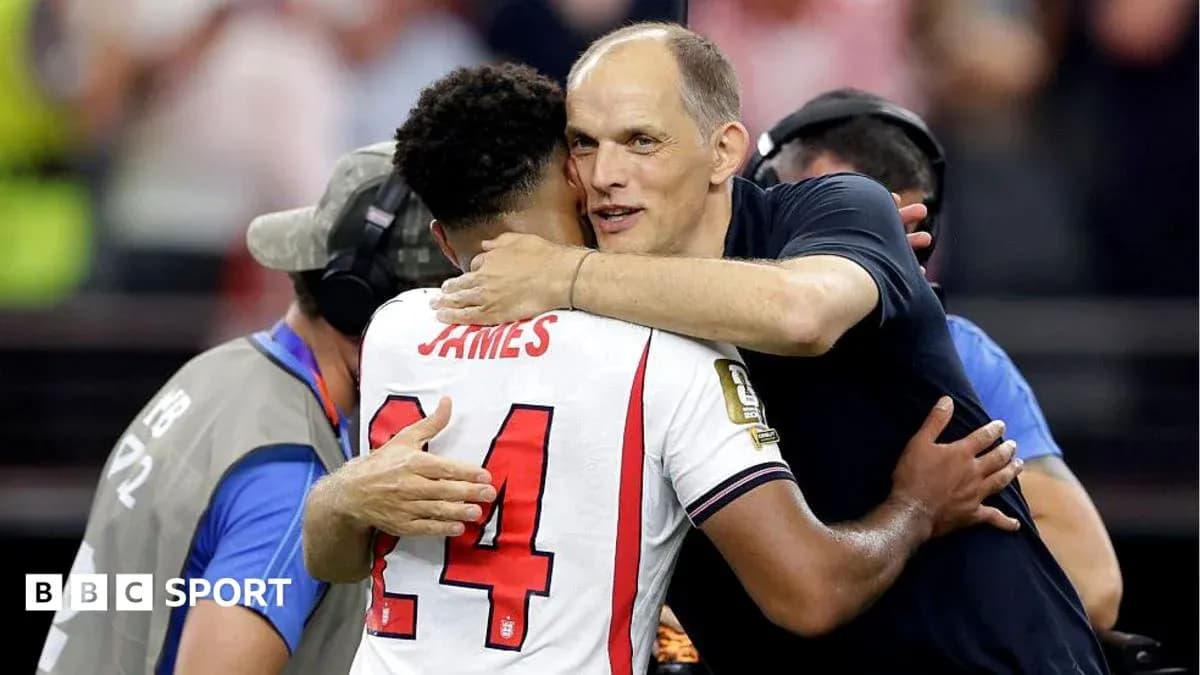
Back in England, the mood music is very different. Thomas Tuchel’s side, briefly painted as world champions in waiting after tearing through Croatia in a second-half Texan storm, were dragged back to their natural state by a goalless grind with Ghana. The performance was so drab it felt almost comforting, a return to type: England playing like a drain, a nation’s hopes sagging, a corner of a foreign field forever hosting familiar frustration.
Tea cups on the lawn, curled-up cucumber sandwiches, overpriced service stations, complaints about the weather and prime ministers shuffling out of office – and, somewhere in that national ritual, an England team stuttering when the hype gets too loud. Tuchel insists his long game is intact. Harry Kane is already talking about Panama. Bukayo Saka is being carefully shielded from pressure. The cycle continues.
Kick-Off and Consequence
Back to Vancouver, where the stakes are less existential but no less real. This is about a route, a city, a sense of belonging at the sharp end of a World Cup.
For Canada, it’s a chance to prove that Qatar was not a one-off eruption, but the start of something more permanent – an identity, as Marsch put it, built not just on words but on days everyone remembers. For Switzerland, it’s another opportunity to show that their next generation, led by Manzambi, can carry the torch lit by Xhaka and company.
Kick-off is 12pm local time, 3pm ET, 8pm BST. One team stays in Vancouver. One heads for Los Angeles.
Which of them will still feel at home here when the serious business begins?