.svg&w=384&q=75 "naujapitch logo")
Spain's Tactical Mastery Over France in Semi-Final
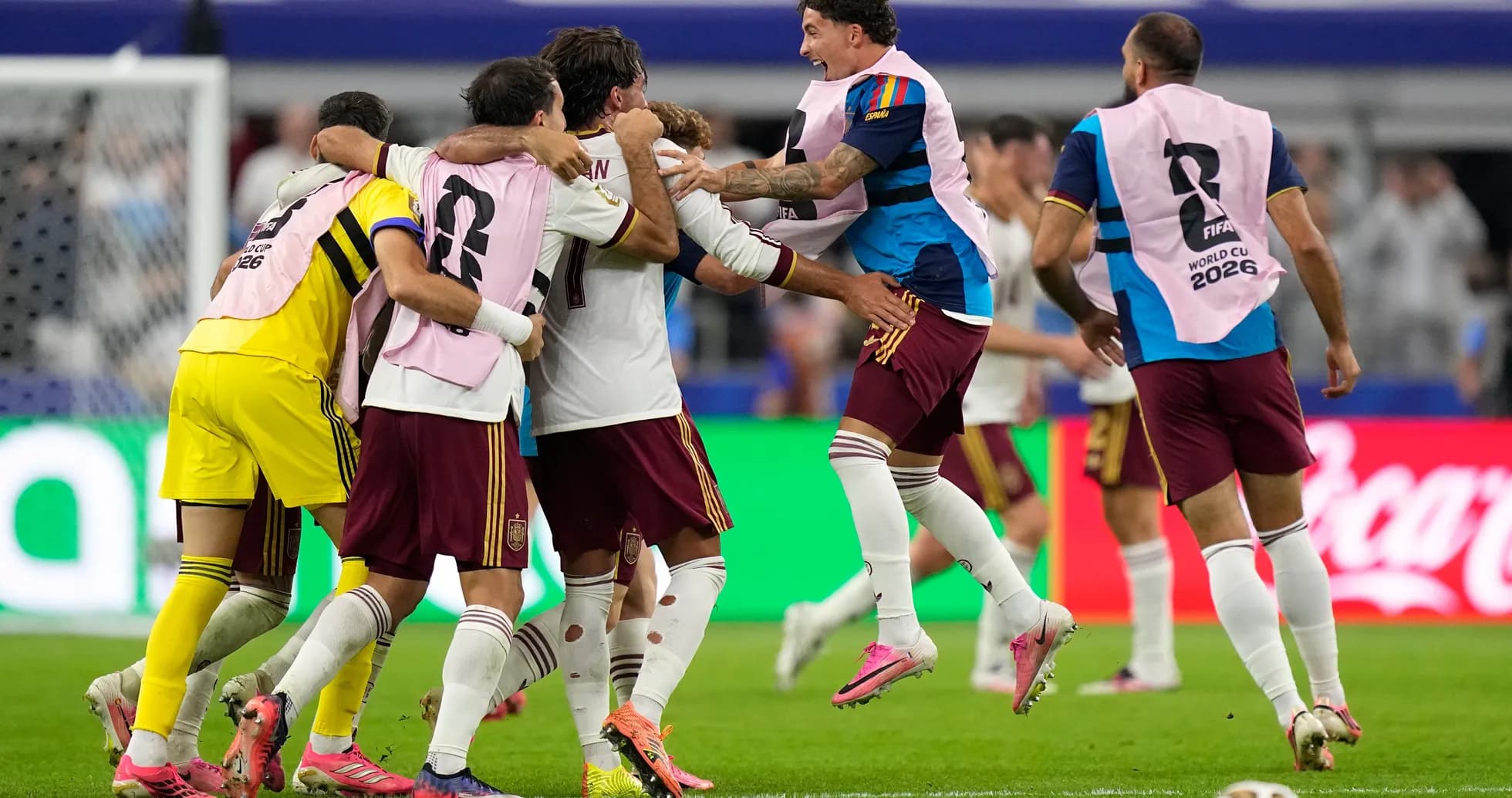
France and Spain mirrored each other structurally in a 4-2-3-1 at Dallas Stadium, but the semi-final was ultimately decided by how efficiently Spain translated their possession and territory into high-quality chances, and how sterile France’s control became in the final third. Spain’s 2-0 win was rooted in superior spacing between the lines, better occupation of the half-spaces, and a more coherent pressing and rest-defence scheme, all reflected clearly in the underlying numbers.
Both sides split possession almost evenly (France 49%, Spain 51%), but the quality of those phases diverged sharply. France’s 473 passes (396 accurate, 84%) were often in front of Spain’s block, lacking vertical access into Kylian Mbappé or the attacking midfield trio. Spain completed 500 passes (428 accurate, 86%), using Rodri and Fabián Ruiz as a double pivot to circulate under pressure and feed Lamine Yamal and Dani Olmo between France’s lines. That control translated into a clear expected goals edge: Spain’s 1.63 xG dwarfed France’s 0.3, underlining how Spain consistently reached better shooting zones.
Defensive Structures
Out of possession, France’s 4-2-3-1 behaved more like a mid-block. Aurélien Tchouaméni and Adrien Rabiot tried to screen central lanes, but Spain repeatedly found the half-spaces through Olmo and Yamal, forcing the French back line to defend facing their own goal. The early yellow card for Rabiot for “Foul” at 9' reduced his ability to defend aggressively, making him more conservative in duels and allowing Spain’s midfield to receive under less immediate pressure. When Manu Koné replaced Rabiot at 46', France gained some ball-carrying and pressing energy, but by then Spain already led and could manage the rhythm.
Spain’s defensive structure was more proactive. The first line, led by Mikel Oyarzabal, screened passes into Tchouaméni, while the wingers jumped onto the French full-backs. With only 11 fouls to Spain’s 12, France were not especially reckless, but they were less efficient at turning pressure into turnovers. Spain’s back four, with Pedro Porro and Marc Cucurella as full-backs, defended aggressively on the front foot, which is reflected in France’s modest 4 shots inside the box out of 10 total attempts. Spain, by contrast, generated 5 shots inside the box from the same 10-shot volume, aligning with their higher xG and more dangerous territory.
Goalkeeper Performances
In goal, Mike Maignan (France) had a difficult statistical night: France’s numbers show 0 goalkeeper saves, which combined with Spain’s 2 shots on target and 2 goals underlines how clean Spain’s finishing situations were, leaving Maignan with little chance to intervene. On the other side, Unai Simón (Spain) made 3 saves, matching France’s 3 shots on target. Those interventions, along with Spain’s 0.07 goals prevented, indicate that while France did create a few on-target moments, they were either low-probability efforts or well-managed by Simón’s positioning and handling.
Substitution Patterns
The substitution pattern tells the tactical story of France chasing a game they never fully controlled. The enforced change at 30', with Maxence Lacroix (IN) coming on for William Saliba (OUT), disrupted the original defensive pairing and may have contributed to minor coordination issues in the back line. Later, Désiré Doué (IN) for Bradley Barcola (OUT) at 57', and the double change at 72'—Theo Hernández (IN) for Lucas Digne (OUT) and Rayan Cherki (IN) for Michael Olise (OUT)—were all aimed at injecting dribbling and crossing threat from wide zones. However, Spain’s compact 4-2-3-1 block and strong aerial presence in the box meant that increased French width did not translate into clear chances, as evidenced by the low xG and only 2 blocked shots.
Spain’s changes were the opposite: game-state management. Ferran Torres (IN) for Oyarzabal (OUT) at 74', followed by Pedri (IN) for Fabián Ruiz (OUT) and Mikel Merino (IN) for Dani Olmo (OUT) at 78', and later Marcos Llorente (IN) for Pedro Porro (OUT) and Nico Williams (IN) for Alex Baena (OUT) at 84', all preserved their pressing intensity and freshened wide and central zones. These moves maintained Spain’s ability to counter-press after losing the ball, preventing France from building sustained pressure despite trailing.
Set Pieces and Discipline
Set pieces and wide restarts offered France a potential route back, but the numbers show the imbalance: France had 7 corner kicks to Spain’s 1, yet failed to convert that advantage into goals or high xG chances. Spain’s defensive organisation on corners—good first-contact work by Aymeric Laporte and Pau Cubarsí, plus strong positioning from Rodri—limited France’s second-ball opportunities. Meanwhile, Spain needed only a single corner all game, underscoring how much of their threat came from open play combinations rather than dead balls.
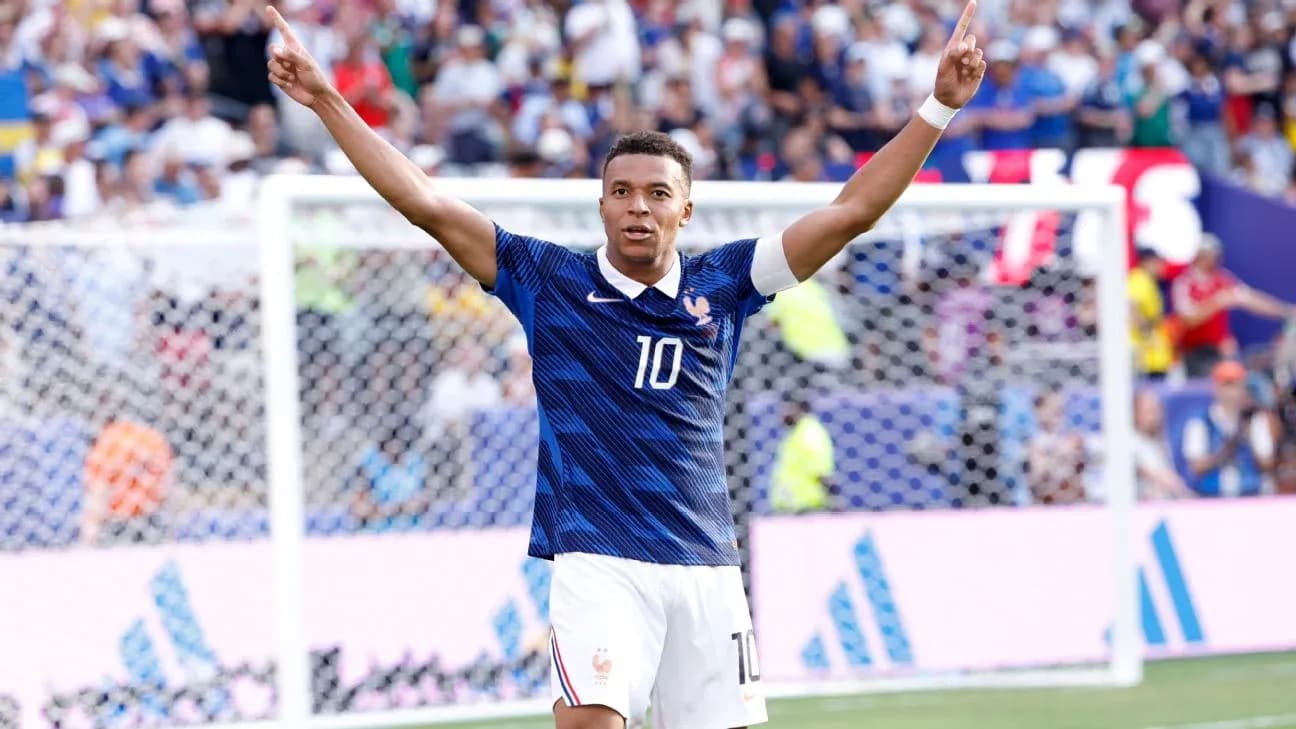
Discipline also played a subtle tactical role. France collected 2 yellow cards (Rabiot for “Foul”, Mbappé for “Violent conduct”), while Spain had 1 (Cucurella for “Foul”). Mbappé’s late booking at 86' reflected mounting frustration in a game where he was largely contained by Spain’s collective structure and could not consistently isolate defenders 1v1. That containment is mirrored in France’s shot profile and meagre xG.
Conclusion
Overall, the statistical verdict is clear: Spain married slightly higher possession with significantly better chance quality and more effective game management. Their 1.63 xG versus France’s 0.3, the 5–4 edge in shots inside the box, and a 3–0 goalkeeper saves differential in their favour all point to a controlled, deserved 2-0 win. France’s semi-final exit was less about volume and more about the lack of incision and verticality in their 4-2-3-1, while Spain’s structure, rotations, and substitutions ensured that once ahead, they never allowed the game to become chaotic.