.svg&w=384&q=75 "naujapitch logo")
Somali Referee Omar Artan Denied Entry to U.S. for World Cup
The World Cup has lost one of its most compelling off-field stories before a ball has even been kicked.
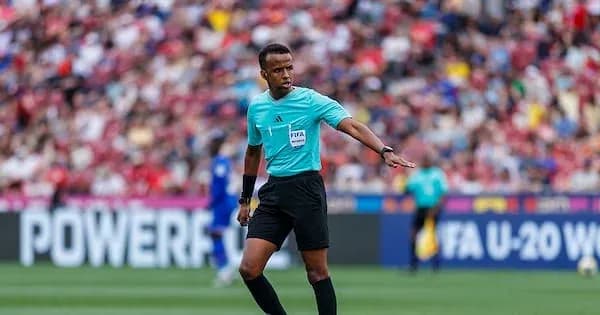
Somali referee Omar Artan, poised to become the first person from Somalia to officiate at a World Cup, has been denied entry to the United States and will not take part in the tournament.
Artan arrived at Miami International Airport on Saturday on a flight from Istanbul, only to be stopped by U.S. Customs and Border Protection (CBP). What followed was routine in name only, and decisive in consequence.
According to a CBP statement, the Somali official underwent “additional inspection,” a process the agency described as a standard part of its vetting when officers need to verify information or determine admissibility. After that inspection, CBP determined that the traveller — identified in the release only as “a referee for the FIFA World Cup” — was “inadmissible due to vetting concerns” and denied him entry.
The statement did not name Artan. It didn’t need to. He is the only World Cup referee from Somalia.
FIFA later confirmed that Artan will not be able to train or officiate at the tournament, drawing a firm line between football’s governing body and the immigration decision that has ended his World Cup before it began.
“FIFA is not involved in host country immigration processes, including visa adjudications, and has been informed by authorities that Mr. Artan’s status will not be changed at present,” the organisation said. “In line with previous FIFA events, a host government ultimately determines who receives a visa and who is admitted into their country.”
There is no appeal on the football side. No late VAR check. Once a host government closes the door, FIFA’s hands stay off the handle.
CBP, for its part, stressed that no one is exempt from its scrutiny — not even those invited to the sport’s biggest stage. The agency underlined that all travellers, “including athletes, coaches and staff,” face inspection and vetting when they arrive in the U.S.
“Admissibility determinations are made on a case-by-case basis using law enforcement, national security, and immigration information available at the time of inspection,” the statement read. “CBP officers have the authority to question travellers, conduct inspections, and determine admissibility consistent with U.S. law.”
No further detail was given on the nature of the “vetting concerns.” The decision, though, has immediate and historic consequences.
Artan stood on the brink of a landmark moment. His appointment to the World Cup would have made him the first Somali to officiate at the tournament, a powerful symbol for a country that has rarely been represented at football’s highest level. He had also just been named 2025 Confederation of African Football (CAF) men’s referee of the year, recognition of a rapid rise through the African and international ranks.
Instead of walking out onto a World Cup pitch, whistle in hand, he finds himself watching from afar, his story abruptly rerouted by forces far beyond the touchline.
The World Cup will move on. The fixtures will be played, the controversies will come from penalty boxes rather than passport checks. But one empty place on the referees’ roster will linger as a reminder: in modern football, even the game’s biggest stage cannot escape the hard edges of border control and geopolitics.