.svg&w=384&q=75 "naujapitch logo")
Rashford and Gordon: Balancing Barcelona's Attack
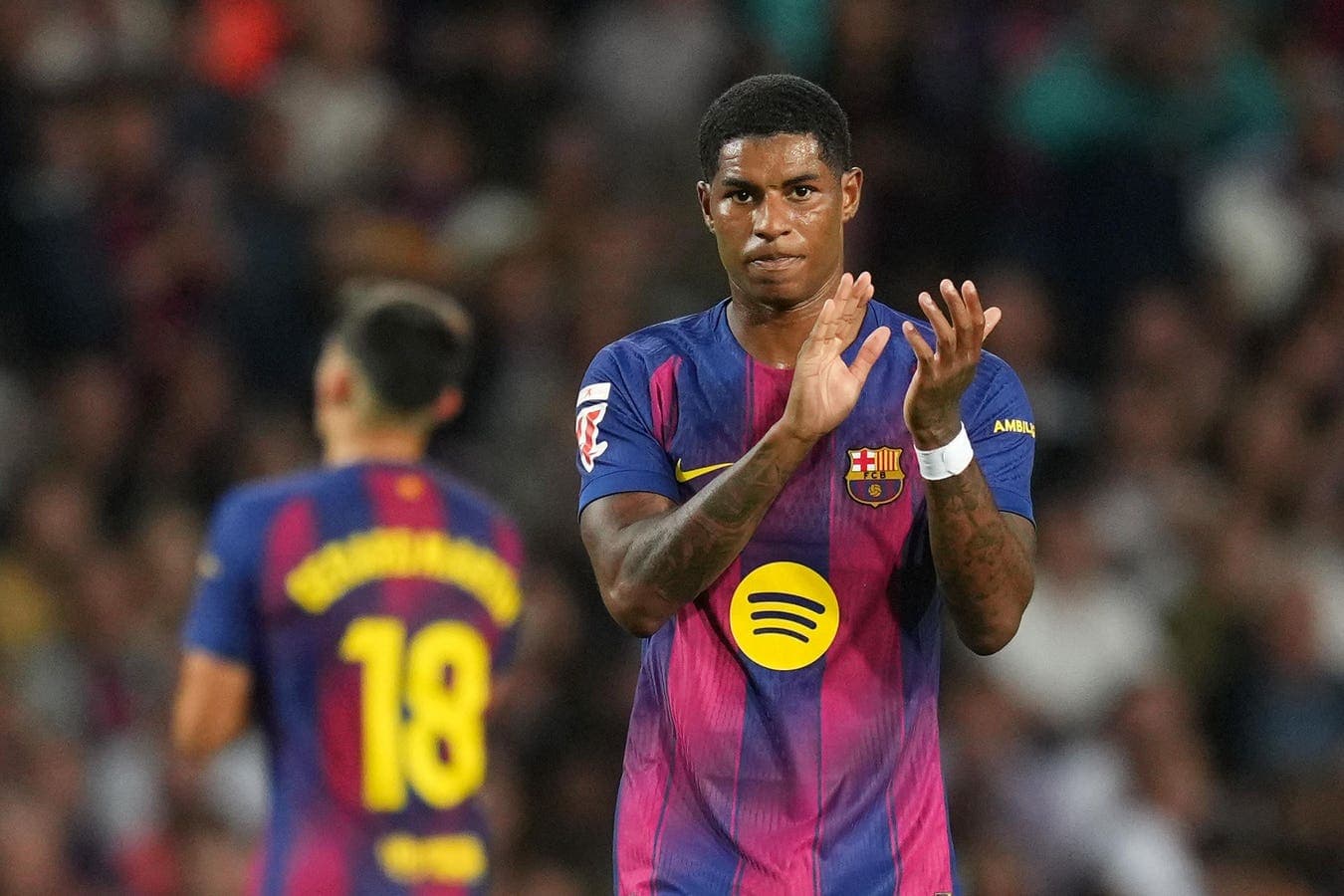
When Anthony Gordon’s plane touched down in Barcelona, the debate started before he had even posed with the shirt. Could there really be room for both the Newcastle winger and Marcus Rashford at FC Barcelona?
Those close to Rashford wasted no time getting their message out. They were relaxed. They knew about the Gordon deal, they said, and they insisted it didn’t change much. The Manchester United forward, after all, is not tied to one patch of grass. Left, right, through the middle – Rashford has spent his career drifting across the attacking line, filling gaps and creating new ones.
The numbers tell a different story. Gordon arrived for a lower fee and, crucially, on a far more manageable wage. Rashford’s salary demands sit in a different bracket entirely. On the balance sheet, the “cheaper” signing might well be the Englishman in black-and-white rather than the one in red.
That financial reality shapes the footballing question. Barcelona like Rashford. They have liked him enough to bring him in on loan, and as his current temporary spell in Catalonia ticks towards its June 30 expiry, his future is again edging towards the spotlight. Manchester United seem destined to wrestle with the same problem once more this summer: a high-earning, high-profile forward whose next step is unclear.
The World Cup could change the temperature. A strong tournament with the Three Lions would push Rashford back into the shop window, reminding Europe’s elite what he can do when his confidence and fitness align. It could also drag Barça back into the conversation. Deco and his recruitment team have not closed the door on another loan, especially if the structure of the deal protects the club’s fragile wage bill.
What keeps Rashford in the frame is not sentiment. It is versatility. Barcelona’s wide options have looked alarmingly thin at times. Raphinha and Lamine Yamal have both spent spells in the treatment room, and when they disappear, so does a chunk of the team’s unpredictability.
Rashford has already shown he can plug those gaps. His sharp, angled assist for Robert Lewandowski against Osasuna, delivered from the right channel, underlined that he is not confined to the left flank. He can isolate full-backs, attack the space behind them, or drift inside to combine. For a coach juggling injuries and suspensions, that kind of flexibility is gold.
Then there is the No. 9 issue. Lewandowski will walk away from the famous shirt at the end of the season, leaving a hole that cannot be filled by sentiment. Barcelona are working on Julian Alvarez as the man to inherit the role, a forward whose movement, pressing and finishing fit neatly into the club’s evolving idea of a modern striker.
So far, every approach has hit a wall. Atletico Madrid and Real Madrid, who share control of the Argentine’s future, have blocked attempts to prise him away. As long as that stalemate holds, Barcelona must look at other ways to cover the central lane.
This is where the Gordon–Rashford equation becomes more nuanced. Gordon offers relentless running, width, and a direct threat from the flank. He stretches games, drags defences back, and opens corridors for others. Rashford, by contrast, can start wide and end up as the spearhead, or simply lead the line from the first whistle. He gives a coach the option to flip the front three mid-game without touching the bench.
Could both coexist? Tactically, yes. Financially, that is a far harsher test. Gordon’s long-term cost profile suits a club still wrestling with economic levers and salary caps. Rashford, on current wages, does not. Any repeat loan would need cooperation from Manchester United and a structure that doesn’t choke Barça’s room to manoeuvre elsewhere in the squad.
For now, the boardroom calculators will keep whirring. On the pitch, the question is simpler. In a season where injuries have exposed the thinness of Barcelona’s attack, how much is that kind of adaptable, proven quality worth – and can they afford to find out twice?