.svg&w=384&q=75 "naujapitch logo")
Netherlands vs Japan: World Cup 2026 Opening Match Preview
Under the giant roof of AT&T Stadium in Dallas, the World Cup spotlight turns to a familiar clash on 14 June 2026 as Netherlands and Japan open their Group F campaigns, each knowing that a winning start can shape their entire tournament. With both sides yet to kick a competitive ball in this World Cup and starting on zero points, this first group match is less about defending a position and more about seizing early control in a group where every goal and point will matter for the Playoffs places noted in their standings.
Season Context
For Netherlands, the standings tell a story still unwritten: rank 1 in Group F with 0 points, 0 goals scored and 0 conceded from 0 matches played. The description of “Playoffs” underlines that their baseline expectation is progression, but with no wins, draws or defeats yet recorded, their campaign is poised on the edge of possibility rather than form.
Japan sit just behind as rank 2 in Group F, also on 0 points with 0 goals for and 0 against from 0 games played. They share the same “Playoffs” designation, meaning their ambitions are formally set at reaching the knockout rounds, but like Netherlands they arrive with a clean statistical slate and everything to prove on the pitch in Dallas.
Form & Momentum
Both teams enter this fixture without a recorded form string in the standings, leaving recent momentum impossible to quantify in numbers. With Netherlands and Japan each showing 0 matches played, 0 goals scored and 0 conceded in the standings, any narrative of attacking fluency or defensive vulnerability would be speculative rather than data-backed, reinforcing that this contest is a genuine reset where reputation must be converted into tangible World Cup performances from minute one.
Head-to-Head Patterns
The most concrete reference point between these sides comes from the World Cup stage itself. On 19 June 2010, Netherlands defeated Japan 1-0 in the World Cup (season 2010, Group Stage - 2, June 2010) at Moses Mabhida Stadium in Durban, a tight contest that underlined how small margins can separate the teams when the stakes are high. That single competitive World Cup meeting, decided by one goal, suggests a historically balanced matchup rather than a one-sided rivalry, and offers a reminder that Japan can contain Netherlands for long spells even when the European side ultimately edges the scoreline.
Tactical Preview
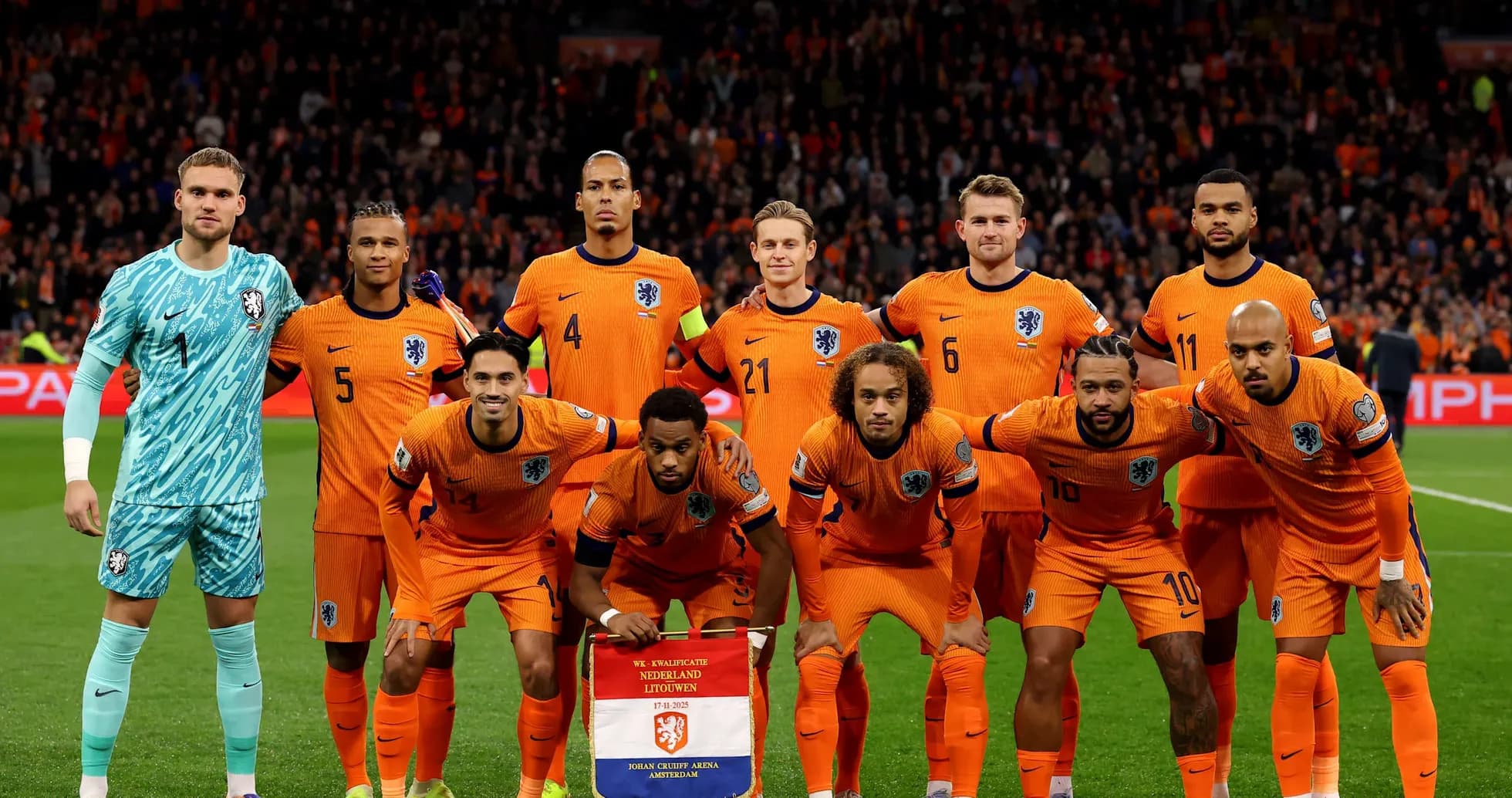
With no World Cup 2026 match statistics yet logged for either side and no formations listed in the team statistics, tactical expectations must lean on squad profiles rather than hard data. Netherlands arrive with a deep group of defenders and ball-playing options such as V. van Dijk, N. Aké, J. Timber and M. van de Ven, supported by midfielders like F. de Jong, T. Koopmeiners and T. Reijnders who are naturally suited to controlling possession and building from the back. That blend points towards a structure built on secure circulation and progressive passing, with the flexibility to shift between a back three or back four depending on how they want to manage Japan’s wide threats, even if no specific formation usage is recorded yet.
In attack, Netherlands have a varied forward line featuring M. Depay, C. Gakpo, D. Malen, N. Lang, B. Brobbey, C. Summerville and W. Weghorst, offering options for both fluid interchanging front threes and more direct, target-man approaches. Without goals or shots data from this World Cup, it is not yet possible to call them prolific, but the sheer number of attackers on the roster suggests an intention to dominate territory and create chances through width and combination play rather than sitting deep.
Japan’s squad construction hints at a different kind of balance. At the back, defenders such as T. Tomiyasu, K. Itakura, H. Ito and Y. Sugawara provide a platform for compact, disciplined defending, while the presence of experienced full-back Y. Nagatomo adds leadership in wide areas. The absence of recorded formations in the statistics means we cannot state their exact system, but the mix of centre-backs and full-backs supports the idea of a back four capable of sliding into narrower or wider shapes to cope with Netherlands’ attacking variety.
Further forward, Japan’s midfield and attacking options – including W. Endo, R. Doan, D. Kamada, A. Tanaka and creative threats like T. Kubo and J. Ito – point towards a team comfortable transitioning quickly once possession is won. With no goals for or against and no form data in the standings, we cannot label them clinical or fragile statistically, yet the squad list suggests they will look to exploit spaces behind Netherlands’ advanced full-backs with sharp runs from D. Maeda, A. Ueda, K. Goto and others. In a neutral-venue setting at AT&T Stadium, this could evolve into a contrast of Netherlands’ patient construction against Japan’s more vertical surges, even though the numbers from this World Cup are still blank.
Statistical Snapshot
- Competition: World Cup, season 2026 — 14 June 2026.
- Venue: AT&T Stadium, Dallas.
- Prediction: Win or draw — Double chance : Netherlands or draw.
- Win Probabilities: Home 50% / Draw 50% / Away 0%.
- Model: Netherlands 0% — Japan 0%.
Betting Verdict
The prediction model leans clearly towards Netherlands avoiding defeat, with a “Win or draw” call and a double-chance advice on Netherlands or draw, even though the total comparison index sits at 0% for both teams. With no current World Cup form or goal data for either side and only a single historical World Cup meeting in 2010 ending 1-0 to Netherlands, the edge is grounded more in perceived squad strength than recent statistics. Match-winner odds cluster around roughly 2.00 for the home designation (Netherlands), roughly 3.50–3.60 for the draw and roughly 3.60–3.90 for Japan, suggesting bookmakers also see the European side as favourites but leave room for a tight contest. In this context, the double-chance Netherlands or draw angle aligns with both the model’s caution and the expectation of a competitive, low-margin opener in Dallas.