.svg&w=384&q=75 "naujapitch logo")
Michael Olise: The Journey from Hayes to World Cup Stardom
On a small estate in Hayes, squeezed between brickwork and parked cars, there is a strip of grass that may as well be a training annex for Clairefontaine now. This is where Michael Olise, seven years old and lost in the game with his brother Richard, first began to shape the talent that is now dragging France through a World Cup and into Ballon d’Or conversations.
“Football in these conditions, it’s just freedom,” he told L’Équipe last month. No drills. No cones. Just the ball, the concrete, the patch of green. “It was simply the pleasure of playing football. I just loved it.”
Those early days are etched in the memory of Sean Conlon, one of his first coaches at Old Isleworthians in west London. Conlon would visit the family home and always find the same scene.
“I would go over to his house and he would be practising outside with Richard,” Conlon recalls. “That little estate probably really aided him; there weren’t a lot of cars but it had a lot of concrete open space and then a small green. He’d just be practising out here all the time, obsessed with football.”
From that obsession grew something rare. When Conlon first saw him at six, playing for Hayes, it was not the tricks that struck him. It was the way the boy moved.
“He glides around the pitch: very graceful, perfect co-ordination, everything effortless. The way he moves today was how he moved when he was six. That’s something he’s been born with. People say he’s the best player England has ever developed.”
England, though, do not own him. They never really tried.
Rejected, released, reborn
The system noticed him early. Conlon had coached at Chelsea and, as soon as Olise was old enough, the club swept him into their academy at nine. The talent was obvious enough that Manchester City took him next, placing him in Cole Palmer’s age group, a year behind Phil Foden.
Then came the first great twist. City released him at 16. Chelsea had already done the same. The boy with the glide and the street-born freedom was suddenly surplus.
He went back to Conlon, who runs the We Make Footballers academy, searching for another route into the professional game. That route turned out to be Reading, where academy scout Brendan Flanagan had been tipped off.
Inside the club, doubts swirled.
“There was a lot of scepticism from various members of staff at Reading that he would be a bad egg,” Flanagan says. “They said: ‘He’s been released by Chelsea, by Man City. We shouldn’t be bringing him in. He’ll be a problem.’ I said: ‘Look, let’s just get the kid in and make our decision.’”
Conlon heard the same murmurings.
“All the other scouts were: ‘He’s just come out of Manchester City, he’s just come out of Chelsea, why have they not kept him on?’ They were half and half. They could see him and say: ‘Why are we not taking this talent?’ But Reading were the ones that committed.”
Any notion of a “problem” evaporated almost immediately. On his first day, Olise phoned Flanagan from Reading station, trying to navigate the shuttle bus that ferried London-based youngsters to the training ground.
“On his first day I got a call from him at the station and he was asking: ‘Where do I need to pick the bus up please?’” Flanagan says. “I directed him to the shuttle bus but everything was ‘please’ and ‘thank you’ and I thought to myself: ‘This ain’t a bad kid. He’s just a kid who’s a bit misunderstood, different.’
“And we never had a problem with him. He wasn’t ever a bad lad. He was always an intelligent, quiet lad who just expressed himself a bit differently. What wasn’t right for them [City and Chelsea] ... well, we’re just little old Reading. We can work with these kids.”
They did more than work with him. They unleashed him.
The Sparta Prague moment
Olise climbed quickly to Reading’s under-21s. The day his future truly announced itself came in a European Under-21 Cup match against Sparta Prague. Flanagan arrived at half-time. Olise, 17, sat on the bench.
“I sat in front of Hayden Mullins, who used to work for us and who I got on well with,” Flanagan says. “Michael came on with 17 minutes to go. Within five minutes Hayden leaned over to me and said: ‘Who the fuck is that?!’ I just started laughing. And Hayden said: ‘Come on then, tell me, where did you find this one?’ So I explained the story ...”
The impression stuck. “He was absolutely unbelievable that day,” Flanagan adds. “Hayden and I shook hands at the end and said: ‘This kid will play for the first team by the end of the season.’”
They were right. A few weeks later, Reading’s then manager, José Gomes, pulled him into first-team training to make up the numbers. The impact was instant.
“That Saturday he was on the bench and he made his debut soon after. The manager obviously saw him and thought: ‘This kid is unbelievable.’”
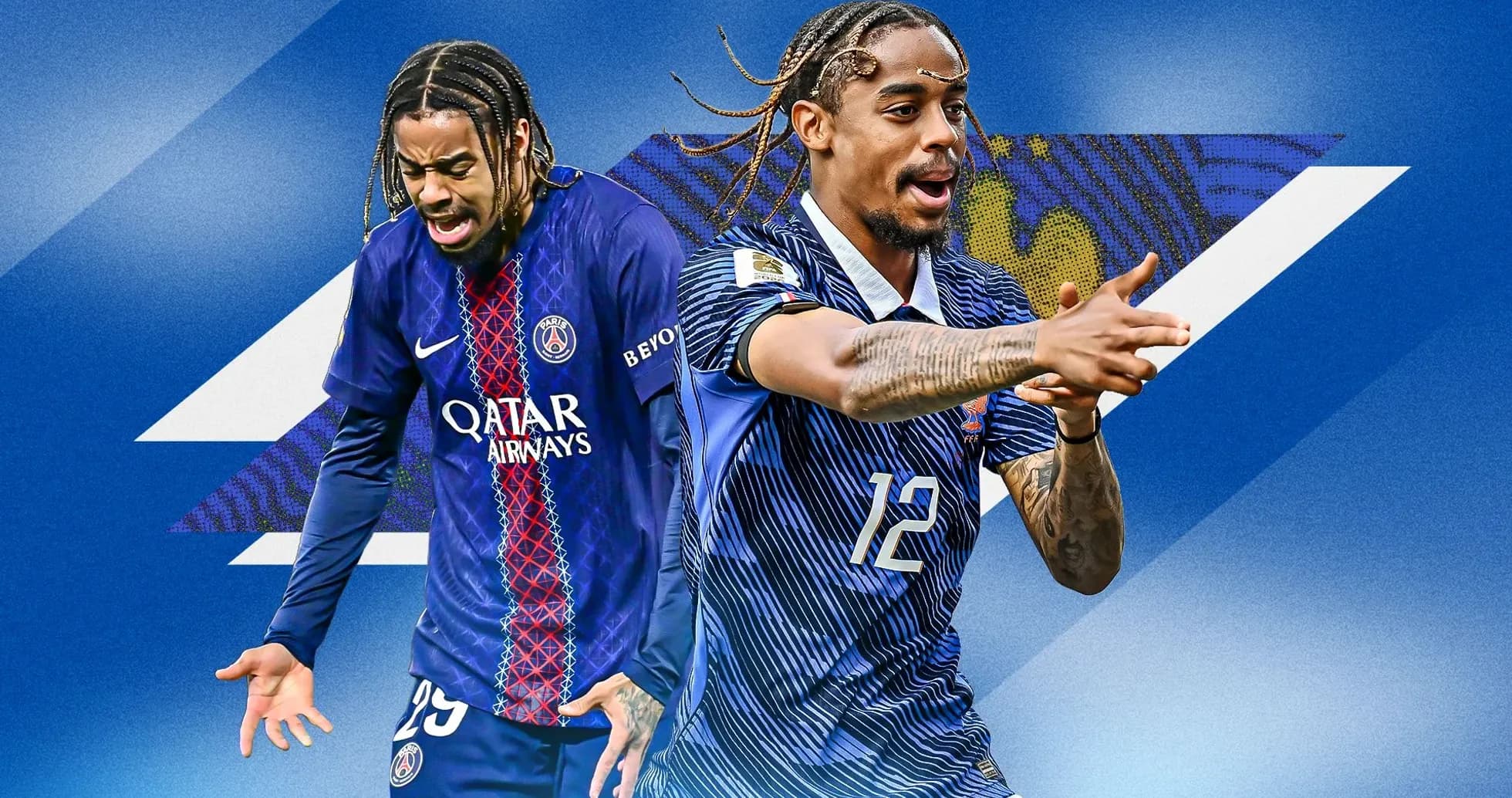
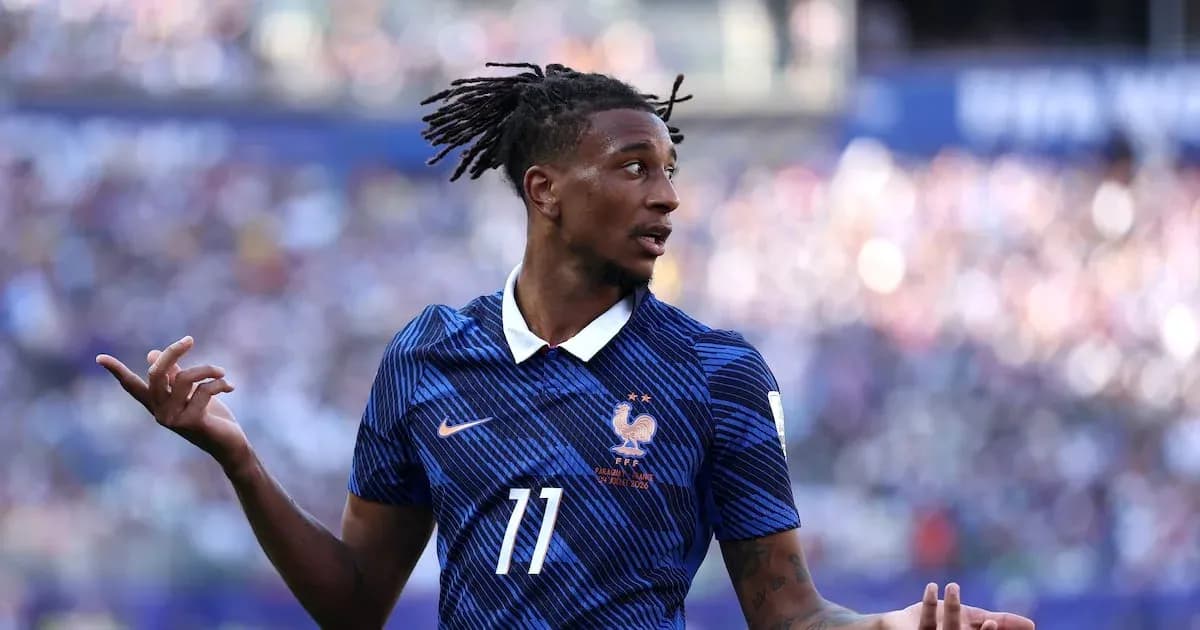
From a Hayes estate to Championship football in a blur. From there, the path bent further upwards, to the Premier League, to the France set-up, to the World Cup, where he has more assists than anyone else at the tournament: five and counting. The boy who once couldn’t stick at Chelsea or City now dictates games on the biggest stage.
Four nations, one choice
The story is not just about missed chances in club academies. It is about a national-team blind spot.
Olise was born in England and raised in London. His mother, Mina, is French Algerian. His father, Vincent, is British Nigerian. The map of his identity stretches across four flags.
“I actually come from four countries,” he told Bayern Munich’s website last season. “France, Algeria, Nigeria and Great Britain. I consider myself very lucky to possess these four parts, which all enrich me.
“I’ve developed attachments in all my countries. When I was growing up in London, we regularly visited Algeria, Nigeria and France. My dad always spoke English with me at home, my mum, French.”
England, though, never made him feel essential. Not when it mattered.
“We weren’t as attractive a club,” Flanagan says of Reading’s standing at the time. “It’s slightly changed now, but back then, for England, generally, you had to come from Chelsea, Manchester City, Manchester United and Arsenal.”
France did their homework. They learned of his French connection, reached out, and called him into their under-18s. The door opened, and he walked through. Only then did England stir, making an approach for the under-20s.
By then, the decision was effectively made. “He was happy where he was,” Flanagan says.
The timing hurt England. They were already swimming in attacking talent in his age bracket: Palmer, Bukayo Saka, Morgan Rogers, Anthony Gordon, Noni Madueke, with Jude Bellingham and Jamal Musiala, then at Chelsea and playing for England, a year younger. The revolution of elite academies, launched in 2012, had flooded the pipeline.
Yet here is the twist that will sting the FA. The most creative player at this World Cup, the one bending games with vision and disguise, was born in London, educated in English academies, and is now feeding Kylian Mbappé in a France shirt.
Premier League academies have taught the world. England are watching one of their own creations flourish for someone else.
A trajectory that never flattened
Flanagan still sounds slightly awed when he talks about where Olise has taken his game.
“Could I see he would reach the levels that he’s reached? I don’t think anyone could,” he says. “Some kids do look like they might be a Ballon d’Or contender at 16 and then kind of level out. But Michael was on a trajectory that went up and up and up, and he still hasn’t levelled off. He just seems to be getting better and better.
“He’s always had a picture in his head, saw things quicker than anyone else and had the ability to find a way to make the pass. But he’s just gone to another level.”
Conlon watches the World Cup with a different kind of disbelief. The coach who once laid out cones for under‑8s now sees one of his former pupils orchestrating a World Cup.
“It’s crazy,” he says. “With the under-8s, we say to the kids: ‘One day you’re going to win the World Cup. One day you’re going to win the Champions League.’ This is why you have to have these standards. You preach it and now we’ve actually had someone go and do it.”
On that estate in Hayes, the message suddenly carries more weight. The dream is no longer abstract. It has a name, a face, a left foot.
England v France, heart v head
All of which leaves an awkward question for those who believed in him first. What happens if England meet France in the World Cup final and the kid from Hayes stands between his birthplace and the trophy?
Flanagan does not pretend to have an answer.
“I’m going to be sat on the fence,” he says. “I want Michael to do well, but I want England to win as well. So I probably won’t watch the game and stay out of the way.”
Somewhere in west London, on that small patch of grass between the houses, the ball will roll again. Another child will cut in off the flank, head up, seeing passes no one else can. And the question will hang in the air: next time, will England recognise what they’ve got before it walks away?