.svg&w=384&q=75 "naujapitch logo")
Gary McAllister Advocates for Liverpool to Reunite with Harry Wilson
Gary McAllister knows what it means to arrive at Anfield on a free transfer and make it count. Now he believes Liverpool should repeat the trick – this time with a familiar face.
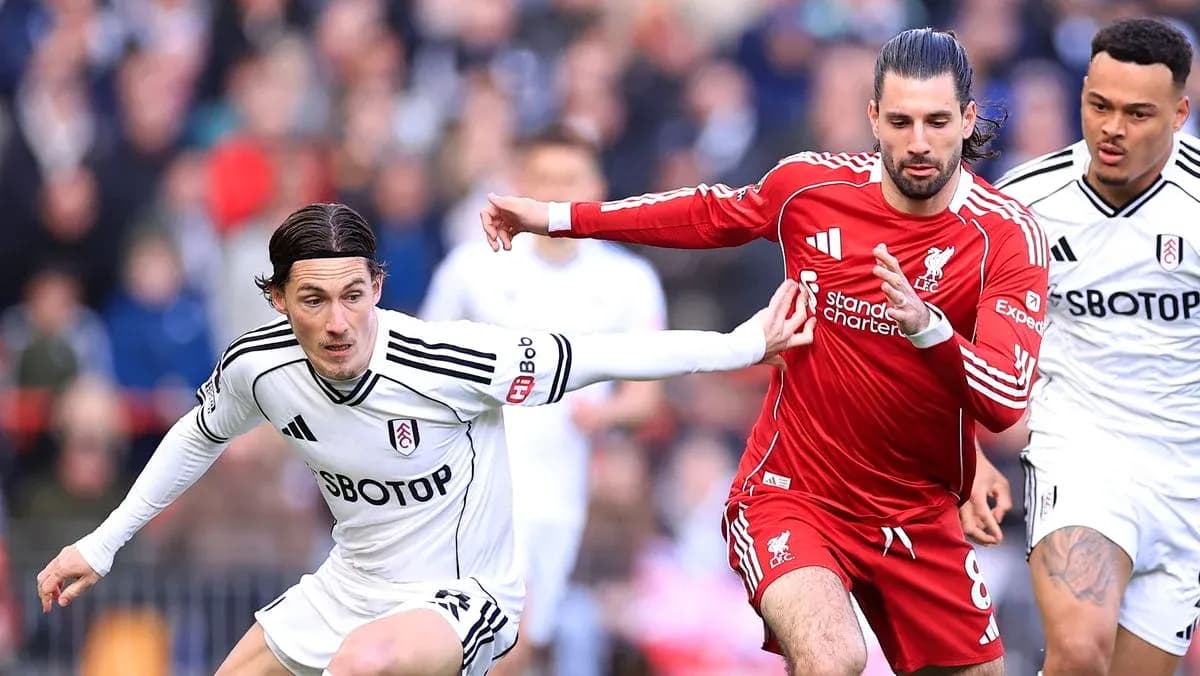
Harry Wilson, once a bright Academy hope on Merseyside, is set to leave Fulham at the end of the month after failing to agree a new deal. Five years, 187 appearances, 36 goals and 46 assists at Craven Cottage have turned him into a proven Premier League performer. They may also have brought him back into Liverpool’s orbit.
McAllister thinks the club cannot afford to ignore that possibility.
A Liverpool education, a Premier League finish
Wilson’s story is well known around Kirkby. He came through Liverpool’s youth system, highly rated and technically polished, but found the first team locked behind a world-class frontline. In the end he managed just two senior appearances in red, his path instead running through loan spells at Crewe Alexandra, Hull City, Derby County, Bournemouth and Cardiff City before he finally settled at Fulham.
What he took with him, McAllister insists, never left.
“He’s been coached in the Liverpool way, and he always caught the eye when you were around Anfield,” the former midfielder said, recalling how Wilson stood out even among a talented crop of youngsters. The sharp left foot, the vision, the work ethic – all visible then, all refined now in west London.
At Fulham, Wilson has become far more than a set-piece specialist or a highlight-reel shooter. His numbers show a wide player who creates and finishes, who presses and covers, who understands the demands of a possession-based side. McAllister calls him “a very complete player” now. The evidence backs that up.
A market opportunity Liverpool can’t ignore
This summer, the timing is striking. Wilson is 29, in his prime, and available on a free. Tottenham Hotspur, Aston Villa and Everton are all strongly linked, sensing value in a winger who has delivered consistently in the league and on the international stage.
Liverpool’s need is obvious. Mohamed Salah has departed, taking with him a decade of goals and reliability from the right. Hugo Ekitike, signed to help reshape the attack, is facing a long-term injury. The right side of the front line, once the most settled position in the squad, suddenly looks thin.
McAllister, who himself arrived as a free transfer in 2000 and became a key figure in Liverpool’s treble-winning season, believes his old club should be “in the conversation” for Wilson as they rebuild that attacking unit.
The logic is clear. Wilson knows the club, the environment and the expectations. He understands the pressing demands and the technical standards. He would not require a fee, only wages and trust. For a squad adjusting to life after Salah, that kind of low-risk, high-experience option is rare.
A Wales regular, and a player at his peak
Wilson’s development has not been confined to club football. He has become a mainstay for Wales, winning 69 caps and featuring in all three of their matches at the last World Cup. On the international stage, he has shown the same qualities that first caught Liverpool’s eye: sharp movement, clever passing angles, a willingness to run and to work.
McAllister’s verdict is blunt: “Without a shadow of a doubt, Harry is a top-end Premier League player now.” That assessment carries weight from someone who has watched him from teenage prospect to established professional.
For Liverpool, the question is not whether Wilson is good enough for the league. He has already answered that. The question is whether a club searching for smart solutions in attack is prepared to look back to one of its own.
Tottenham, Aston Villa and Everton are circling. Wilson’s next move will tell us plenty about how the market values an experienced, versatile winger entering his peak years.
It may also reveal how bold Liverpool are prepared to be as they reshape the right side of their attack in a post-Salah era.