.svg&w=384&q=75 "naujapitch logo")
England's Thrilling Victory Over Croatia Raises Defensive Concerns
England 4–2 Croatia in the book, four goals on the board, attacking talent purring. Yet as the dust settled, the soundtrack from the England camp and its former greats was not one of pure celebration. It was scrutiny. Particularly of what happened at the other end.
Rooney’s cold eye on England’s first lapse
Wayne Rooney has seen enough World Cup football to know that scorelines can flatter. For him, Croatia’s first goal cut straight through the gloss.
“We could do so much better with the first goal,” the former England striker said, dissecting the move piece by piece.
Jude Bellingham, normally so sharp, was “a bit flat-footed” as the ball was turned over. John Stones, back at the heart of the defence, went to ground when he didn’t need to. Jordan Pickford, well positioned initially, chose to gamble rather than hold his shape. That single decision dragged Nico O’Reilly across to cover, opened up the edge of the box and allowed Croatia to work the ball into a neat set, a clean cut-back and a tidy finish.
From a Croatian perspective, it was a slick, well-taken goal. From Rooney’s, it was preventable on three or four different levels.
He even turned the spotlight on Pickford, despite acknowledging the speed of the move. The England goalkeeper got a full hand to the shot. For Rooney, that alone will nag at him.
“I’m always critical of goalkeepers,” he admitted. “If Jordan is getting a hand on it like he does then he’ll be disappointed.”
England led, England won, but the detail of how they conceded clearly jarred with one of their greatest forwards.
Richards: England “played into Croatia’s hands”
Rooney wasn’t alone. Micah Richards, watching the same game from a defender’s perspective, reached a similar conclusion: both Croatian goals should have been snuffed out long before the ball hit the net.
“If you look at the goals Croatia scored, both could have been avoided,” he said. England, in his view, invited trouble.
By dropping that little bit deeper and allowing Croatia’s technicians the time and space they crave, England gave the game exactly the texture the opposition wanted. The intensity was there – “in terms of energy England were all over Croatia” – but the starting position wasn’t.
Push 10 or 15 yards higher, Richards argued, and those situations never materialise. The duels happen further from Pickford’s goal. The risk shrinks.
What encouraged him was the bench. Fresh legs, fresh energy, genuine options to change the tempo late on. That, he believes, will be crucial as the tournament hardens.
Stones, Konsa and a dilemma for Tuchel
All of which leaves Thomas Tuchel with a decision before Ghana.
He backed John Stones and Ezri Konsa at the heart of his defence against Croatia. On paper, it is a pairing of calm, ball-playing authority. In reality, it looked like a partnership still searching for rhythm.
Stones, short of minutes at Manchester City last season, saw plenty of the ball here. He took responsibility in the build-up, stepped into midfield, tried to dictate. That always carries risk, and Croatia were quick to pounce when England’s structure around him wasn’t perfect.
Alongside him, Konsa – a regular under Tuchel – showed flashes of the composure that earned him that trust. There were clean interventions, moments where he read danger early. But as a unit, the two centre-backs never quite settled. Two first-half concessions underlined that.
So Tuchel has a choice. Persist with Stones and Konsa, betting that familiarity will breed security, or bring in Marc Guéhi to steady the axis for Ghana. Change now, or double down and ride out the teething problems.
The scoreboard says four goals for, two against. The tape tells a more nuanced story.
Gordon’s grounded debut
Amid all of this, Anthony Gordon lived out a childhood dream.
“It has been a crazy couple of weeks and that just topped it off,” the England forward told BBC Radio 5 Live after his World Cup debut. First World Cup game, first taste of the biggest stage. He called it “special” – then immediately pushed the spotlight away.
“It is not about me. Self-centredness is a disease and I don’t want to be a part of that,” he said. The message was clear: this is a collective, not a personal showreel.
He pointed to Marcus Rashford, Bukayo Saka and Morgan Rogers as proof. All came on, all made an impact. All fed into the same idea of a squad built to share the load.
Gordon did not gloss over the struggle either. The first half, he admitted, was “difficult”. Croatia’s goal “came from nowhere and stunned us a little bit”. The response, though, impressed him. England emerged after the break with more purpose, more bite, and eventually got what they wanted.
“They were really good and that can’t be underestimated when you look at the game,” he added, refusing to let the scoreline rewrite the challenge Croatia posed.
Rashford’s reminder – and a looming club decision
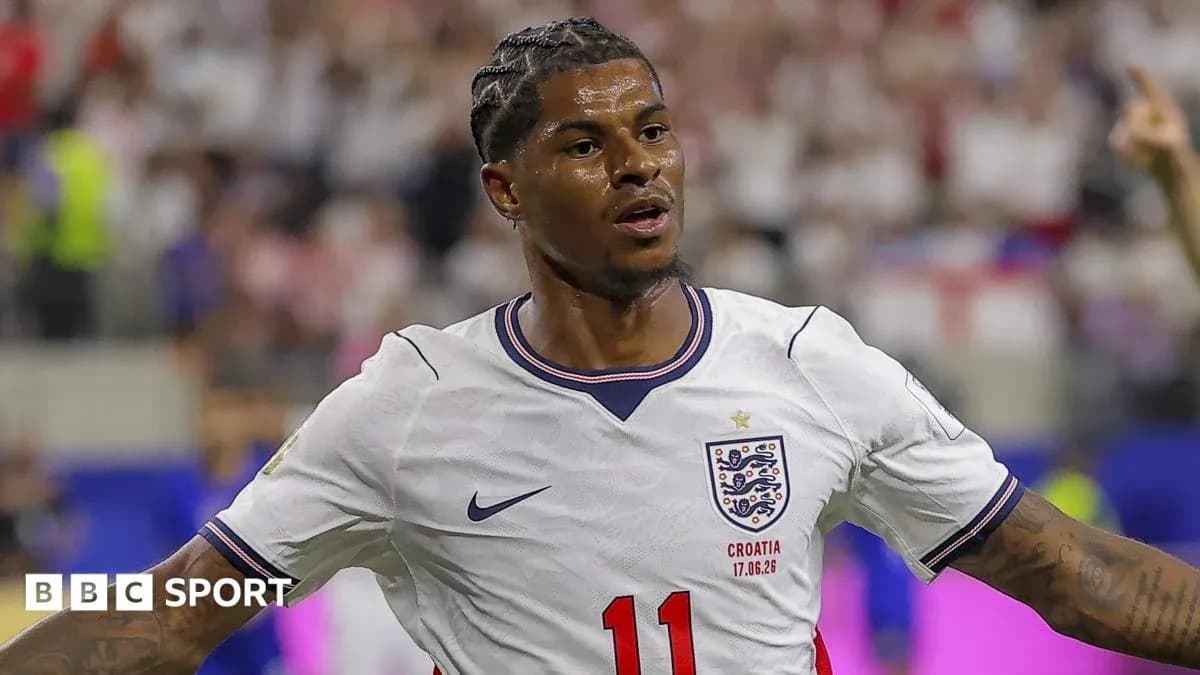
For Rashford, the night carried a different kind of weight. A goal, a bright cameo, and a timely reminder of what he still offers at elite level.
On 1 July, he officially reverts to being a Manchester United player. Barcelona have decided against triggering a £26m option to buy the 28-year-old after his loan spell. United’s stance is blunt: they want £40m, and they will not consider another loan to the La Liga club.
Rashford’s £325,000-a-week contract, with two years remaining, narrows the market. Only a handful of clubs can realistically step into that conversation. United cannot force his hand, and he cannot conjure buyers from thin air.
For now, the plan is simple. After his mandatory three-week break post-World Cup, United expect him back in time for a training camp in the Republic of Ireland. Between now and then, the phones will keep ringing, the numbers will keep being crunched.
Performances like this one for England help. They remind everyone – suitors, sceptics, perhaps even Rashford himself – of the player behind the contract and the headlines.
England walk away from a 4–2 win with confidence in their firepower and doubts about their foundations. Tuchel must decide how much to change before Ghana. Rashford must decide where he wants his club career to go next. One game in, the scoreline flatters, the questions sharpen, and the tournament already feels like it’s starting to bite.