.svg&w=384&q=75 "naujapitch logo")
Manchester United's Midfield Dilemma: Is Manu Kone the Right Fit?
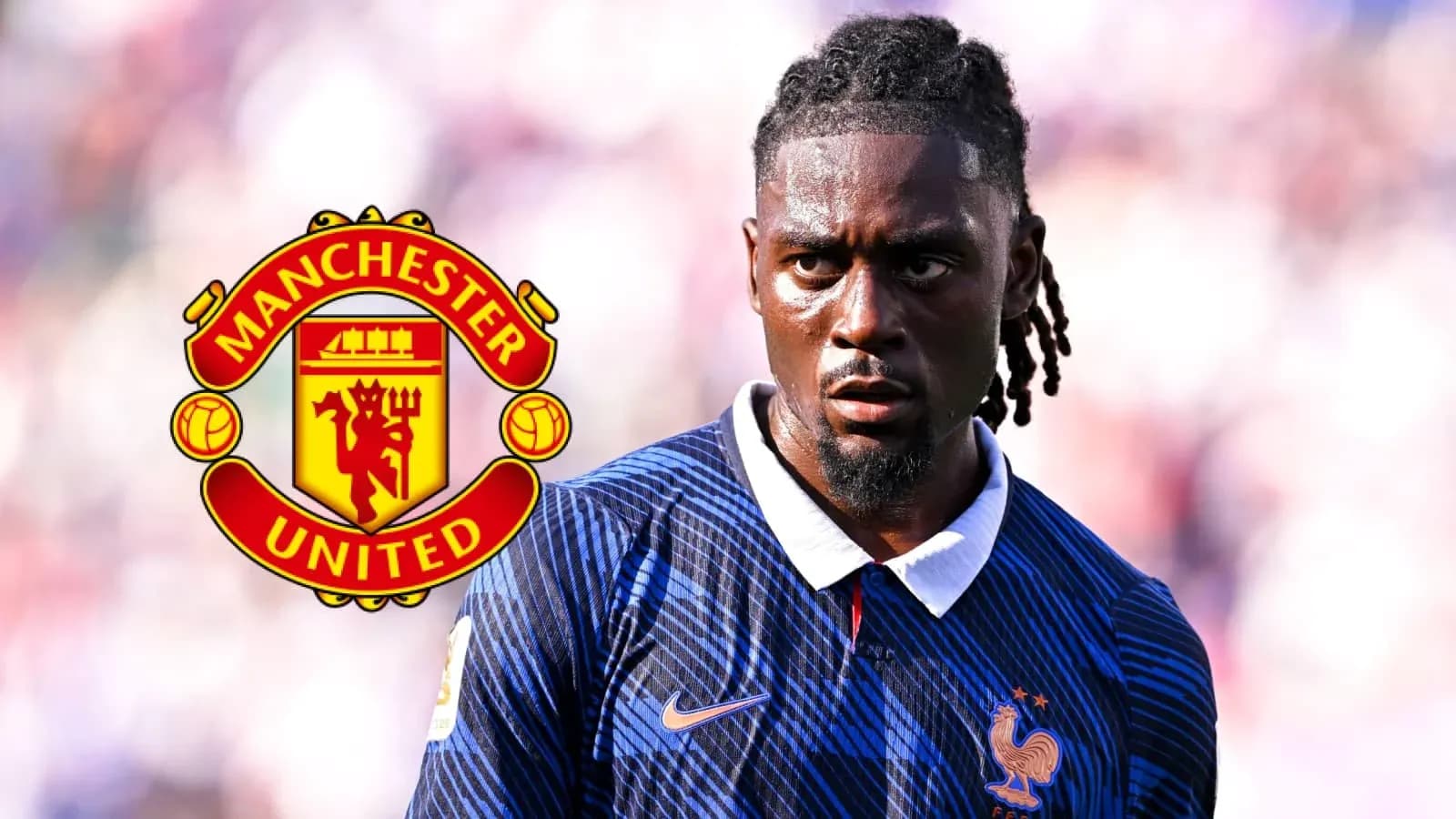
Manchester United’s search for a holding midfielder has reached the crucial stage, but if they think Manu Kone is the answer to that specific problem, they’re looking in the wrong place.
United have already moved quickly this summer. Andrey Santos and Youri Tielemans have arrived to plug the gaps left by Casemiro’s departure on a free and Manuel Ugarte’s serious injury. On paper, the numbers are back where they need to be. Premier League experience? Box ticked. Depth? Box ticked.
The shape of the midfield, though, still isn’t right.
Michael Carrick needs a specialist to sit in front of his defence. He needs, in essence, a version of himself: a player who lives in that space, screens the back line and dictates the game from deep. Carrick was never a destroyer, more a conductor, but his office was always the same patch of grass in front of his centre-backs.
That distinction matters, because “defensive midfielder” covers a lot of ground. It’s where the risk with Kone really lies.
A midfielder miscast
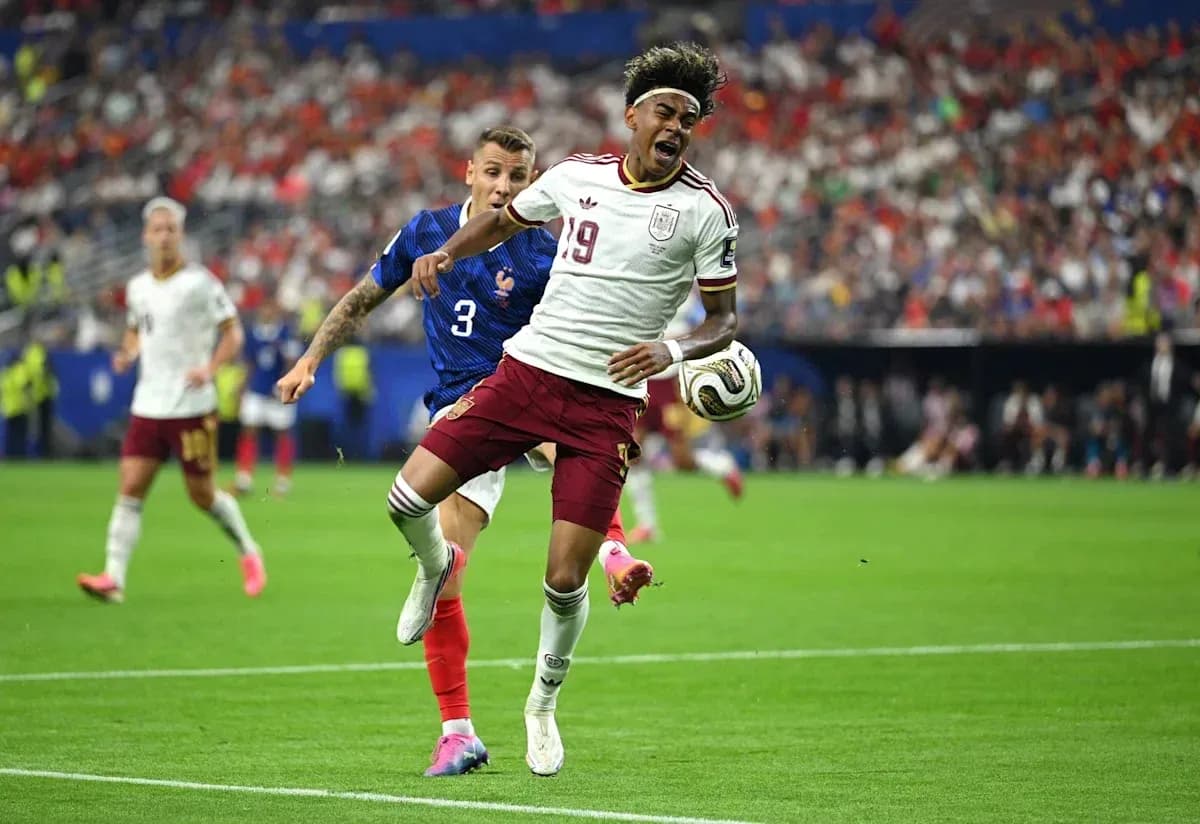
Kone has caught the eye for France at the World Cup, the kind of tournament that can distort reputations. In his case, it’s actually a fair reflection of his quality. At 25, he’s entering his prime after five straight seasons in Europe’s top five leagues: three with Borussia Monchengladbach in the Bundesliga, two with Roma in Serie A.
Roma see him as a prize asset. When he arrived on deadline day in the summer of 2024, he injected energy and drive into their midfield. But he didn’t transform them by sweeping up attacks or anchoring the play.
He did it by running.
Kone’s standout trait in his debut Serie A season was his ball-carrying. He drove through lines, shrugged off challenges and dragged his team up the pitch. He looked like a modern No 8, not a classic No 6.
His role shifted under Gian Piero Gasperini in year two. The assumption was obvious: high-intensity, man-to-man coach, dynamic all-action midfielder – perfect marriage. It didn’t quite work that way.
Gasperini often asked Kone to drop into the defensive line during build-up, tucking in as an auxiliary defender rather than surging forward. The Frenchman still had a good season, but his influence became more muted, more subtle. Less rampaging, more restrained.
That’s the warning sign for United. You only get the best version of Kone when you let him roam box to box. Ask him to sit and hold, and you’re paying a premium to blunt his most dangerous weapon.
United have been here before. The Fred–Scott McTominay double pivot was a long-running experiment in square pegs and round holes, two willing midfielders asked to do jobs that never quite suited them. The result was a dysfunctional partnership that left the club chasing a solution ever since.
Casemiro brought moments of control and authority, but he arrived at 30. The fantasy scenario was always Casemiro at 25, not the veteran version United actually signed in 2022. Ugarte’s Ligue 1 tackling numbers at PSG suggested he might be that answer; in United’s system, he hasn’t been.
Now the plan seems to be clear: Tielemans and Santos as the more advanced options, Kone earmarked as the deepest midfielder. He can play there. He has the physicality and the defensive tools to “do a job”.
But it wastes what he does best.
What Kone really brings
The numbers back up the eye test. Last season, Kone ranked in the 78th percentile of Serie A midfielders for the average distance of his progressive carries – and that was in a campaign where he wasn’t allowed to push on as often.
He’s not a luxury player. He can tackle, he can press, he can compete. But at his peak, he’s a central midfielder who contributes defensively, not a pure shield in front of the back four.
There are flaws. If he’s to convince as a true box-to-box presence, his shooting has to improve. Four goals in 82 games for Roma tells its own story. In the final third he often looks hesitant, lacking the conviction to finish moves he starts.
Gasperini put it bluntly after Kone’s first goal of the 2025-26 campaign in December: if he scored more, he’d already be at a different level, playing somewhere else. Since that strike, he has played 22 more times for club and country and scored only once. The numbers reinforce the perception that he’s a defensive midfielder. The reality is more nuanced.
There’s also work to do off the ball when his team have possession. Too often last season he failed to drift into the right pocket to offer a passing lane, or he clogged up space and blocked a teammate’s route instead. As a lone holding midfielder, positional detail isn’t optional; it’s the job.
The price of potential
All of which feeds into the key question: what is that profile worth in this market?
Goal contributions no longer tell the full story for midfielders, but they still shape fees and expectations. Elliot Anderson delivered fewer than 10 goal contributions last season and just moved to Manchester City for £116m. Mateus Fernandes, another who doesn’t live off goals and assists, joined Tottenham for £85m after United cooled their interest.
Roma are likely to ask for £50m or more for Kone. The World Cup will only have inflated his value. They rejected around £38m from Inter last year, and they know they’re negotiating from a position of strength.
Any club paying that kind of money needs clarity. They’re not buying a guaranteed source of goals. They’re not buying a pure holding midfielder. They’re buying a dynamic, driving central midfielder with upside, but also clear areas to polish.
For United, their 4-2-3-1 does at least offer a possible workaround. Kone could operate in a double pivot with Tielemans or Santos. One goes, one stays. The responsibility shared, not dumped on a single player’s shoulders.
We’ve seen the template already. For France at the World Cup, Kone has lined up next to Adrien Rabiot against Iraq, Paraguay and Morocco, and alongside Aurelien Tchouameni against Norway and Spain. Both partners are comfortable sitting when Kone surges. At Roma, Bryan Cristante often provided the balance, even if the Italian himself pushed on at times.
For United, the blueprint is simple to draw, harder to execute: when Tielemans roams, Kone holds. When Kone drives, Tielemans anchors. If one of them ends up as a permanent sitter, the equation stops working.
Is England even the right destination?
United are not alone in their interest. Atletico Madrid have hovered earlier in the summer. Arsenal’s name has been mentioned. Liverpool, who tracked Kone during his Monchengladbach days, could yet circle back.
There are clubs where his profile might click more naturally. At Arsenal, a fixed anchor such as Martin Zubimendi would free Kone to play higher, in a similar way Declan Rice has been encouraged to step forward. But Arsenal’s gaze seems to have moved towards Bruno Guimaraes.
Liverpool might be the more realistic alternative. They are also hunting a No 6, but if Andoni Iraola leans into a 4-2-3-1, Kone could dovetail with someone like Ryan Gravenberch, sharing the load rather than shouldering it alone.
What’s not in doubt is the player’s quality. Kone is powerful, technically sound and brave on the ball. He has limitations, but he also has time to fix them. If this is the summer he crosses into the Premier League, someone will land a serious midfielder.
Whether they unlock him or miscast him will decide if that £50m looks like smart business or another expensive lesson in getting the profile wrong.