.svg&w=384&q=75 "naujapitch logo")
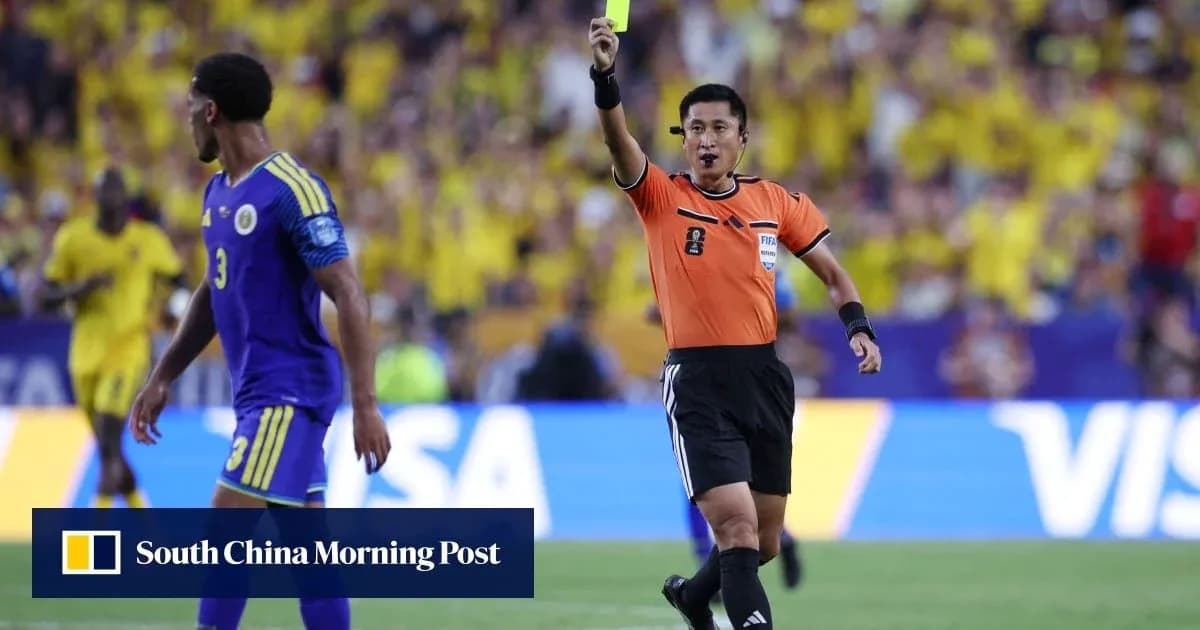
Ma Ning's World Cup Journey and Message to Chinese Fans
Chinese referee Ma Ning has blown his final whistle at this World Cup, slipping out of the spotlight before the semi-finals but leaving with a story that clearly matters far beyond the tournament.
Fifa’s final list of match officials for the closing stages did not include Ma, his assistant referee Zhou Fei, or video assistant referee Fu Ming, whose own campaign ended last week. With their departure, China’s on-field presence at this World Cup is over.
For Ma, 47, it marked the end of a long climb. He chose to say goodbye in his own words, posting a video on Chinese social media on Monday to close the chapter.
From the outside, he is just another name on a referees’ roster. In his own telling, he is a man who has spent two decades chasing a place on this stage.
“From the campus to the World Cup stage, from youthful ignorance to composure and calm, I have spent 20 years proving the meaning of persistence,” he said. The line carried the weight of someone who knows how long the road is for a referee from a non-traditional football power.
At 47, he knows the questions about age. He addressed them head-on: “At 47, many people say it is too late, but I always believe that as long as there is faith, we can turn the impossible into the possible.”
That belief has underpinned a career built far away from the glamour that follows star forwards and celebrity coaches. Referees live in the margins: noticed when things go wrong, rarely celebrated when they get everything right.
Ma used the farewell not just to talk about himself, but to pull the camera back to those who carried him there. He reserved special thanks for his family, describing their support as the force that kept him “resolute and fearless” as he chased his dreams. For a profession that demands constant travel, relentless scrutiny, and the mental strain of every tight call, that backing is no small thing.
Then he turned to the people in the stands and behind the screens.
Chinese fans have not always gone easy on him. He knows the nickname that once followed him around domestic football: the “card master,” a reference to his readiness to reach for yellow and red. He chose to confront that too, and to credit supporters for the way the relationship evolved.
“From teasing me as the ‘card master’ to recognising my officiating standard, it is your rationality and tolerance that have shown me the most lovely side of Chinese football,” he said. That line cut through the usual distance between referee and fan, framing supporters not as a problem to manage, but as partners in understanding the game.
“You are not only watching the games,” he added, “but also truly understanding the value of refereeing.”
It was a rare moment: a referee, often the lightning rod for anger, instead speaking directly to a national audience about respect, learning, and the craft of officiating.
China’s World Cup story this time will not be written in goals or knockout drama. It ends in the officials’ room, with three referees packing their bags before the final week. Yet in Ma Ning’s farewell, there is something that lingers — a reminder that for Chinese football, presence at this level, in any role, still matters.
The World Cup moves on without them. The question now is whether Ma’s journey, and the path he has traced over 20 years, inspires the next wave of Chinese officials to chase the same stage, and perhaps stay just a little longer next time.