.svg&w=384&q=75 "naujapitch logo")
Lamine Yamal's Injury and Spain's World Cup Dilemma
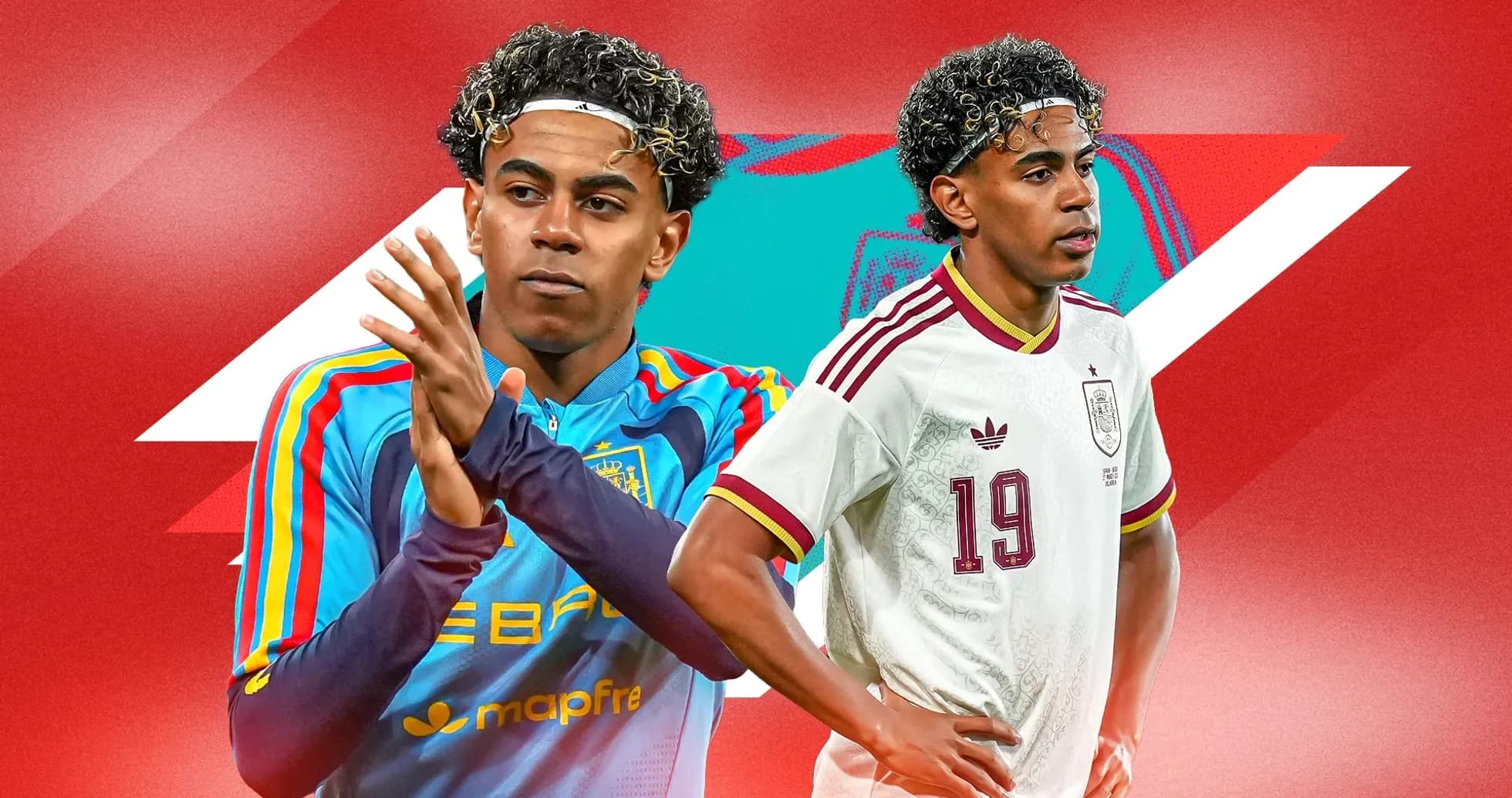
Lamine Yamal limped away from glory. That is Spain’s World Cup dilemma in a single image.
Seconds after burying a pressure penalty against Celta Vigo on April 22 – the goal that proved decisive – the Barcelona winger turned to the bench, signalled, and sank to the turf. The celebrations froze. Joy gave way to alarm.
He has not played a minute since.
A season of brilliance, framed by pain
Initial reports in Spain painted a grim picture: fears of a torn left hamstring, talk of an eight-week layoff, doubts over whether he would be anywhere near match sharpness by the time the World Cup kicked off in North America.
Barcelona moved quickly to calm the storm. The club confirmed a hamstring injury in his left leg, announced a conservative treatment plan and ruled him out for the remainder of the league season. Crucially, they added one line that shaped the national debate: he was “expected to be available for the World Cup.” Hansi Flick backed that stance publicly.
It was still another jarring entry on a medical file that already looked too busy for a teenager.
Yamal had missed five games at the very start of the campaign because of pubalgia, the chronic groin problem that also dogged Cole Palmer at Chelsea through much of 2025-26. It is the kind of injury that stalks explosive wide players, the ones who live on sharp turns and violent changes of direction. Youngsters jumping into the brutal rhythm of first-team football are especially vulnerable.
Back in September, that same issue sparked a club-versus-country row. Yamal aggravated the groin problem while away with Spain, and the national team staff were accused of failing to “take care” of their prodigy. Barcelona pushed back, and the winger skipped the November international camp. The Catalans will not want to relive that stand-off this summer, not even for a World Cup.
Back on the grass, but how ready?
Late May brought the first tangible sign that the tide might be turning. Yamal posted a video from Barcelona’s training base: back on the grass, ball at his feet, the movements light and familiar. At one point he flicked the ball with his heel over a training dummy before calmly laying it off, a small act of mischief that felt like a message.
Two days earlier, his name had appeared – as everyone expected – in Spain’s World Cup squad. De la Fuente was always going to take him. There were still almost three weeks to go before La Roja open their campaign against Cape Verde on June 15. Time to build rhythm. Or at least that is the hope.
History at this tournament is littered with managers rolling the dice on half-fit stars. Yamal now joins that lineage. Reports in Spain suggest he might not be ready until the third and final group game, against Uruguay on June 27.
According to Mundo Deportivo, medical staff from Barcelona and the Spanish federation have been in constant contact and have reached a shared conclusion: the teenager should not be risked in the first two group fixtures. De la Fuente has struck a slightly more optimistic tone in public, insisting he expects Yamal, Nico Williams and Mikel Merino to be available for the first match – and if not, then the second or third.
“The injuries are putting us under pressure,” he admitted. At this stage of the season, even minor muscle problems can become tournament-defining.
Can Spain live without their jewel?
How much does it actually hurt Spain if Yamal watches the first week from the bench or the stands? On paper, not as much as it might.
The European champions have landed in a forgiving Group H. Cape Verde first, Saudi Arabia next, then Marcelo Bielsa’s Uruguay as the step up in difficulty. Spain should expect to win the group even if their most gifted attacker plays only a cameo role.
De la Fuente has cover on the right. Yeremy Pino, the adaptable Crystal Palace forward, can slot into Yamal’s role. Victor Munoz of Osasuna is also capable of operating on that flank. Across the frontline, the coach has filled his squad with players who can move between positions – Alex Baena at Atletico Madrid, Mikel Oyarzabal at Real Sociedad, and others who can shuffle across the attacking band.
Yet the picture is complicated by Nico Williams’ own hamstring recovery on the opposite wing. Both starting wingers coming off muscle injuries is not the scenario any coach wants heading into a World Cup. Spain’s depth should see them through the early skirmishes, but depth is not the same as genius.
At some point, tournaments ask a different question: who can decide a match on their own?
The road ahead – and the moment of truth
Spain’s potential path after the group stage underlines why Yamal’s fitness matters so much.
The last 32 will likely bring the runner-up from Group J, probably Austria or Algeria unless Argentina stumble and set up a surreal reunion with Lionel Messi. Croatia or Colombia could lie in wait in the round of 16. Then a quarter-final against Belgium, the perpetual dark horses. Survive that, and a colossal semi-final with France looms on the horizon, with a possible final against England dangling at the end of the road.
These are not games you navigate solely with structure and system. These are nights when you need someone who can tilt the pitch with a single touch.
Yamal already showed at Euro 2024 that he belongs on that stage. After a relatively quiet group phase, he came alive in the knockout rounds: assists in the last 16, quarter-finals and final, and that outrageous long-range strike against France in the semi-final that felt like a coronation.
De la Fuente knows the value of a player who can burn bright in short bursts. He has spoken openly about the idea of using certain talents as high-impact substitutes if they are not ready for 60 or 70 minutes. “There are players who may not be able to give you 50 or 60 minutes, but they can give you 20 very good ones,” he told Sport in April. Those 20 minutes, in his eyes, can be “differential” in a knockout tie.
The plan is clear: arrive at the decisive moment with the best possible version of Spain, even if that means handling Yamal with extreme care in June.
A prodigy racing the clock
Beyond tactics and medical bulletins, there is something more human at stake. This is a teenager staring at his first World Cup with the world watching.
De la Fuente recently described him as “incredibly excited” and “very young but very mature,” a player who understands that “this is his moment” and that in football, as in life, chances like this do not come with guarantees of a sequel. Nobody knows what shape the next World Cup will take, or who will still be standing by then.
Yamal turns 19 just six days before the final. If his body allows it, this tournament offers him the platform to plant a flag as the most naturally gifted player on the planet, to stack up the kind of iconic moments that define careers and eras.
For now, the clock keeps ticking, the rehab continues, and Spain wait. They can cope without him in the group stage. They might even cruise.
But when the World Cup hardens into the games that live forever, can they truly conquer it without Lamine Yamal at full throttle?