.svg&w=384&q=75 "naujapitch logo")
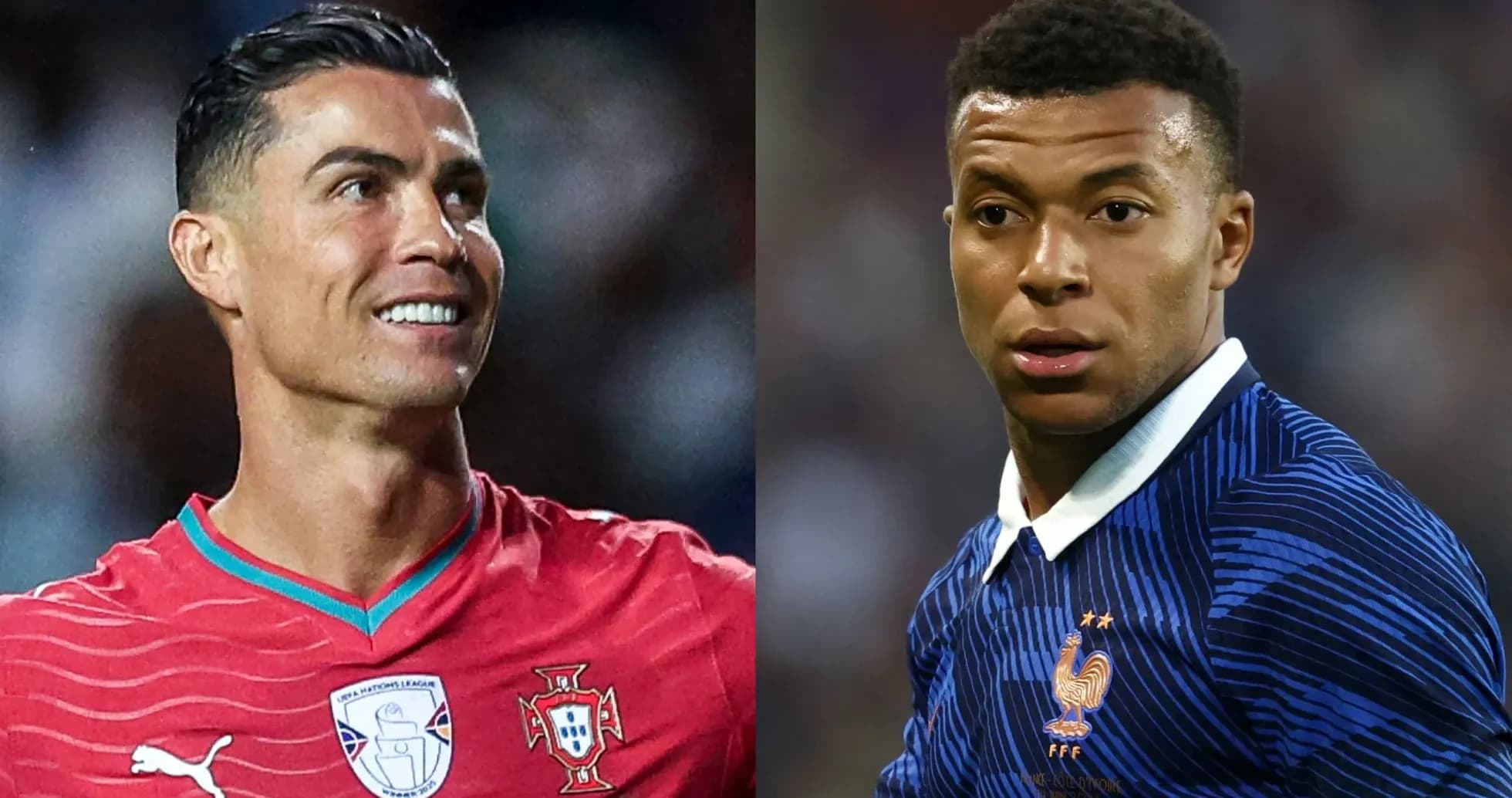
Kylian Mbappé: A Star in a Team-Oriented Game
Kylian Mbappé has spent most of his life being told he is the main event. The numbers back it up: 86 goals in 103 games for Real Madrid, 56 for France, a career built on stepping into the glare and owning it.
But what happens when football demands something else? When the game, increasingly, belongs not to the soloist but to the orchestra?
Frank Leboeuf has watched Mbappé’s rise from a distance, and he doesn’t hide his concern. The former France defender believes the forward has been conditioned from childhood to think like a star, not like a cog in a machine.
“He's been created to be the main man,” Leboeuf told GOAL, speaking in association with World Cup Betting. Since the age of eight, he says, the world told Mbappé he would be one of the best, and the player did everything right to reach that level.
The problem, in Leboeuf’s eyes, is that the sport has moved firmly in another direction.
The cult of the team vs the cult of the star
For him, those triumphs weren’t about one man. They were about the pack.
He recalls Madrid’s path through Chelsea, PSG and Manchester City on their way to facing Liverpool. By his logic, they had no business winning those ties on performance alone. They survived and advanced because of something less tangible and more powerful: a collective spirit that refused to break.
That, Leboeuf argues, is where Mbappé falls short. “Kylian doesn't have that in his computer,” he says bluntly. And if it isn’t built in early, he believes, it is brutally difficult to install later – especially in a football culture obsessed with instant stardom.
Leboeuf calls it a “dictator of emergency”: a world that demands immediate impact, instant icons, and constant individual validation. The Ballon d’Or, once a fleeting accolade in his own playing days, has swollen into a season-long campaign and a global referendum on greatness.
The result? An environment that feeds the individual at the expense of the group, then wonders why the chemistry fails.
When talent doesn’t click
Leboeuf doesn’t isolate Mbappé as the only culprit. He insists the system itself is warped, from media to fans to clubs, all complicit in elevating individuals beyond the team.
Football, he says, keeps delivering the same lesson: if you don’t play together, it breaks.
He looks at the glittering front lines assembled in Paris and Madrid. Neymar, Messi and Mbappé in the French capital. Now Vinícius Jr and Mbappé in Spain. The names dazzle. The combinations, in his view, don’t.
“It doesn't work because they don't fit into a collective spirit,” he argues. For Leboeuf, it’s not about highlight reels or dribbles. It’s about connection, anticipation, sacrifice.
So he turns to Liverpool as his counterpoint. Who was the single star of that side? Mohamed Salah? Yes, but only partially. Virgil van Dijk was a star. Alisson was a star. Andy Robertson, Trent Alexander-Arnold, the full-backs tearing up and down the pitch, crossing for each other and for their forwards – all of them carried equal weight in the story.
“That was insane,” Leboeuf says. That, to him, is football at its best.
He’s unmoved by solo runs, even when they come from Mbappé. “I don't care about Mbappe dribbling four players. It doesn't impress me because he doesn't see the game.” The players who capture his imagination are those like Rodri and Kevin De Bruyne, who read the pitch a step ahead, who know where the ball is going before it arrives.
He even admits he was never a huge admirer of Diego Maradona’s dribbling, despite acknowledging his genius. One-touch passing, vision, anticipation – that is the art form Leboeuf cherishes most.
A restless star and the Premier League question
Mbappé’s numbers at Madrid are outrageous, but the mood has not always matched the output. In recent months he has cut a frustrated figure at times, his body language prompting the inevitable: is he already thinking about another challenge?
The Premier League, of course, looms over any such conversation. Could he go there? Would he fit?
Leboeuf’s answer has changed with the league itself.
He admits that in his era, the English game would have swallowed Mbappé whole. Too physical, too direct, too unforgiving. Today, with more space, more technical nuance and a style that rewards pace and transition, he sees a different picture.
“With the pace that he has and the possibility that you can find in England when you play in the Premier League, yes I think Kylian Mbappe can play in any league in the world,” Leboeuf says. He even allows himself to imagine the spectacle: Mbappé and Erling Haaland trading goals and Golden Boots in the same division.
But then reality bites. The fee. The wages. The sheer financial gravity of such a move.
Leboeuf doesn’t see anyone paying that bill right now. Not next season, and not among the clubs realistically positioned to contend for titles.
The Arsenal dilemma and the Haaland comparison
Arsenal’s name inevitably surfaces in any conversation about elite forwards. They need a striker. They create chances. They sit on the cusp of something bigger.
Leboeuf isn’t convinced.
He argues that Mikel Arteta’s side don’t truly play through a central striker in the traditional sense. The ball whirls around the box, wide players and midfielders dominate the play, and the No. 9 often becomes a reference point rather than the focal point.
He likens it to the role Viktor Gyökeres might be asked to play: waiting for crosses, waiting for passes, waiting for service that doesn’t always arrive. That, he warns, is a recipe for an unhappy Mbappé.
He then draws a sharp contrast with Haaland at Manchester City. The Norwegian has accepted a minimalist existence at times under Pep Guardiola, touching the ball only a handful of times per half but still deciding games with ruthless efficiency.
Leboeuf doubts Mbappé would tolerate that kind of isolation. He sees a player who would drift deeper, search for the ball, drop into a No. 10 role, and in doing so potentially disrupt the tactical structure his coach is trying to build.
So the paradox remains. Mbappé is a generational finisher, a man built for centre stage. Modern football, at its highest level, keeps proving that the true star is the system.
If he wants to dominate the next decade as much as he has dominated the headlines, the question may no longer be whether he can conquer another league. It may be whether he is willing to surrender a little of himself to truly belong to a team.