.svg&w=384&q=75 "naujapitch logo")
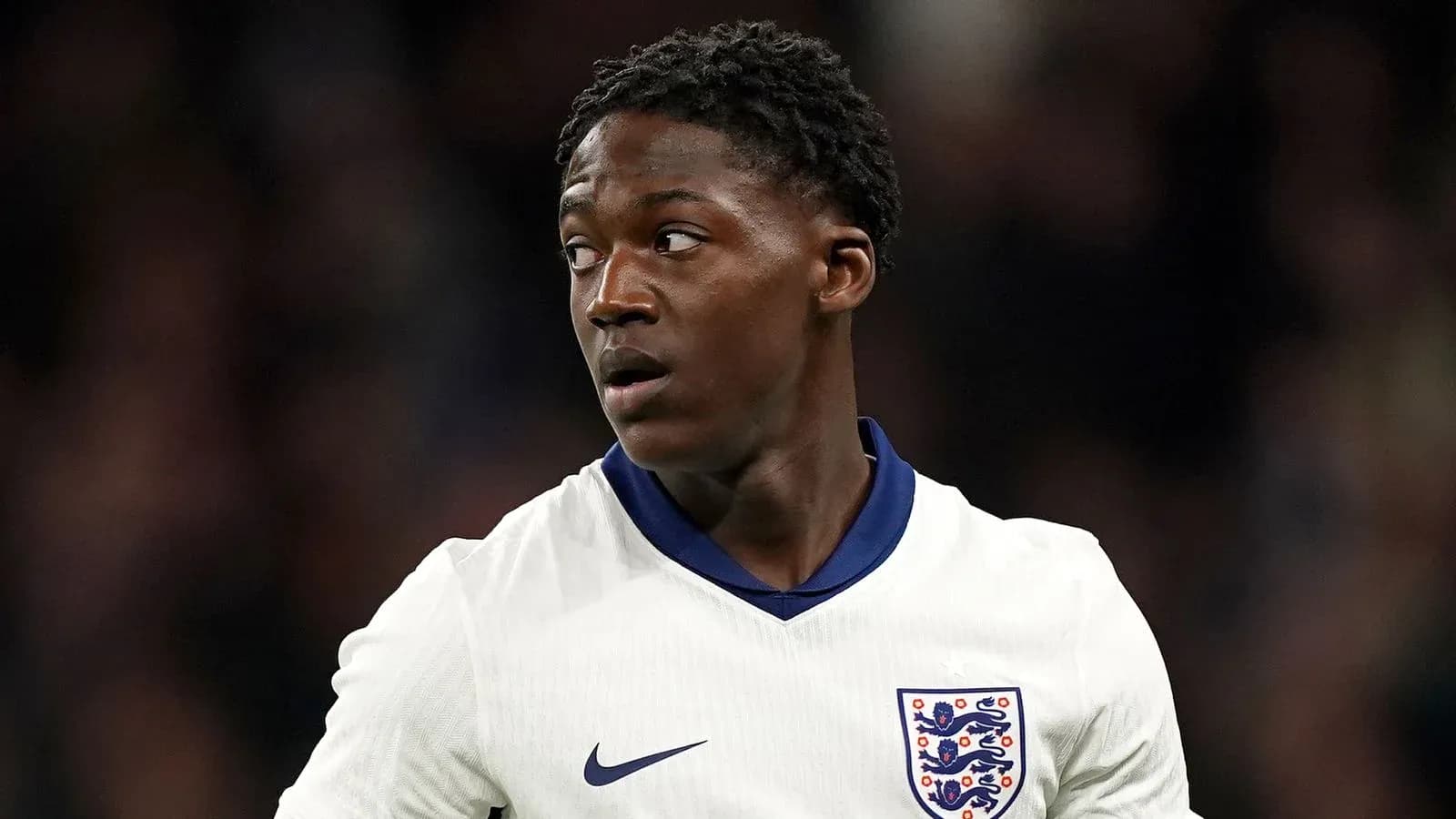
Kobbie Mainoo's World Cup Struggles: A Talent on the Bench
Kobbie Mainoo cuts a lonely figure at this World Cup.
While England march on towards a semi-final with Argentina, one of their brightest young talents has barely kicked a ball in anger. In fact, he has not kicked one at all.
He is one of only three outfield players yet to play a single minute at this tournament. Ivan Toney and Trevoh Chalobah are the others. They, at least, knew the script.
Chalobah arrived late, a replacement for the injured Tino Livramento, and slotted straight into the role of emergency cover. John Stones has been the first-choice defensive insurance policy on the bench; Chalobah the man behind the man.
Toney’s situation has been just as clear. Thomas Tuchel told him plainly: he is a “finisher”, a specialist option rather than a starter. With Harry Kane fully fit and in ruthless form, scoring six goals and yet to be dragged into a penalty shoot-out, the Brentford striker has simply had no door to walk through.
Mainoo’s story feels different.
This is a player who started a European Championship final for England at 18. A teenager who walked out at Euro 2024 and looked as if he belonged on that stage. It would have been natural for him to believe he had stepped into a long, glittering international career.
It may still unfold that way. But this summer in the USA and Mexico has offered only cold reality. Six games. Not a single minute.
Around the squad, the signs are subtle but hard to miss. After every match, Mainoo has been the first England player to leave the dressing room, the first to climb onto the team bus. Each time, he has walked alone. No sulking, no visible strops. Just a young midfielder who looks, at times, a little lost in the shadows of a World Cup run.
The context makes his absence even starker.
Jordan Henderson’s tournament effectively ended the moment he broke his wrist in the celebrations after the win over Mexico. One of the senior midfield options gone in an instant. A gap appeared on the depth chart. Mainoo stayed where he was.
Tuchel’s preferred pairing in the middle has been clear. Declan Rice and Elliot Anderson have owned those shirts. They have controlled games, dictated tempo, set the tone. Anderson, whose move to Manchester City went through mid-tournament, has grown with every outing. His quarter-final display against Norway was his best yet, full of drive and precision.
Rice, the vice-captain, is inked onto the team sheet when fit. Even as he has wrestled with illness and injury, he has kept turning up, kept playing, kept anchoring England.
Until Norway.
Laid low by a stomach bug picked up in Mexico, Rice spent three days in bed before the quarter-final in Miami. He could manage only 45 minutes in the suffocating heat.
If ever there was a moment for Mainoo, this was it.
Instead, Tuchel turned to something different. He sent on Eberechi Eze for Rice at half-time, pushing for more attacking thrust, more passing between the lines, more incision. The England manager wanted to tilt the game, not just hold it.
Mainoo could reasonably argue that his own energy and range of passing might have offered exactly what England needed in that second half, especially as the Miami humidity drained legs and dulled minds. The stage looked made for a fresh, dynamic midfielder.
The call still did not come.
Midway through the second half, Reece James entered the fray in midfield, despite nursing a hamstring issue. Tuchel trusts James as a defensive midfield option, even though his defined role for England, as with Chelsea, is at right-back.
Then came another twist. Ezri Konsa, filling in as a makeshift right-back, cramped up and had to come off. James dropped back into defence. A vacancy appeared again in midfield. Once more, Mainoo’s chance seemed to be opening in front of him.
Once more, it vanished.
Tuchel sent on Morgan Rogers into midfield and shifted Eze out to the left wing. Mainoo stayed rooted to the bench, bib still on, waiting for an invitation that never arrived.
For the player, that sequence of decisions must have stung. For the manager, the logic is clear enough. James brings defensive security and tactical flexibility. Eze offers creativity and risk. Rogers adds legs and direct running. In a knockout game, with the heat oppressive and the margins thin, Tuchel backed experience in his system over potential in reserve.
That is the brutal edge of tournament football. A World Cup is no place for sentiment. Tuchel is chasing the ultimate prize, and in that pursuit, even a prodigy can become a spectator.
Kobbie Mainoo will have other tournaments, other summers, other nights under the lights. But right now, as England move closer to the biggest game of all, he is learning the hardest lesson of international football: talent gets you to the World Cup; trust gets you onto the pitch.