.svg&w=384&q=75 "naujapitch logo")
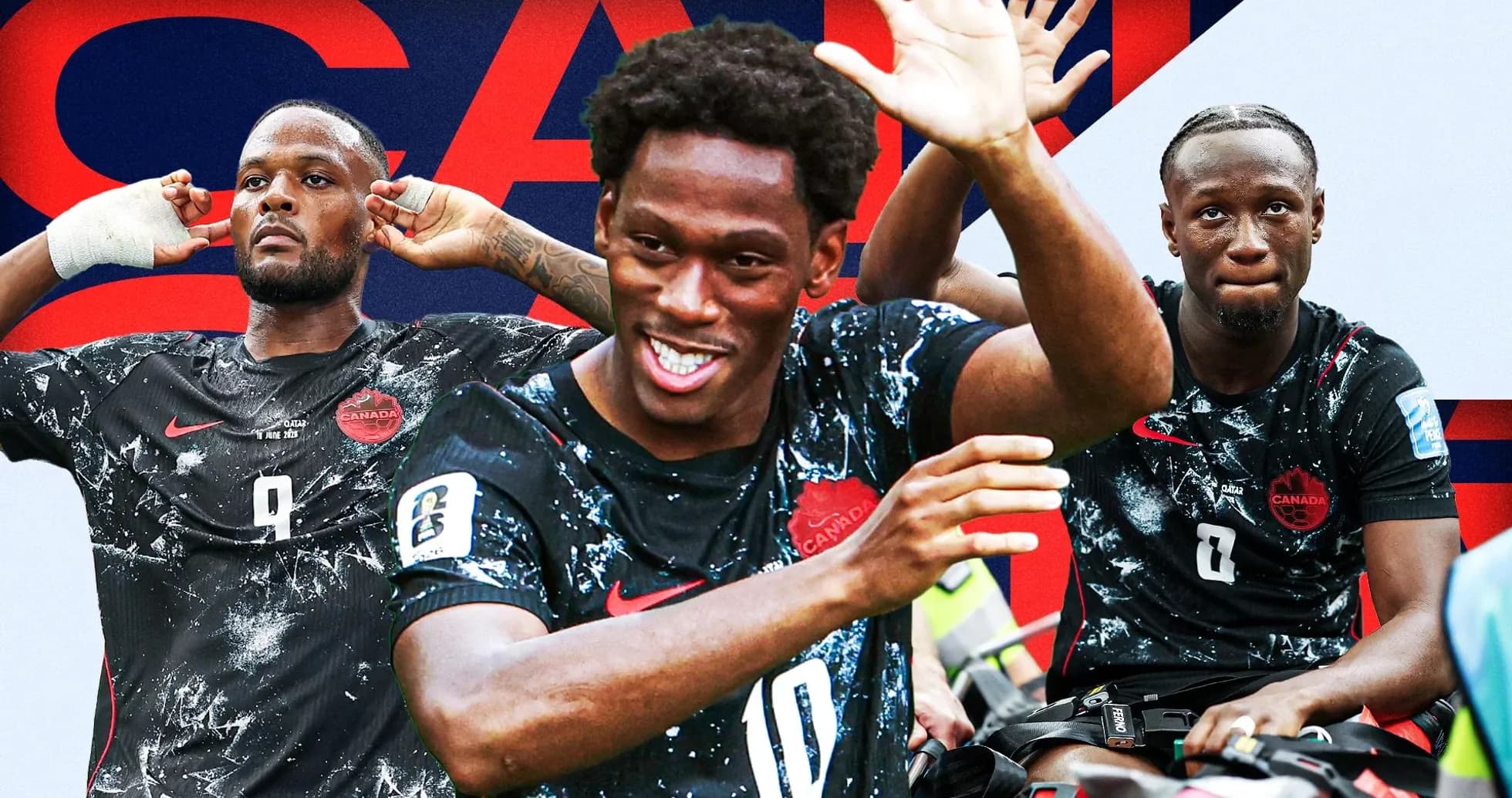
Jonathan David Shines with Hat-Trick in World Cup Victory
Jonathan David walked into this World Cup week under fire. Hooked before the hour against Bosnia and Herzegovina, questions rained down about his temperament, his touch, his ability to carry a nation when the lights are hottest.
Ninety minutes against Qatar didn’t just answer them. It obliterated them.
David’s Response
David rarely talks. He has always preferred the cleaner language of goals, and against Qatar he spoke fluently. From the opening whistle, the Juventus striker hunted. He pressed centre-backs, snapped into duels, chased every second ball. Qatar’s back line never settled; they were being stalked.
The breakthrough came early. In the 16th minute, David uncorked a vicious right-footed volley that Almoez Ali could only parry into chaos. Cyle Larin pounced, sweeping in his second goal of the tournament. The noise around David quietened. Briefly.
Then came the move that felt like a turning point in his World Cup story. Tajon Buchanan and Alistair Johnston carved open Qatar down the right with a crisp triangular exchange. David timed his run, took the final pass in stride, and passed the ball into the far corner with cold precision. His first World Cup goal. The finish of a man who had decided enough was enough.
From there, he played as if unshackled. When Larin had a go later on, David again crashed the box and buried the rebound. The instincts were sharp, the movement relentless, the body language transformed.
In stoppage time, he completed the statement. One more break, one more ruthless finish, and history: Canada’s sixth of the night, and David’s third. No Canadian had ever scored a World Cup hat-trick. Now their all-time leading scorer owns that record too, up to 42 goals for his country and finally carrying the aura his numbers have long suggested.
“It was amazing. After every goal, it got louder and louder,” David said of the crowd. “It gave us motivation to get the next goal and the next goal.”
The night belonged to him. The soundtrack, though, was mixed.
A Win With a Cost
As Canada ran riot, the air inside the stadium shifted on a single, horrible sound.
Ismaël Koné went down, and players froze. This wasn’t cramp. This wasn’t a routine knock. It was the kind of injury that silences a party.
“You could hear the bone snap,” head coach Jesse Marsch said afterwards, confirming Koné had been taken to hospital for surgery. “Your heart goes out to him. Everybody’s shaken for him.”
Koné has been the quiet metronome of this team, the midfielder who makes chaos look organised. He slips between lines, threads passes through traffic, and carries the ball with a calm that drags Canada up the pitch. In transition, he is the hinge everything swings on.
Now, they may have to do without him for the rest of the tournament and beyond. There is no like-for-like replacement in this squad. No one else who combines that ability to pierce defensive lines with such composure on the ball.
Canada have already lived through an injury crisis on the road to this World Cup, so the “next man up” mantra is familiar. They will lean on it again. Alphonso Davies is returning. Samuel Saliba came on for Koné and curled in a free-kick to join the party. The profiles are good, the talent clear.
But Koné was the specialist. His absence changes the ceiling.
“For us to be at our best, he's a big part of it. But, look, it's given us now something else to play for," said Johnston. “That's what this team is all about, it really is a brotherhood. So it's really difficult to see one of your brothers go down. But, look, if we needed any extra motivation for this tournament, we got it now.”
Johnston on a Knife-Edge
Few players lived the emotional swing of the night quite like Alistair Johnston.
One booking away from suspension, the Celtic fullback walked a tightrope. Many in his position would have tucked in, played safe, and let others take the risks. Johnston did the opposite. He attacked the game.
He became a constant outlet on the right, combining with Buchanan, Koné and David to overload Qatar’s left side. He delivered the assist for Canada’s second goal, whipped in four accurate crosses, and racked up six big chances created. All while keeping his name out of the referee’s book and preserving his availability for the Group B finale against Switzerland, when yellow cards reset before the Round of 16.
Tactically, he was central to Marsch’s plan.
“We knew that the idea was kind of to build up against the Akram Afif. He's a maverick; you could see some of the quality he had on the ball. Defensively, though, the idea was to play against him, make him defend, because we didn't think he was going to,” Johnston explained. “We're trying to find that balance of me being in the defensive three in a build-up, but then also give me the license, as I have with my club, to really join in and help Tajon.”
When Koné collapsed, Johnston’s role shifted from tactical fulcrum to emotional anchor. One of the most vocal figures in the dressing room, he moved towards shaken teammates, offering words and presence, while glancing anxiously at the midfielder receiving treatment. Leadership is often measured in these unscripted moments, not just in numbers on a stat sheet.
Qatar Overwhelmed
For Qatar, this was a brutal step backwards on the global stage.
They arrived with the memory of finishing last at their home World Cup still raw, but with some belief restored after a gritty 1-1 draw against Switzerland, secured by a late equaliser. That resilience vanished here.
Canada’s tempo swallowed them. The organisation that held firm against the Swiss disintegrated under sustained pressure. Defensive lines sagged, midfield distances grew, and the co-hosts looked unprepared for the intensity of a side playing with both freedom and fury.
Head coach Julen Lopetegui, a veteran of some of the sport’s biggest arenas, could not steady the ship. His team lost their structure, their discipline, their nerve.
Qatar will almost certainly exit at the group stage and will do so without two starters in their final match. If this performance reflects their long-term level rather than a one-off collapse, their return to a World Cup could be a long way off.
Larin, David, and the Silence of Doubt
This Canadian campaign has been shadowed by questions about its two main strikers, and those doubts have been answered in quick succession.
Before Bosnia, the noise centred on Cyle Larin. His form, his sharpness, his ability to justify a starting place. Marsch responded by dropping him for Tani Oluwaseyi. Larin’s reaction has been emphatic: a goal in Toronto, another here, and a presence that again looks like the penalty-box predator Canada have relied on for years.
With Larin’s critics quietened, the conversation swung to David. Was he really that guy on the biggest stage? Could he translate club form and CONCACAF dominance into World Cup moments?
Consider that file closed for now. A hat-trick, an assist via that opening volley, and a performance Marsch was quick to underline.
“That’s a player, that's a striker, that's a goal scorer. I never had any doubts in Jonny, and the one thing I said is, for us to really be successful as a team, we need Jonny driving what we do in the attacking part of the pitch,” the coach said. “He set up the first goal with the shot, then he obviously scored the hat trick, but I thought he was fantastic in general.”
The pressure finally told — not on David, but on those who doubted his capacity to own a World Cup night.
A Statement, and a New Burden
Canada did more than win. They dominated. They showed that on this stage, they can do more than merely survive; they can impose themselves, dictate tempo, and overwhelm opponents. And they did it without Alphonso Davies, buying their captain and superstar another week to sharpen up before a likely group decider against Switzerland.
The performance sends a message to the rest of the tournament. It also sets a new challenge.
They must now carry on without Koné, the midfielder who stitched their best football together. They must find new patterns, new routes through the lines, new sources of calm when matches tilt and tighten.
They have their goalscorer back in full voice. They have their fullback leader still on the pitch. They will soon have their talismanic left-sided star.
The question now is simple: can this tight, bruised, newly confident group turn a devastating injury into the fuel that drives them into the World Cup’s biggest moments?