.svg&w=384&q=75 "naujapitch logo")
Japan's World Cup Journey: Adaptability and Unity
Hajime Moriyasu stood on the brink of another World Cup knockout stage and chose his words carefully. Not about tactics or formations, but about something far less tangible and far more important to this Japan side: adaptability and unity.
In a group ripped open by injuries, Japan have refused to bend.
Japan bend, but don’t break
They opened with a wild 2-2 draw against the Netherlands, twice dragging themselves back into the game. Then came Tunisia. No chaos this time. Just control, incision, and a ruthless 4-0 win that pushed Japan to the edge of the last 32.
All of it without some of their biggest names.
Takefusa Kubo, the creative spark so often at the heart of Japan’s attacking play, is expected to miss Thursday’s final Group F clash with Sweden after picking up a knee problem against the Dutch. Former captain Wataru Endo isn’t at the tournament. Nor are Kaoru Mitoma or Takumi Minamino. On paper, that list strips Japan of leadership, width, and guile.
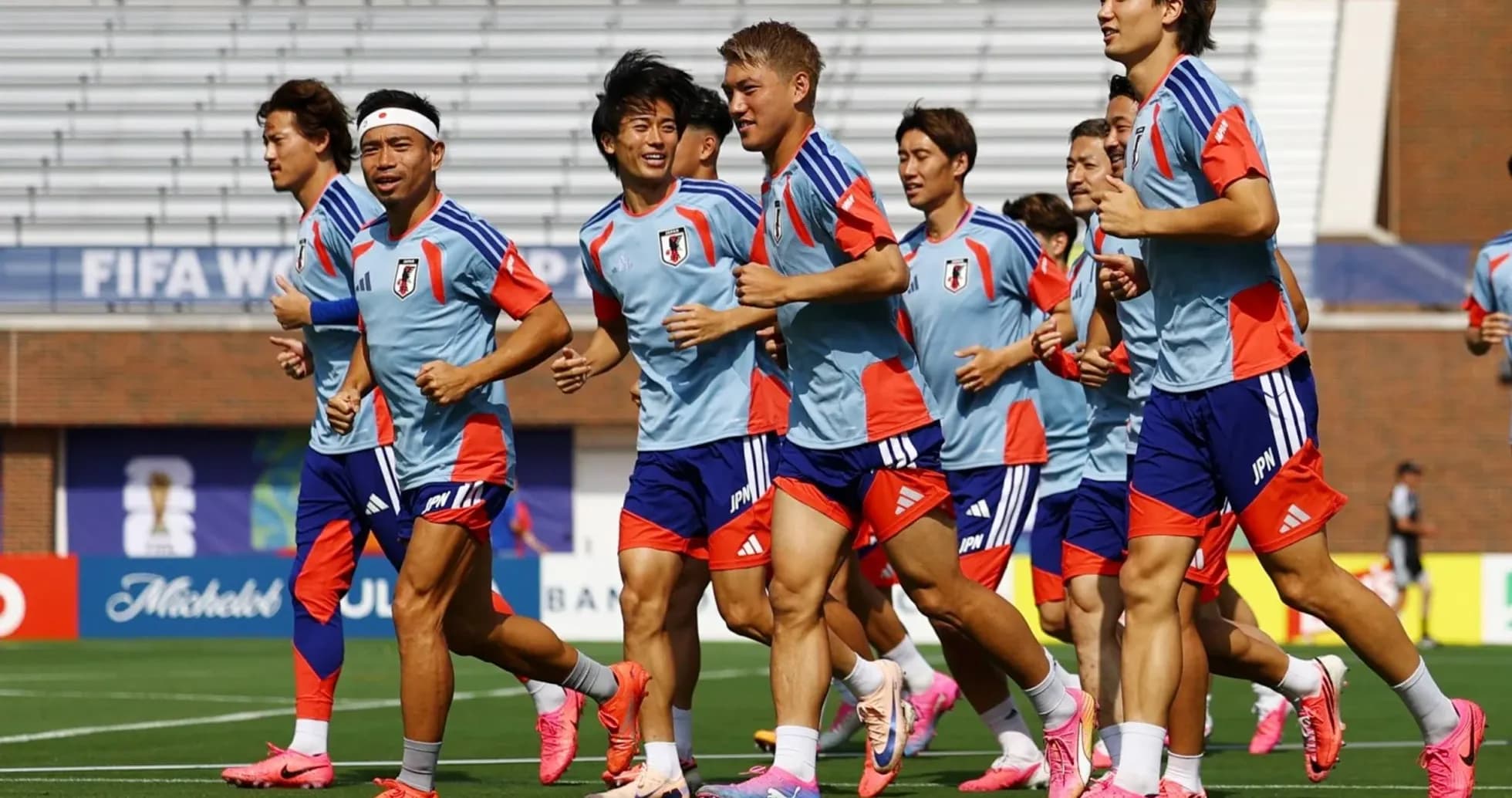
On the pitch, the replacements have looked like they’ve been playing together for years.
“Anyone can play with anyone else, that’s the readiness we wanted to ensure,” Moriyasu said, highlighting the core idea that has carried this patched-up squad to the verge of qualification. He knows that kind of fluidity doesn’t just appear. It’s built.
“That’s easier said than done,” he admitted. “When there’s a change over in the team, it’s not that simple or easy to play with different players and achieve good results or be successful.”
The evidence says they’ve managed exactly that. Two games, four points, six goals scored, a team that looks tactically sharp and emotionally aligned.
“I’m very grateful that the other coaches and the players have been developing themselves towards such a great achievement,” Moriyasu said. “In the last two matches the team has functioned tactically and with the teamwork they are developing and increasing their readiness.”
Top spot, not just survival
With four points already in the bank, Japan are in a strong position. Even a defeat to Sweden may not be enough to deny them a place in the last 32. Many coaches would talk about managing risk, rotating heavily, conserving energy.
Moriyasu is not in that mood.
“We are basically thinking of winning, that’s what’s in our mind,” he said. The message is clear: no coasting, no hedging, no playing the group permutations.
He wants top spot, but not at any cost.
“If possible we would like to advance on top of the group by scoring as many goals,” he added, before drawing a firm line. “But distorting the balance of the team is more of a risk. We will see.”
That balance has been the story of Japan’s tournament so far. They have attacked with numbers when the moments were right, but their structure has held. Players have rotated in and out, but the collective shape has remained.
Moriyasu knows the next opponent will bring a different kind of test, and he is not interested in guessing games about who might await in the knockouts.
“We don’t know what kind of team we will come up against in the next round,” he said. “But what’s important is that we are solid and that we play against a team that we are able to deal with no matter what appears.”
The priority is immediate and simple.
“First we want to think about ourselves and how we play tomorrow. In terms of our target we would like to win and qualify for the knockout stage on top of the table.”
Sweden’s chaos, Sweden’s danger
If Japan have been steady, Sweden have been anything but.
A 5-1 demolition of Tunisia lit up their opening game. Then, just as quickly, they were torn apart 5-1 by the Netherlands. Same scoreline, opposite direction. A team that can thrill and unravel in the space of a few days.
What hasn’t changed is their threat up front.
Alexander Isak and Viktor Gyokeres give Sweden a strike partnership that can punish the slightest mistake. They stretch defences, they run at pace, they finish with conviction. For a Japan side that has prided itself on tactical discipline, this is a step up in difficulty.
Moriyasu doesn’t want his players to fear that challenge. He wants them to embrace it.
“They’re world class, wonderful strikers so I would like us to enjoy facing these players,” he said. “It’s going to be a good opportunity for our players to develop themselves further.”
That is the other thread running through this Japan campaign. Qualification matters, of course. So does finishing first. But for Moriyasu, each game is also a test of how far this group can push itself without its stars, how quickly new partnerships can form, how resilient this squad really is.
On Thursday, against a volatile Sweden side and without Kubo, those questions will be asked again. Japan don’t just have the chance to reach the knockout stage.
They have the chance to prove that, even shorn of some of their biggest names, they can still dictate what happens next.