.svg&w=384&q=75 "naujapitch logo")
Inquest into Nobby Stiles' Death Ordered After CTE Finding
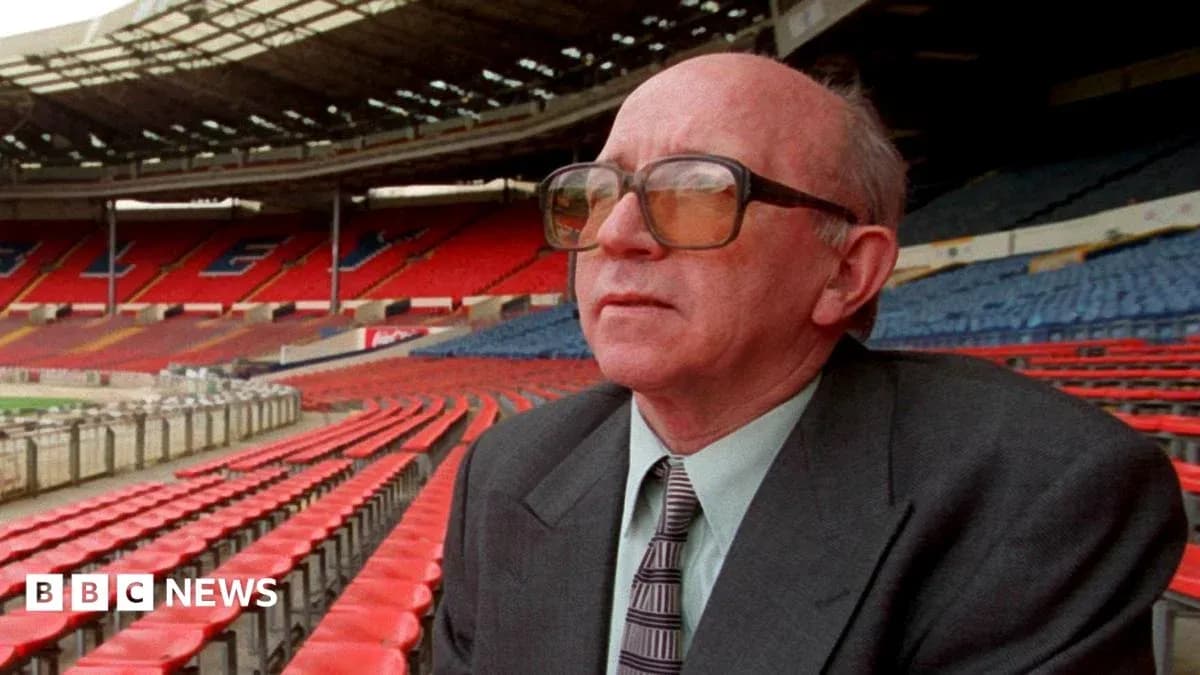
Nobby Stiles, the combative heartbeat of England’s 1966 World Cup triumph, died with a traumatic brain injury and chronic traumatic encephalopathy (CTE), a court has heard – and a coroner has now ruled that an inquest into his death must finally take place.
Stiles, who died in 2020 aged 78, had long been the human face of football’s dementia crisis. A relentless defensive midfielder for Manchester United and England, he was famed for his fearless tackling and repeated heading of the heavy leather ball of his era. Those very traits are now at the centre of a formal investigation into how he died.
At Stockport coroner’s court, area coroner for Greater Manchester South, Chris Morris, said a full inquest was required after a neuropathology expert examined Stiles’s brain and medical records. That expert, Dr Daniel du Plessis, concluded that Stiles’s primary cause of death was Alzheimer’s disease, but that his condition had been significantly contributed to by high-stage CTE – a degenerative brain disease linked to repeated head trauma.
Dr du Plessis also identified “stage three limbic predominant age related TDP-43” and small vessel cerebrovascular disease as contributing factors. Crucially, the presence of CTE meant a traumatic injury formed part of the cause of death.
“On the basis of that cause of death, particularly the inclusion of a traumatic injury included in the cause of death, I’m satisfied an inquest is required into the sad death of Mr Stiles,” Morris told the court.
The decision arrives late. Very late.
Morris noted that, “for reasons not entirely clear to me”, Stiles’s death had not been reported to the coroner’s office at the time, and that the investigation only began after information was provided by the former midfielder’s family. A full inquest hearing will now be held on Wednesday at the same court.
For that family, this is not just a legal process. It is part of a fight they have been waging for years.
Stiles’s son John has repeatedly said that football “killed” his father. He now heads Football Families for Justice (FFJ), a group pressing the game’s authorities to do far more for former players living with, or dying from, neurodegenerative disease they believe was caused by the sport.
The personal cost has been brutal. Nobby Stiles, a man who lifted both the World Cup and the European Cup, was forced to sell his winner’s medals to pay for his dementia care. Those medals, once symbols of glory, became a lifeline.
The Stiles family is among dozens involved in legal action against the Football Association, the Football Association of Wales and the English Football League. Their claim is stark: that the governing bodies were “negligent and in breach of their duty of care” to players by failing to protect them from the long-term risks of repeated heading and head impacts.
Lawyers for the former players and their relatives argue that football’s leaders knew, or should have known, for decades that heading the ball in training and matches was likely to cause brain injuries. They say the warnings were there, the science was emerging, and the response was too slow.
The authorities reject that assertion.
In March this year, lawyers for The Football Association told the High Court that it has “not been established by science” that heading a ball or “occasional” concussion can lead to permanent brain damage. That line underlines the gulf between grieving families and the game’s rulers – a gap now being probed not just in courtrooms but, case by case, in coroners’ courts too.
The Stiles inquest will not be the first to put heading under the microscope. In January, an inquest into the death of Gordon McQueen, the former Scotland, Manchester United and Leeds United defender, concluded that heading the ball was “likely” to have contributed to a brain injury that played a part in his death at 70. McQueen, like Stiles, had been diagnosed with CTE.
McQueen’s daughter, TV presenter Hayley McQueen, has spoken powerfully about what has happened to that fabled 1966 England side. She said the team had now been “pretty much wiped out” by neurodegenerative disease. One by one, the heroes of Wembley have become case studies in a crisis the sport can no longer sidestep.
The numbers back up the fear.
In 2019, a landmark study co-funded by The FA and the Professional Footballers’ Association (PFA) found that former professional footballers were three-and-a-half times more likely to die of neurodegenerative disease than members of the general population of the same age. It was a statistic that shook the game, even as arguments raged over causation and responsibility.
Some changes have followed. The FA is now phasing out heading entirely in youth football up to under-11 level by 2026, a move that would have been unthinkable in Stiles’s day. Training guidelines have been tightened higher up the age groups. Awareness campaigns have multiplied.
Yet for families like the Stiles and the McQueens, those measures arrive too late. Their loved ones played in an era when heading was constant, celebrated, and barely questioned. Nobby Stiles, born in Manchester in 1942, played nearly 400 times for Manchester United and won 28 caps for England, anchoring midfield with a fearlessness that defined his career and, they argue, destroyed his brain.
The inquest now ordered will not rewrite that history. It will, however, formally examine how a national hero ended his life with Alzheimer’s disease, high-stage CTE and other serious brain pathology – and whether the sport that made him famous must finally confront its responsibility in full.
For a game built on heading, the question now is unavoidable: how many more inquests will it take before football accepts what its past has done to its greatest servants?