.svg&w=384&q=75 "naujapitch logo")
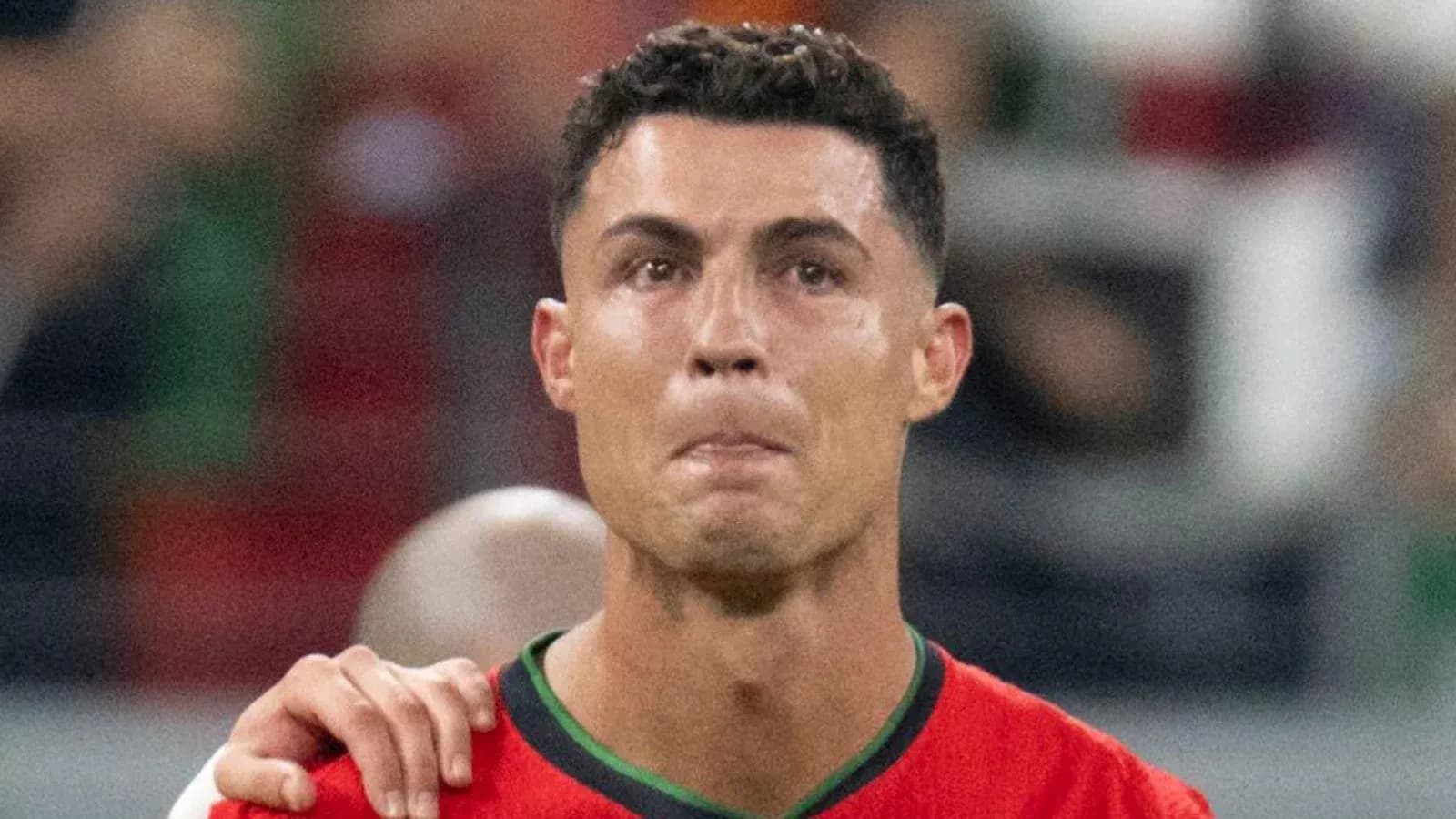
England’s Selection Crisis and Ronaldo’s Response to Criticism
The international break has delivered the usual cocktail of mild hysteria, inflated outrage and some truly Olympic‑level headline writing. England’s squad is apparently one full-back away from immortality, Cristiano Ronaldo has been “blasted” by a Portugal team‑mate for being “just another player”, and Mark Chapman has apparently shattered the sacred code of Match of the Day by… saying goodbye.
Let’s start with England’s latest existential crisis.
England, Tuchel and the Great Full-Back Meltdown
Thomas Tuchel has picked a squad good enough in midfield and attack, we’re told, to win the World Cup outright – just as long as someone airlifts in Arsenal’s back four.
In The Sun, Charlie Wyett argues that if Tuchel could somehow bolt on Jurrien Timber, William Saliba, Gabriel and Riccardo Calafiori, England would be unstoppable. The logic is simple: the defence is the weak link, the rest of the team is loaded, so just borrow a ready-made club back line and job done.
It’s a fun pub argument. It’s also fantasy football.
Wyett then pivots to what he calls “a mess” at full-back, lamenting that the injury to Tino Livramento was not addressed with a “like-for-like replacement”. The implication is that the failure to swap out a fringe player for another fringe player has left England structurally compromised.
But how much damage can the 25th man in a tournament squad really do? Livramento, fit or not, was never going to be central to Tuchel’s plans. Replacing him with Trevoh Chalobah, a centre-back, is hardly some wild act of sabotage.
Wyett doubles down: “Therefore, England do not have a fully fit, in-form, natural full-back.”
That takes some verbal gymnastics. It neatly steps over the two full-backs who actually started the win over Croatia. Reece James’ fitness is always a talking point, fair enough, but to declare the entire position a wasteland requires a very selective reading of reality.
Then comes Nico O’Reilly.
“Nico O’Reilly has been playing well but he is a midfielder who is being squeezed in at the back,” Wyett writes.
Except O’Reilly is Manchester City’s starting left-back. Pep Guardiola has trusted him there. That should carry a bit more weight than the notion he’s being “squeezed in” as some desperate stop-gap. If this is the standard, that supposedly dream England back four of Timber, Saliba, Gabriel and Calafiori contains precisely zero “natural full-backs” as well.
The Luke Shaw line only muddies it further. Wyett calls it “ridiculous” that Tuchel didn’t pick Shaw after a good season at left-back for Manchester United, before conceding that his omission was “not a surprise” given he hasn’t played for England since the Euro 2024 final.
If it isn’t a surprise, it’s hard to sell it as ridiculous.
Ronaldo, ‘Brutal’ Blasts and Manufactured Storms
On to Cristiano Ronaldo, who has apparently been “blasted” by a Portugal team-mate in the wake of a poor display against DR Congo.
“JUST ANOTHER PLAYER,” screams one Sun headline. “He’s just another player – Cristiano Ronaldo blasted by Portugal World Cup team-mate after DR Congo horror show,” adds another.
You brace for a dressing-room takedown. A senior player finally saying what he really thinks. A crack in the façade.
Then you read what João Neves actually said:
“We know what Cristiano has done for us, for our national team, and for the world of football. But at this moment, he and we know that he is no different. He is just another player here to help. He is no different from the others. He is here to contribute, just like all of us.”
That’s it. No accusation, no insult, no drama. A young international emphasising that Ronaldo is part of the collective, not a separate entity orbiting above it. Respect for his legacy, insistence on team ethic in the present.
To spin that into a “storm” is to stretch the word beyond recognition. A few aggrieved fan accounts on social media do not constitute a national crisis. Neves hasn’t torched a legend; he’s described the reality of a modern dressing room trying to function around a 39-year-old icon.
Cole Palmer, Jet2 and the Curious Case of Airline Morality
The same paper offers another neat snapshot of how the narrative shifts depending on the name.
Cole Palmer, we’re told, is a “humble star” for flying with Jet2. A grounded lad, still in touch with normal life.
Raheem Sterling, by contrast, was once described as “penny pinching” and having “slummed it on the budget airline” EasyJet, despite earning “a staggering £200,000 a week”. Same basic act – taking a low-cost flight – wildly different framing.
The behaviour hasn’t changed. The story around it has.
Mark Chapman and the Great MOTD Heresy
Then there’s the BBC and an “unwritten MOTD rule” that Mark Chapman has apparently shattered.
“BBC host Mark Chapman makes feelings perfectly clear after World Cup clash as he breaks unwritten MOTD rule,” The Sun announces.
You’d think he’d gone rogue with a profanity or torched the format live on air. Instead, after Czechia’s draw with South Africa, Chapman simply signed off with:
“Sometimes a game does not deserve a really clever closing link. Goodbye.”
This, we’re told, breaches an “unwritten rule in the BBC that there is always a clever link at the end of match coverage”.
So the great crime here is acknowledging a drab game and declining to force a laboured gag over the top of it. It’s presented as some sort of rebellion against the corporation’s hallowed standards.
The irony is obvious. That sign-off is a clever link. It undercuts the expectation, matches the mood of the match and lands the point in one line. If there is an “unwritten rule” at the BBC, it’s surely that good broadcasting is encouraged, not outlawed.
Emma Hayes and the ‘Tiny Blackboard’
Emma Hayes, meanwhile, continues to attract a very specific kind of scrutiny.
“Hayes was forced to do her tactical analysis on a tiny blackboard on a set that looked like a little kitchen, sparking outrage online,” reports The Sun.
The language is doing a lot of heavy lifting there. “Forced” to use a “tiny blackboard” in a studio that “looked like a little kitchen” – as if this were some act of humiliation rather than a production choice. The outrage, such as it is, comes less from what Hayes said and more from the aesthetic of how she said it.
It’s a long way from Michael Scott’s beloved plasma TV. But it’s also a long way from an actual scandal.
The themes are familiar: England’s squad dissected to the point of absurdity, a polite comment about Ronaldo inflated into a “brutal” attack, a broadcaster’s throwaway line promoted to heresy, and a blackboard turned into a battleground. The football keeps moving; the noise just gets louder.