.svg&w=384&q=75 "naujapitch logo")
England and Scotland Face Critical World Cup Matches
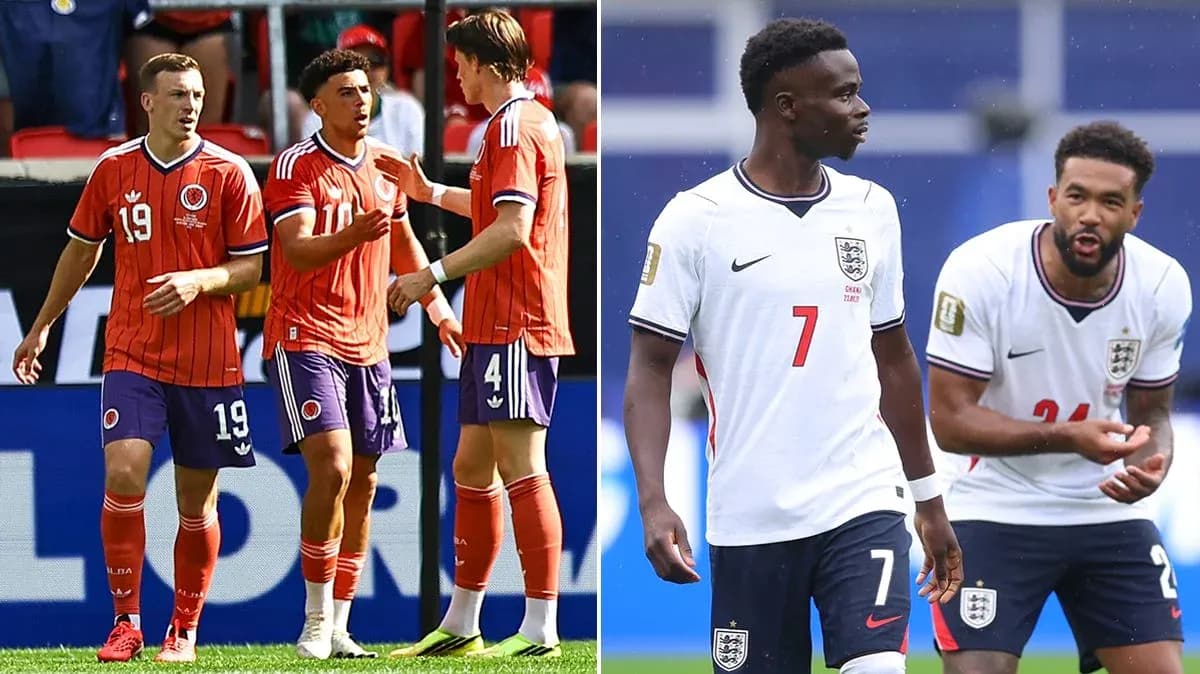
The World Cup has reached that nervy third-game stretch where every touch feels heavier and every misstep can drag a nation home early. England are stuttering, Scotland are swinging for history, and the tournament is beginning to bare its teeth.
Bellingham’s ‘second game fever’ and an England side stuck in neutral
England’s 0-0 draw with Ghana in Boston felt like a night when the tournament could have opened up for them. Instead, it exposed old habits. No breakthrough, no confirmation of a last‑32 place, just a nagging sense of déjà vu.
Jude Bellingham, man of the match but visibly irritated by the stalemate, labelled it “second game fever” – England’s fourth straight draw in a second group match at a major tournament, a run stretching back to Euro 2020. His message, though, was to “roll with it”, to treat the stalemate as part of the journey rather than a derailment.
The numbers tell the story: chances created, woodwork rattled, composure missing in the final act. Nico O’Reilly clipped the underside of the bar, Ghana dug in, and the clock eventually beat England as surely as the Black Stars did.
Now everything points to Saturday and Panama. England remain top of Group L, and a win – or simply bettering Ghana’s result against Croatia – will lock in first place. The performance, not just the points, suddenly matters.
Kane shrugs off the miss, rejects talk of over-reliance
Harry Kane has lived enough lives as a No 9 to know when to torture himself and when to move on. This one goes in the latter category.
The captain lashed over from seven yards in stoppage time, a chance he converts “nine times out of 10”, as he put it. He isn’t dwelling on the one that got away.
“It’s part of a striker’s life,” the 32-year-old said. “I’ve had many chances go my way this year, chances that probably shouldn’t have gone in. Nine times out of 10 I score but in football there is a feeling that it just doesn’t go your way.”
Kane rejected the suggestion that England lean too heavily on him.
“I don’t think there is an over-reliance,” he insisted. “Any No 9 at a big team, people expect them to score goals and it’s no different for me. When you don’t, there are a few questions. It is what it is.”
Eberechi Eze struck a similar note. For him, the draw hasn’t altered the internal mood or the group dynamic.
“We set out to win anyway, so it changes nothing for us, the mentality is still the same,” he said. “You can't be too high, you can’t be too low… we’re trying to enjoy it as much as we can, and being confident of what’s to come.”
Kane’s drought – if one game can be called that after his brace against Croatia – has even been dragged into superstition. Ghanaian “witch doctor” Nana Kwaku Bonsam claimed he had cast a spell to stop the England captain scoring, then announced he has now “released” Kane ahead of the Panama clash. The defender of the realm, it seems, has moved from VAR to voodoo.
Rice on a tightrope, fitness fears and a disciplinary cloud
Declan Rice walked out of the Boston Stadium with his leg strapped, a sight that will have sent a chill through England’s camp. The Arsenal midfielder had been one of Thomas Tuchel’s standout performers against Ghana before limping off.
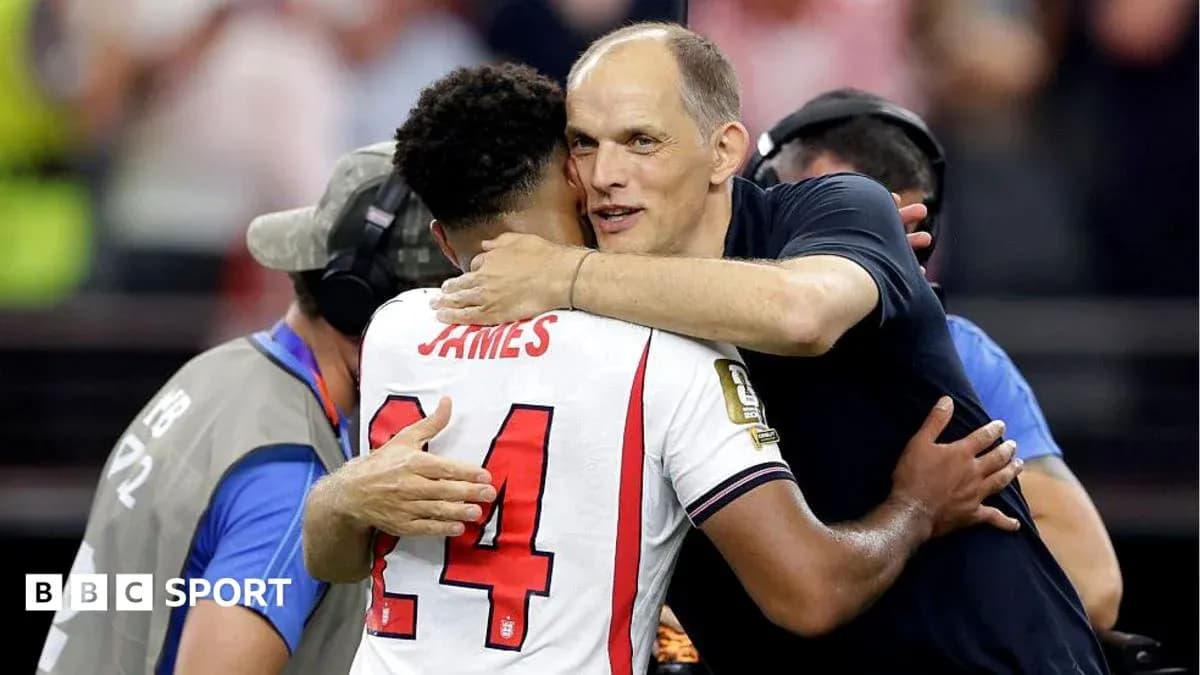
Early indications suggest there is no long-term concern, but Rice will be assessed before the Panama game and could be rested. Reece James, who completed the full 90 minutes after his recent injury troubles at Chelsea, will also be checked and may be rotated.
Rice has another problem: the yellow card he collected for a foul on Jerome Opoku. It was England’s first booking of the tournament, and it leaves him one caution away from a one‑match suspension. Under FIFA rules, two yellows in the group stage trigger a ban; only after the groups are completed are single bookings wiped.
If Rice plays and is booked against Panama, he misses England’s second-round tie. If he sits out, England risk losing rhythm and control in midfield. Tuchel now has a choice to make in a game that should, on paper, be straightforward – but no longer feels that way.
Bellingham at the centre of a growing FIFA storm
As if the performance scrutiny wasn’t enough, England are now entangled in a disciplinary row that has reached FIFA’s door.
Reports from Spain say Paraguay have lodged an official complaint after Jude Bellingham avoided punishment for covering his mouth while speaking to Ghana’s Jordan Ayew. Under a new World Cup regulation, players can be sent off for hiding their mouths during confrontations, a response to high-profile cases of abusive language being picked up only on review.
Miguel Almiron became the first player dismissed under the rule during Paraguay’s win over Turkiye, red-carded after a VAR check for covering his mouth in a heated exchange. Bellingham, by contrast, faced no action because his chat with Ayew was deemed friendly and without animosity.
The Paraguayan FA argue that the law is being applied inconsistently. FIFA, already under scrutiny for its officiating directives, now faces a test of its resolve and clarity. England, through no direct action of their own, find themselves at the centre of a storm they can’t control.
Ronaldo roars back, Fernandes breathes easier
While England wrestled with frustration, Cristiano Ronaldo seized the spotlight again. Two goals in Portugal’s 5-0 demolition of Uzbekistan marked his emphatic return to form after calls for him to be dropped following a poor display against DR Congo.
He told the world he was “back”. It was classic Ronaldo – defiant, unapologetic, unmissable.
Bruno Fernandes, who created Ronaldo’s second, admitted the dressing room felt the lift.
“It was important for our captain to score,” the Manchester United midfielder said. “He’s our go-to player in attack. We managed to score a lot of goals, and we’re happy about that. I’m here to set up my teammates up front. It’s part of my game, regardless of whether I score or not.”
Portugal now face Colombia in Miami with top spot in Group K on the line. Ronaldo has his tail up again. That alone changes the temperature of a tournament.
Scotland’s date with Brazil – and the dream of England in Mexico City
Miami belongs to the Tartan Army this week. Kilts on the sand, bagpipes on the boardwalk, beer on the beach. Scotland’s supporters have turned South Florida into a travelling carnival ahead of a game that could define a generation.
Steve Clarke’s side face Brazil knowing the equation is simple in theory, brutal in practice. Beat the five-time champions and Scotland are through, possibly as group winners if Morocco slip up against Haiti. A draw would almost certainly be enough, taking them to the golden four-point mark that usually secures passage as one of the best third-placed teams.
Even a narrow defeat might keep the door ajar. Scotland’s 1-0 loss to Morocco leaves them on three points with a goal difference of 0. Another one-goal reverse against Brazil would likely leave them on three points, goal difference -1 – a total that has historically been just about enough to squeeze through. Anything heavier, and the maths turns ugly.
Carlo Ancelotti knows exactly what’s coming.
“It will be a difficult game,” the Brazil coach warned. “Scotland has quality, they are fighters, they are well organised. They have good players, (Scott) McTominay, (John) McGinn that are experienced players. Easy games at the World Cup were finished a long time ago. We are ready to play a difficult game.”
He will also have Neymar back in his armoury. The forward, sidelined so far with a calf problem, has trained fully and is “fit and able and ready to play”, according to Ancelotti, who praised his attitude and work to return. Neymar could feature for 45 minutes or the full 90. Either way, Scotland must handle a fresh, motivated superstar.
Raphinha, injured in the 3-0 win over Haiti, misses out, but Brazil’s depth remains intimidating. Scotland, who have never beaten Brazil at a World Cup despite meetings in 1974, 1982, 1990 and 1998, will lean on organisation, physicality and the raw energy of their travelling support.
The stakes run beyond Miami. As it stands, England top Group L and Scotland sit third in Group C. If results fall a certain way, the two could collide in the last 16 in Mexico City on July 6. For now, it’s a tantalising possibility rather than a guarantee – but it’s enough to sharpen the edges of both nations’ final group games.
Fans, prices and a tournament under scrutiny
Off the pitch, this World Cup is being fought on several fronts.
Ticket prices have drawn fierce criticism, with former UK prime minister Gordon Brown calling for an inquiry into what he branded “extortionate” costs. He warned that ordinary families are being “priced out” of the game, pointing to final ticket prices he says are 30 or 40 times higher than those for the Euro final in Germany. For him, football cannot claim to be at its best if its most loyal followers are locked out.
At the other end of the spectrum, those who have made the trip are being praised for how they’ve carried themselves. UK Football Policing chiefs hailed England fans for their “exemplary” behaviour in Boston, echoing similar praise for Scotland’s supporters in both Boston and Miami. No arrests, no major incidents, just colour, noise and a sense of occasion.
That atmosphere could yet be tested by events beyond football’s control. Extreme weather has already forced France’s match with Iraq to finish almost four hours after kick-off due to storms. With the final round of group games supposed to be played simultaneously – a safeguard brought in after the infamous “Disgrace of Gijón” in 1982 – FIFA has acknowledged that severe weather could break that synchronisation.
Article 12.4 of the tournament regulations states that final group matches must kick off at the same time “unless stipulated otherwise by Fifa (e.g. in cases of force majeure)”. The concern is obvious: staggered kick-offs can invite manipulation, conscious or not, as teams play knowing exactly what they need.
For now, it’s a warning rather than a scandal. But the margin for error is shrinking by the day.
Elsewhere around the groups
Germany, already safely through, refuse to ease off. Midfielder Nadiem Amiri insists their clash with Ecuador will be treated “like a final”, arguing that they owe it to the competition – and their own momentum – to go full throttle rather than experiment.
Argentina, too, are showing little appetite for cruise control. Lionel Scaloni’s side have already wrapped up Group J and secured a last‑32 tie in Miami, yet the coach is ready to use Lionel Messi again against Jordan in Dallas. Messi, with five goals in two games and leading the Golden Boot race, wants at least 45 minutes. Cristian Romero, nursing a muscle problem, is expected to be out until the knockout phase, giving opportunities to the likes of Guillano Simeone, Valentin Barco and Jose Manuel Lopez in the Texas heat, where temperatures are forecast to hit 100F.
Sweden coach Graham Potter is fighting his own battle, not with opponents but with the narrative. After a 5-0 win over Tunisia was followed by a 5-1 hammering by the Netherlands, defender Isak Hien has been hammered for his role in three of the goals conceded. Potter isn’t having it.
“I love Isak Hien, and I don't care what anybody says. If I'm manager, then he's playing,” he said, calling the reaction a “blame game” and insisting responsibility lies with him, not his captain. “We win and we lose together as a team.”
Across the Atlantic, Christian Pulisic offered the United States a simple one-word reassurance – “yes” – when asked if he would be fit to face Turkiye in California after missing the win over Australia with a knock. Mauricio Pochettino’s side are already through, Turkiye are out, but Pulisic’s presence still matters to a home crowd eager for momentum.
And in Group B, the margins are as thin as anywhere. Switzerland face hosts Canada, while Bosnia and Herzegovina meet Qatar with both sides on one point and everything on the line. A winner will almost certainly march into the last 32. A draw could drag calculators and tiebreakers into play.
The group stage is supposed to sort the serious contenders from the hopefuls. Instead, it has thrown up questions. Can England turn control into conviction? Will Scotland’s bravest night finally arrive against Brazil? And when the dust settles on this week, who will still be standing when the World Cup truly begins?