.svg&w=384&q=75 "naujapitch logo")
England Uses Palm-Cooling Tech for World Cup Heat Management
England’s World Cup preparations in the United States are already under a fierce spotlight – and so is the sun. With temperatures soaring in Florida, the squad are leaning on cutting‑edge sports science, turning to high-tech palm-cooling devices in a bid to keep their heads – and bodies – cool when the tournament ignites.
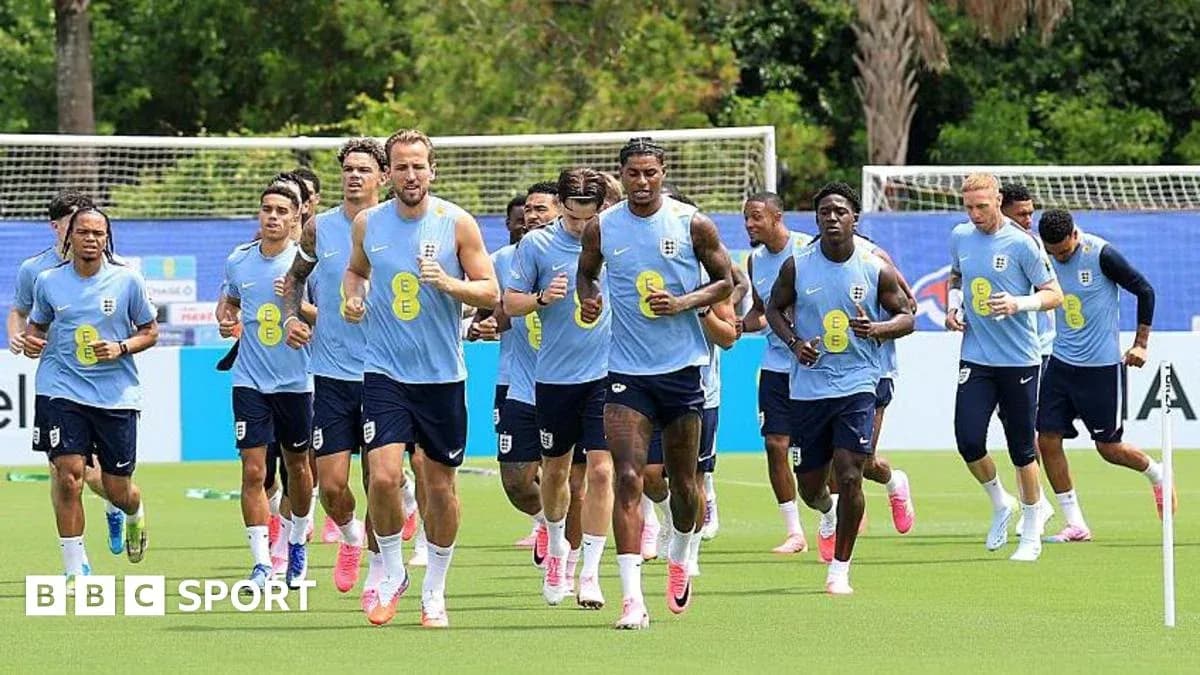
On Tuesday in West Palm Beach, the thermometer hit 32C during England’s opening training session. That was just a taste of what is to come. Studies around the tournament suggest at least a third of World Cup fixtures will be played in temperatures above 26C, a punishing backdrop for players expected to press, sprint and think clearly for 90 minutes and beyond.
This is where the science steps in. The palm-cooling equipment, already in use at clubs such as Manchester United, is fast becoming one of elite sport’s favourite gadgets. The principle is simple but powerful: by cooling specific areas of the hands, athletes can significantly lower their core body temperature. That drop can speed up in-game recovery, sharpen decision-making and sustain intensity when legs and lungs are screaming.
England intend to use the devices both in training and during the mandated water breaks in World Cup matches. It is a small detail, almost invisible from the stands, but at this level the smallest details often separate those who fade from those who finish strongest.
Adapting to Conditions
Jordan Henderson, speaking about the need to adapt quickly to the conditions, made it clear this opening week in the US is not about spectacle but conditioning. This period, he said, is being used to “build capacity to the conditions”, with the warm-up fixtures crucial to that process. These are not just friendlies; they are live rehearsals in heat management.
The Brentford midfielder was quick to highlight the work being done away from the cameras, praising the “team behind the team” for the “top level research” into cool-down and recovery. The message is obvious: England are determined not to be caught out by the climate. “Hopefully that can give us a little edge when we get into the tournament,” he added. In a World Cup defined by fine margins, an “edge” can be everything.
Upcoming Fixtures
The schedule allows no room for complacency. England face New Zealand on Saturday, 6 June (21:00 BST), then Costa Rica on Wednesday, 10 June (21:00), two fixtures that will test both tactics and tolerance to the heat. Each game doubles as a laboratory, every drinks break another chance to refine the use of the palm-cooling devices under match pressure.
Then comes the real examination. Thomas Tuchel’s side open their World Cup campaign against Croatia on Wednesday, 17 June (21:00), a meeting with seasoned tournament operators who know how to drag opponents into deep water, both physically and mentally. Ghana follow on 23 June (21:00), a team built on power and tempo, before Panama on 27 June (22:00), a late kick-off that could still be played in heavy, draining humidity.
England have long talked about marginal gains. In the heat of an American summer, gripping a palm-cooling device on the touchline may look like a small, almost trivial act. But if it keeps legs driving in the 88th minute and minds clear in stoppage time, it might be one of the most important decisions they make this World Cup.