.svg&w=384&q=75 "naujapitch logo")
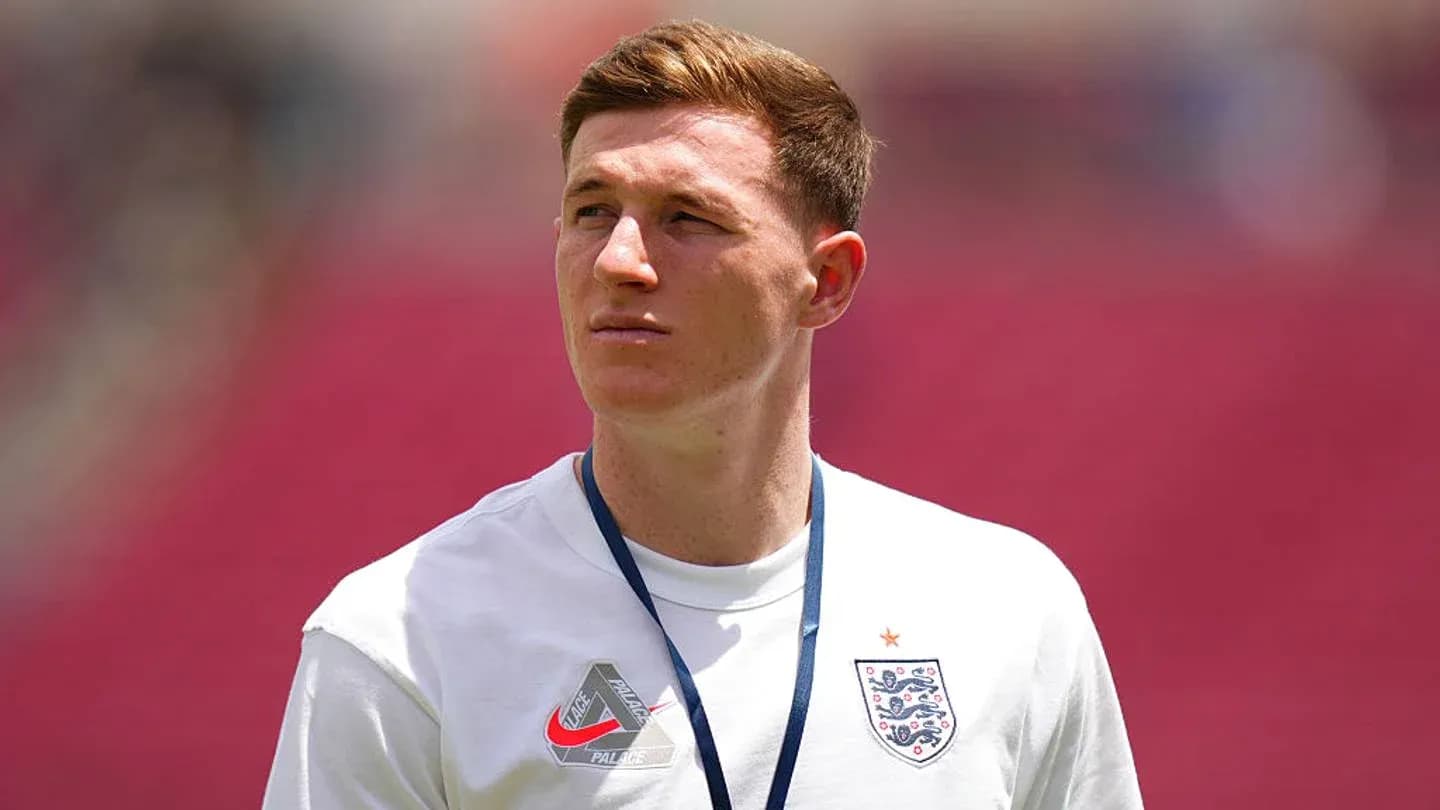
Elliot Anderson: Manchester City's Record-Breaking Transfer Bid
Manchester City are testing the limits of English football’s transfer economy again, and this time the spotlight is on Elliot Anderson.
The Premier League champions have moved to make the Nottingham Forest midfielder the most expensive English player in history, tabling an offer that underlines both their faith in his talent and the inflationary reality of the 2026 market.
City’s Record-Breaking Gamble
City’s proposal, relayed on Wednesday by Fabrizio Romano and The Athletic’s David Ornstein, starts at $141.7 million (£106 million) guaranteed and climbs beyond $160.4 million (£120 million) with performance-related add-ons.
That guaranteed figure alone edges past Arsenal’s 2023 outlay on Declan Rice, currently the benchmark for an English player. Yet it still falls short of the number Forest have in mind.
Forest are pointing towards the 2025 transfer of Alexander Isak from Newcastle United to Liverpool as their reference point: $167.1 million guaranteed, with only minor add-ons attached. That deal set a new standard for Premier League spending. Forest believe Anderson belongs in that bracket – or above it.
To meet that valuation outright would not just rewrite the English transfer record for a midfielder. It would set a new Premier League high, leaving Anderson behind only Neymar and Kylian Mbappé in the global all-time list before add-ons.
City know exactly what they are doing. They don’t view a package worth close to $170 million as excessive. The argument now is not whether Anderson is worth elite money; it is how much of that fee gets locked in from day one.
Why Forest Can Hold Their Nerve
Forest’s stance is not bluster. It is leverage.
Anderson, 23, is tied down for another three years. There is no ticking clock, no looming free agency, no forced discount. On the pitch, he has just delivered a breakout 2025–26 campaign, emerging as one of the Premier League’s standout midfielders and playing his way into England’s squad for the 2026 World Cup.
He has already hurt both Manchester clubs in recent months, producing the kind of big-game performances that stick in the memory of recruitment departments. Add his age, his ceiling, and the scarcity of complete midfielders at the very top level, and Forest’s position hardens.
From their perspective, this is a rare kind of win-win. If no club reaches their valuation, they keep a player who can anchor their midfield for at least another season. If someone does, they bank a fee that was supposed to be prohibitive and gain the sort of financial firepower that can reshape an entire squad.
Forest have been here before in a different era. In 1993, they sold Roy Keane to Manchester United for a British record £3.75 million, with Blackburn Rovers having actually offered more in a bid to land the midfielder. The numbers have changed beyond recognition, but the principle has not: if you own the asset everyone wants, you dictate the terms.
The Market That Made Anderson a $170m Footballer
At first glance, pricing Anderson near $170 million sounds outrageous. Context strips away some of the shock.
The Rice deal in 2023 reset expectations for English midfielders. Chelsea’s moves for Enzo Fernández and Moisés Caicedo that same year pushed the ceiling even higher, with Liverpool also having a similar offer accepted for Caicedo before he chose Stamford Bridge. Those three transfers did not just nudge the market; they dragged it into a new financial tier.
Elite football has only grown richer in the three years since. Broadcast deals, commercial revenue and the global pull of the Premier League have all expanded, and clubs have adjusted their internal valuations accordingly. What looked eye-watering in 2023 feels less so in 2026.
Isak’s move to Liverpool illustrates the point. His first season at Anfield has been disrupted – a slow start for fitness and form, followed by a broken leg and further injury trouble. Even so, that $167.1 million guaranteed fee stands as a reference point, not an outlier. If a forward with that profile commands such money, Forest argue, why shouldn’t a homegrown, all-round midfielder at the peak of his upward curve?
Precedent drives negotiation. Clubs look at what others have paid in similar situations and draw their own lines in the sand. Forest’s line for Anderson has been drawn very high.
What Anderson Offers City
The attraction for City is obvious. Anderson fits the modern super-club blueprint almost perfectly.
He is 23 now, 24 in November, and already operating at the top end of the Premier League. He has the legs to press, the intelligence to knit play, the technique to hurt teams in the final third. City see a midfielder who can cover multiple roles in a post-Pep Guardiola squad that will inevitably evolve over the next decade.
This is not just a transfer for the next two or three seasons. City’s recent history is built on players who arrived for big money and then stayed long enough to justify every cent: David Silva, Yaya Touré, Sergio Agüero, Kevin De Bruyne, and, more recently, John Stones and Bernardo Silva. When City get a cornerstone signing right, they squeeze nine or ten years of elite performance from them.
Viewed through that lens, a fee approaching $170 million looks different. Spread across a decade, it becomes a strategic investment rather than a short-term splash.
Of course, there is risk. Anderson still has to prove he can carry the weight of that price tag, adapt to City’s demands and sustain his level on multiple fronts. But City’s recruitment record is strong. They rarely commit this kind of money without a clear plan.
A Deal on a Knife Edge
So the stand-off continues.
City are on the brink of smashing their own records to secure a midfielder they believe can shape their next era. Forest, financially secure and contractually protected, are in no mood to blink first.
Somewhere between $160 million and $170 million lies the number that will decide whether Anderson spends his prime years in sky blue or remains the beating heart of Forest’s project a little longer.
The money is extraordinary. The question now is simple: who bends first in a market that keeps redefining what a great midfielder is worth?