.svg&w=384&q=75 "naujapitch logo")
Celtic's Managerial Search: Robbie Keane's Controversial Candidacy
Celtic’s pursuit of Robbie Keane has ignited a political storm that stretches far beyond the touchline.
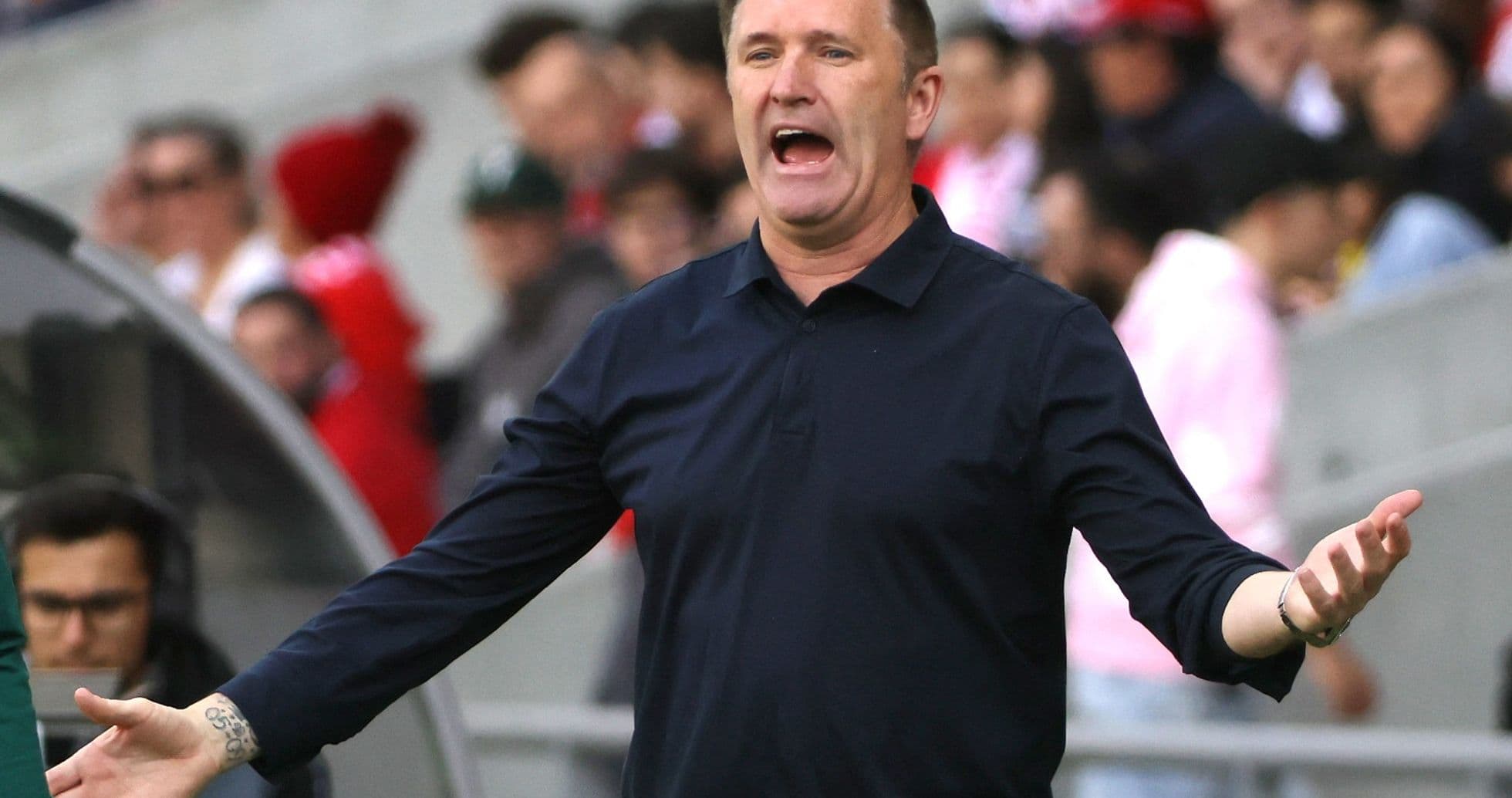
The former Ireland captain is understood to be the frontrunner to become the next manager of the Scottish champions after entering talks with principal shareholder Dermot Desmond. On football terms, it makes an obvious kind of sense: a decorated international, Ireland’s record goalscorer, and a player who lit up Celtic Park during a prolific loan spell in 2010.
But this is not just a football decision. Not at Celtic. Not now.
A fanbase divided
Keane’s recent past with Maccabi Tel Aviv sits at the heart of the fury. His decision to remain in Israel after the outbreak of the conflict in Gaza drew criticism in Ireland and has now triggered a fierce backlash among a vocal section of Celtic’s support, a fanbase that has made its stance on Palestine unmistakably clear for years.
Palestinian flags have become a familiar sight at Celtic matches throughout the conflict. Banners, tifos, and choreographed displays have turned the club’s terraces into a regular platform for political solidarity.
Now, those same stands are speaking out against the man who could soon lead the team.
Graffiti and banners opposing Keane’s potential appointment have appeared outside Celtic Park in Glasgow. The message is direct: this is more than a disagreement over tactics or style of play. For many, it is a question of conscience.
“Deeply divisive”
A group calling itself ‘Celtic Fans for the Liberation of Palestine’ has issued a strongly worded statement condemning the move to hire Keane, warning that his appointment “would be deeply divisive among the support”.
The statement, amplified by the ‘North Curve Celtic’ account on X, carries the weight of organised fan power. That account has published a list of 67 groups said to have endorsed the message, underlining just how broad the opposition could be inside a support that prides itself on its political identity.
“Celtic supporters have a long and proud history of solidarity with the Palestinian people,” the statement reads.
“For us, Robbie Keane’s decision to manage Maccabi Tel Aviv during the genocide in Gaza is impossible to ignore.
“To choose to manage a club in Israel while, less than 40 miles away, the same country was using indiscriminate weapons of mass murder against defenceless people is unconscionable.
“Celtic was founded by a community shaped by the legacy of genocide, displacement and famine. Our club’s roots lie in solidarity with those who suffered injustice and oppression.
“We urge the Celtic board to listen to supporters’ concerns and reconsider this appointment.”
The language is stark, the accusation uncompromising. It places Keane, and the Celtic hierarchy, squarely in the crosshairs of a moral argument that goes far beyond his CV.
Keane’s Israeli chapter
Keane took charge of Maccabi Tel Aviv in June 2023, months before the Hamas-led attacks of October 7 that triggered Israel’s bombardment of Gaza. Once the war began, his decision to stay in the job became a flashpoint.
On the pitch, he delivered. Maccabi secured a league and cup double under his watch, before he resigned in 2024 and moved on to Hungarian side Ferencvaros later that year.
Off the pitch, he defended his choice to see out the season, pointing to his responsibility to the staff who followed him to Israel.
“I have a duty of care,” he said. “My analyst, for example, was at Middlesbrough for 12 years. For him to come with me to Israel and then for me to just walk away, leaving him and his family.”
To some, that sounds like loyalty. To others, it is nowhere near enough to offset the symbolism of working in Israel during the bombardment of Gaza. At Celtic, where the club’s Irish Catholic roots and political consciousness are woven into its identity, that distinction matters.
A club at a crossroads
All of this unfolds as Celtic stand on the brink of another pivotal summer. Interim boss Martin O’Neill, 74, stepped in to guide the club to the Scottish Premiership title on the final day of the season and added the Scottish Cup for good measure, restoring a sense of momentum and authority.
Now the board must decide what comes next.
On one side, a high-profile candidate with a history at the club and fresh success abroad. On the other, a powerful section of the support warning that his arrival would tear at the fabric of what they believe Celtic stands for.
At most clubs, a managerial search is about systems, trophies, and transfer budgets. At Celtic, the choice over Robbie Keane has become a test of something deeper: how much a modern superclub is prepared to let its politics, its history, and its conscience shape who leads it from the dugout.