.svg&w=384&q=75 "naujapitch logo")
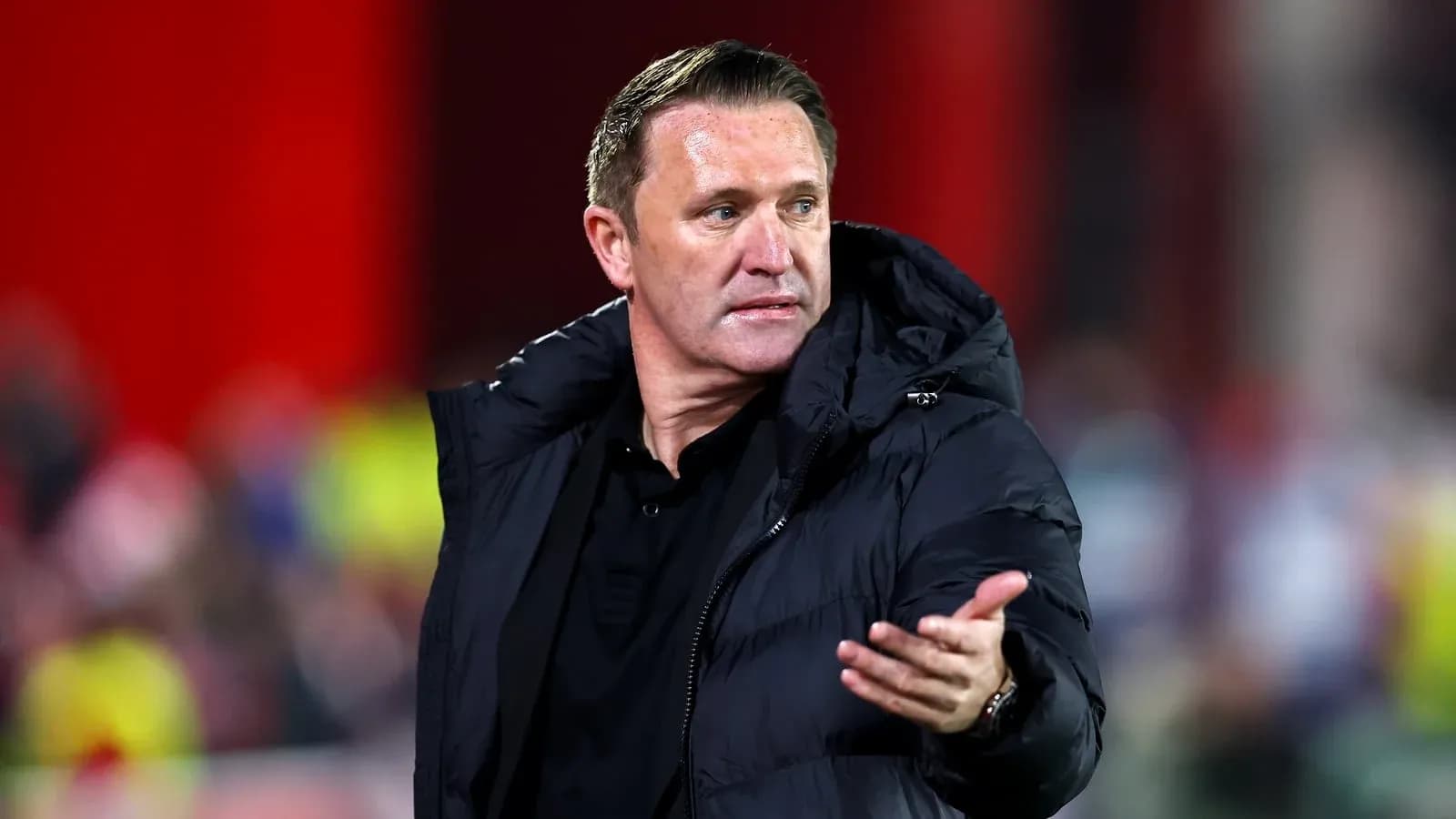
Celtic Fans Split Over Robbie Keane's Potential Appointment
The romance of Robbie Keane returning to Celtic Park was supposed to be simple. It never is with this club.
As talks continue between Keane and principal shareholder Dermot Desmond over the manager’s job, a powerful section of the support has moved firmly against the idea, turning what might have been a popular footballing appointment into a flashpoint over politics, identity and the club’s sense of itself.
From loan hero to lightning rod
Keane’s credentials on the pitch are not in doubt. The Republic of Ireland’s record goalscorer lit up Celtic Park during a prolific loan spell in 2010. As a manager, he has lifted league titles in both Israel and Hungary, adding weight to his candidacy as Celtic look to shape their next era.
Yet it is that Israeli chapter that now defines the debate.
Keane took charge of Maccabi Tel Aviv in June 2023, months before the Hamas-led attacks of 7 October and the subsequent Israeli bombardment of Gaza, which has led to the deaths of more than 70,000 people. When the conflict escalated, he stayed in his post. That decision, and the symbolism of managing an Israeli club during the war, has drawn fierce criticism in Ireland and, increasingly, in Glasgow.
What began as grumbling has hardened into organised resistance.
Graffiti, banners and a growing backlash
Outside Celtic Park in recent days, the mood has been written in spray paint and stitched into banners. Messages opposing Keane’s potential appointment have appeared around the stadium, reflecting anger that had already started to build online.
A statement from a group calling itself Celtic Fans for the Liberation of Palestine set the tone, framing Keane’s time at Maccabi Tel Aviv as incompatible with Celtic’s self-image and history. That message has now been amplified dramatically.
The North Curve Celtic account on X published a list of 67 groups said to have endorsed the statement. It is not a fringe coalition. Among the names are the Green Brigade and Bhoys Celtic ultras, long-established supporters’ clubs such as Glasgow University Celtic Supporters Club (CSC) and Craigneuk Tommy Gemmell CSC, and several prominent fan media outlets including the Cynic and eTims.
This is the organised core of Celtic’s matchday atmosphere and much of its online voice, lining up against the board’s reported preferred candidate.
“Impossible to ignore”
The statement they have backed is unflinching. It argues that Celtic supporters “have a long and proud history of solidarity with the Palestinian people” and insists that Keane’s decision to manage Maccabi Tel Aviv “during the genocide in Gaza is impossible to ignore.”
It goes further, placing the club’s founding values at the heart of the objection. Celtic, the statement says, was born from “a community shaped by the legacy of genocide, displacement and famine,” and its roots “lie in solidarity with those who suffered injustice and oppression.”
To then appoint a manager who chose to work in Israel “while, less than 40 miles away, the same country was using indiscriminate weapons of mass murder against defenceless people” is described as “unconscionable.”
The language is stark, and it reflects the wider political framing. Last October, an independent UN commission concluded that Israel had committed genocide against Palestinians in Gaza. That finding is now being invoked directly in the debate over who should lead Celtic.
Unity at risk
For many inside the club, this was meant to be a summer of consolidation and ambition. Instead, the choice of manager threatens to open a deep fault line.
“At a time when Celtic requires unity and collective purpose, this appointment would be deeply divisive among the support,” the statement warns. It also criticises Keane’s candidacy on football grounds, calling it “a predictable and uninspiring choice at a moment when greater ambition is needed.”
The message to the board is blunt: “We urge the Celtic board to listen to supporters’ concerns and reconsider this appointment.”
The pressure is not just moral or symbolic. Groups like the Green Brigade have, in the past, shaped the atmosphere inside Celtic Park and influenced how the club is perceived around the world. Their backing or opposition to a manager can colour an entire tenure before a ball is kicked.
Keane’s stance and his defence
Keane, now 45, guided Maccabi Tel Aviv to a league and cup double before resigning in the summer of 2024. On the pitch, it was a resounding success. Off it, the scrutiny never eased.
He has since explained why he stayed in Israel for the full campaign, pointing to his responsibilities to the staff who followed him there.
“I have a duty of care,” he said. “My analyst, for example, was at Middlesbrough for 12 years. For him to come with me to Israel and then for me to just walk away, leaving him and his family….”
“So I made the decision to stay until the end of the season and to walk away from a big contract - another year, possibly two more years. We made that decision as a group, as staff.”
For some, that explanation speaks to loyalty and leadership. For others, it does nothing to soften the core objection: that he chose to work, and then remain, in Israel during a war that has devastated Gaza.
A decision that will echo
Celtic has long been more than a football club to its support. It is a vessel for history, politics and identity, often loudly so. The Palestinian cause has been visible on its terraces for years; flags, banners and displays have drawn both praise and UEFA sanctions.
Appointing Robbie Keane now would not just be a footballing call. It would be read as a statement about what, and who, the club is prepared to stand alongside.
Desmond and the Celtic board know the stakes. They are not just choosing a manager. They are choosing whether to push ahead in the face of organised fan resistance or step back and seek a different path.
Whichever way they turn, this episode has already posed a sharper question: in the modern game, can Celtic still live up to the ideals it so often claims as its own?