.svg&w=384&q=75 "naujapitch logo")
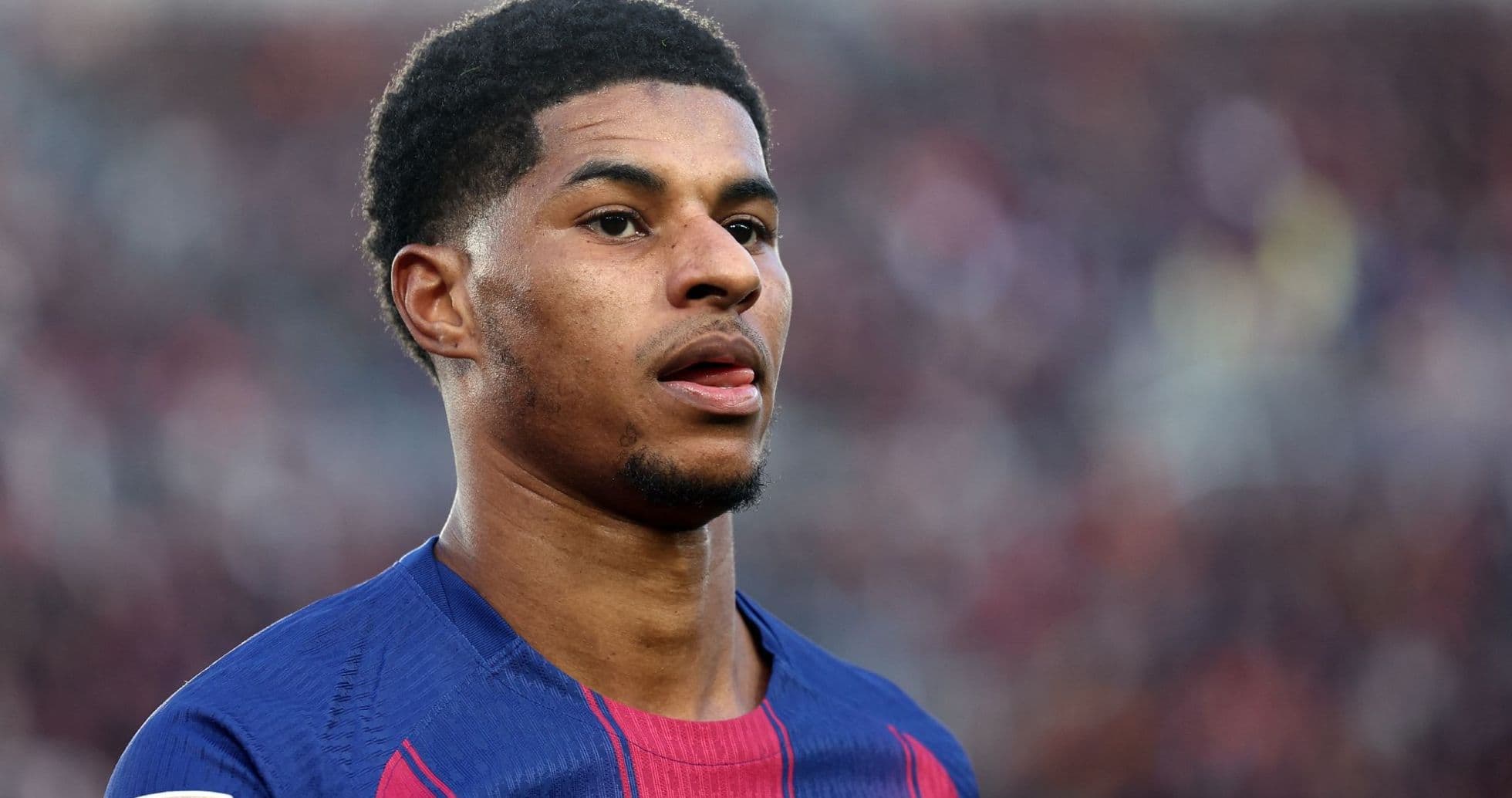
Barcelona's Decision on Marcus Rashford Amid Anthony Gordon's Arrival
The moment Barcelona pushed Anthony Gordon’s transfer over the line, Marcus Rashford’s fate in Catalonia was effectively sealed.
Hansi Flick suddenly had more left-sided firepower than he could realistically use. Gordon, the headline €70 million arrival from Newcastle, walked into a squad that already included Raphinha, now entrenched as a starter in the front three. Rashford, who had fought his way back to form in Spain, slipped from long-term solution to expendable luxury almost overnight.
Barcelona close the door
Barcelona have decided they will not activate the €30 million clause to make Rashford’s stay permanent, as reported by Marca. The numbers initially looked tempting. Rashford had agreed to a 40% wage cut to remain at the club, and his annual amortisation would have hovered around €10 million. For a player of his pedigree, that kind of structure usually screams opportunity.
Then came Gordon.
The England winger arrives on a lower weekly salary, but the size of his transfer fee changes the calculation. His €70 million move translates into an amortisation cost of around €14 million per year. On the surface, that leaves the club paying almost the same yearly outlay when wages and fees for each player are combined.
So why choose Gordon and walk away from Rashford?
Barcelona’s hierarchy view Gordon as the stronger long-term asset. At 23, he offers resale value and a wider developmental runway. Rashford turns 29 in October, three and a half years older than his new international team-mate. For a club determined to build a sustainable project, age is not a footnote; it is a central pillar of the recruitment strategy.
The deadline to trigger Rashford’s clause expires on Monday. Inside the club, there is no expectation of a dramatic late twist. The decision has been made.
Flick’s football, Flick’s demands
The sporting rationale is as sharp as the financial one. Flick wants forwards who defend like midfielders and press like full-backs. His system leans on ferocious work without the ball, and the staff judged Gordon to be the more intense presser from the front.
High-pressure defending is non-negotiable for the German. It is the starting point, not the add-on. While Rashford’s quality in transition and his eye for goal are not in doubt, he was often viewed as less effective in that relentless pressing game than his younger compatriot.
In that light, the choice becomes clearer. Two left-sided forwards, similar total annual cost, but one fits the manager’s tactical blueprint more naturally and offers a longer horizon. Barcelona backed the profile they believe better matches the future they are trying to build.
Rashford’s next move
Rashford will now head back to Manchester United, at least on paper. His return feels more administrative than emotional. The expectation is that he will cut ties with United permanently this summer.
His loan spell in Spain has done its job. The 28-year-old has rebuilt his reputation and reminded Europe’s elite of his ability to shift a game from the flank or through the middle. That resurgence has not gone unnoticed.
Arsenal are among the clubs monitoring his situation as they look to add flexibility and depth to their forward line. A player who can operate across the front three, carry the ball at pace and finish in big moments fits neatly into their evolving attack.
Interest is not confined to England. Reports also link Bayern Munich with the forward, though any move to the Bundesliga would likely hinge on Rashford accepting a reduced salary. For a player who has already shown a willingness to trim his wages to make a project work, that is not an impossible scenario.
Barcelona have made their bet on Gordon and moved on. Rashford now steps into a different kind of window, one where his form has reopened doors but his next decision will define the prime years of his career.