.svg&w=384&q=75 "naujapitch logo")
Andy Robertson: Tottenham’s New Standard-Setter
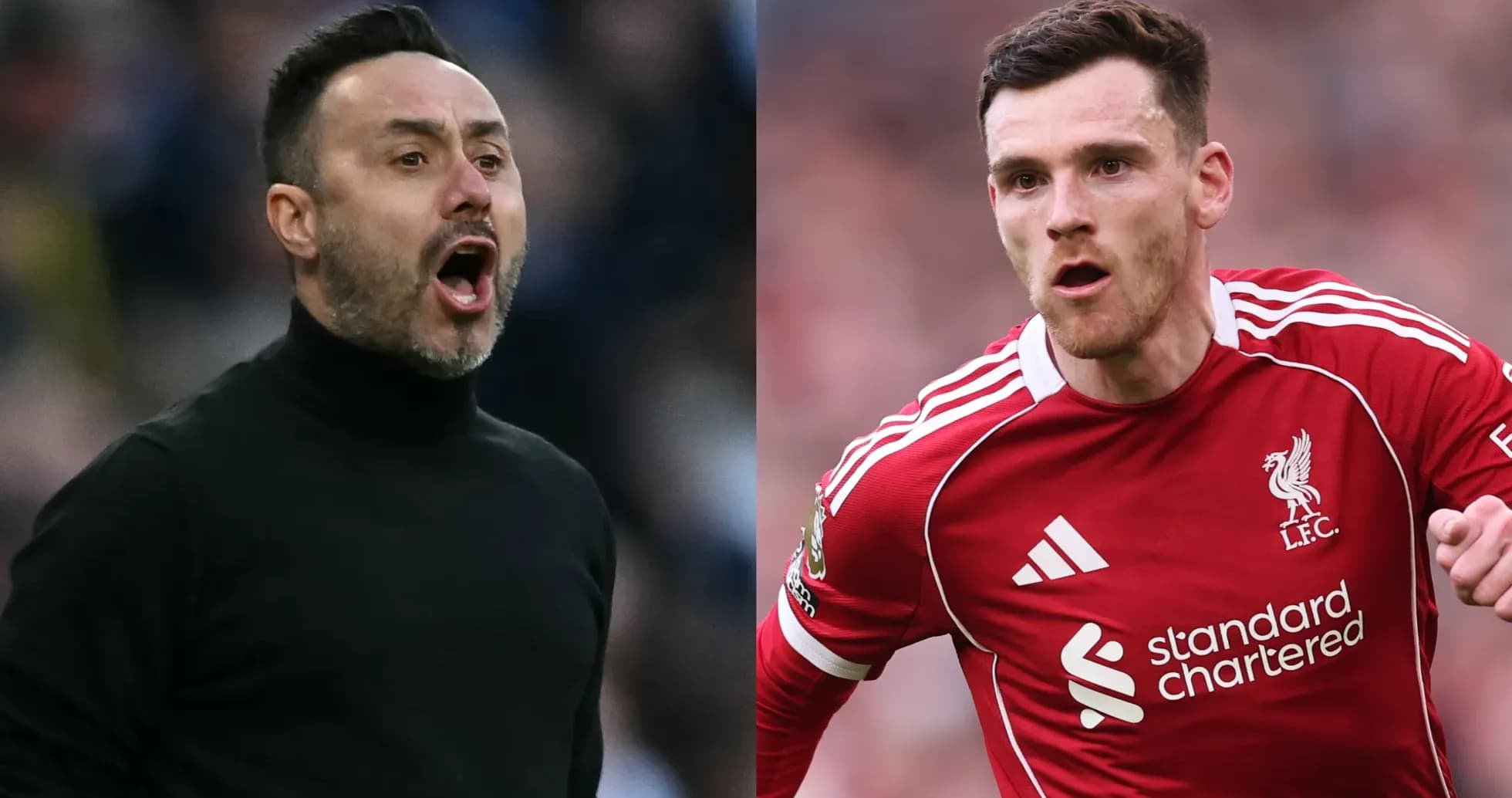
The sight of Andy Robertson in anything other than red will take some getting used to. For eight years he thundered up and down Liverpool’s left flank, a constant in a side that collected trophies at a relentless pace and reshaped what a modern full-back could be.
Now he belongs to Tottenham Hotspur. And that changes the temperature in north London.
A Liverpool great, by any measure
You don’t survive, let alone thrive, under Jurgen Klopp without intensity in your blood. Robertson had it in surplus.
He arrived from Hull City in 2017 for a reported £8million and left having won everything that mattered: two Premier League titles, a UEFA Champions League, an FA Cup, two League Cups and a FIFA Club World Cup. That is the full sweep, the complete set, the kind of medal collection that anchors a legacy.
Within Liverpool’s Premier League era, he stands alone at left-back. Go back through the club’s history and the debate narrows quickly to two names: Alan Kennedy, scorer of two European Cup-winning goals, and Robertson, the relentless Scot who turned the flank into a runway.
His game meshed perfectly with Klopp’s football. High line, high press, high risk. Robertson embraced it all. He attacked space with and without the ball, overlapped on repeat, and still had the legs to recover defensively. It was a partnership between player and manager that felt almost pre-ordained.
He didn’t just impress the Kop. He impressed his opponents. After Liverpool’s 3-1 win over Manchester United in December 2018, Jose Mourinho admitted he was exhausted just watching Robertson, describing a player who “makes 100-metre sprints every minute, absolutely incredible.” That was the reputation: a full-back who simply didn’t stop.
A running machine with bite
The numbers back up the eye test. In 2020/21, Robertson covered 389.3km in the Premier League, the second-highest total among full-backs, just behind Luke Ayling. Those are midfielder’s distances from a defender who also had to sprint, press and cross.
He didn’t just run far, he ran fast and often. Between 2019 and 2022, Robertson led all Premier League full-backs for sprints in three straight seasons:
- 2019/20: 567 sprints
- 2020/21: 843 sprints
- 2021/22: 656 sprints
No one at his position could match that combination of volume and intensity. That engine underpinned one of the most famous defensive sequences of the Klopp era: the 13-second press against Manchester City in January 2018.
In that wild 4-3 win at Anfield, Robertson hunted in a single, furious burst, closing down Bernardo Silva, Kyle Walker, John Stones, Ederson and Nicolas Otamendi in one continuous chase. It wasn’t a tackle or a block that made the clip iconic. It was the sheer will to keep going, to suffocate City’s build-up on his own. Liverpool fans fell in love with that version of Robertson and never really fell out of it.
Tottenham supporters will recognise that trait quickly. He presses like a forward, tackles like a centre-back and runs like a winger. That combination travels well.
Creation from the flank
For all the talk of his stamina, Robertson’s true greatness lies in what he did with the ball.
Only two full-backs in Premier League history have recorded 10 or more assists in three separate seasons: Trent Alexander-Arnold and Andy Robertson, in the same campaigns – 2018/19, 2019/20 and 2021/22. Liverpool built an era with their full-backs as playmakers, and Robertson was half of that blueprint.
Across the league, since his first Liverpool season in 2017/18, he has dominated almost every attacking metric for left-backs:
- 612 touches in the opposition box – ranked 1st among left-backs, 1st among all defenders
- 430 chances created (including assists) – 1st among left-backs, 2nd among defenders
- 88 big chances created – 1st among left-backs, 2nd among defenders
- 56 Premier League assists – the most by any left-back
- 973 open-play crosses – 1st among left-backs, 2nd among defenders
- 191 successful open-play crosses – 2nd among left-backs, 3rd among defenders
- 4,000 successful passes ending in the final third – 1st among left-backs, 1st among defenders
Only Lucas Digne has more successful open-play crosses from the left-back position. Otherwise, Robertson sits at the top or right next to it.
Is he the greatest left-back in Premier League history? Ashley Cole still holds that crown for many, given his longevity at the very highest level with Arsenal and Chelsea. But Robertson is in that conversation now, shoulder to shoulder with a player once considered untouchable in that debate.
Why Tottenham moved for him
When a player of this pedigree becomes available on a free transfer, the market reacts. Spurs were among several clubs pushing to secure Robertson once it became clear he would leave Liverpool at the end of his contract.
They had tried to move early. A January approach fell away when Liverpool could not recall Kostas Tsimikas from his loan at Roma. The door closed temporarily, not permanently.
Roberto de Zerbi, newly installed as Spurs head coach, wanted it reopened. He pushed for the deal again and, after fending off reported interest from Juventus, Tottenham finally got their man – a 32-year-old serial winner who still plays like he has something to prove.
On paper, Spurs were not short of left-backs. Destiny Udogie offers power and promise, Djed Spence brings athleticism and versatility. What they lacked was a senior figure with a chest full of medals and a voice that carries in the dressing room.
“He brings experience, mentality and qualities,” De Zerbi said when the signing became official. “He’s a big player for us.” That line matters. Spurs have finished 17th in back-to-back seasons. Their problem hasn’t just been talent; it has been standards. Robertson has lived in an environment where those standards never dipped.
He knows what a title-winning culture feels like on the training pitch, in the gym, in the dressing room. Tottenham are buying that as much as his left foot.
What’s left in the tank? Plenty
Age always prompts the same question: how much is left?
Robertson will captain Scotland at the FIFA World Cup 2026. International managers don’t hand out that responsibility to passengers. At club level last season, he remained heavily involved for Liverpool, starting 11 Premier League matches and coming off the bench 13 more. Across all competitions, he featured 35 times.
He is not quite the same relentless raider who lived in the opposition box, but the attacking intent remains. His heat map from 2025/26 still burns bright along that left touchline, showing a player who pushes high, overlaps and supplies width.
Crucially for Spurs, his output per 90 minutes still outstrips their existing options. In the Premier League last season:
- Passes played into the box per 90:
- Robertson: 5.07
- Spence: 2.67
- Udogie: 1.75
- Tackle success rate:
- Robertson: 75.00%
- Spence: 61.36%
- Udogie: 61.29%
- Successful open-play crosses per 90:
- Robertson: 0.92
- Spence: 0.44
- Udogie: 0.34
- Chances created per 90:
- Robertson: 1.54
- Spence: 0.81
- Udogie: 0.44
Those numbers do not belong to a fading force. They belong to a player who can still dictate a flank and tilt a game from full-back. On this evidence, he does not arrive in north London to be a squad option. He arrives to start.
He will give De Zerbi the width and balance his system craves, the angles into the box, the whipped deliveries that turn half-chances into goals. He will also give Spurs a defender who wins his duels and sets the press, not waits for it.
Raising the bar at Spurs
This is what makes the deal feel so astute. Tottenham are not gambling on potential. They are importing certainty.
Robertson brings a track record of winning, an intolerance of complacency and a personality that naturally drags standards upwards. He has operated for years in a dressing room where anything less than a title challenge felt like failure. Spurs, after two seasons flirting with the drop, need that kind of shock to the system.
De Zerbi wants intelligent, technical players who compete with courage and conviction. Robertson ticks every one of those boxes. He may no longer be at his absolute peak, but the class remains, the mentality remains, the engine remains.
The shirt has changed. The expectations around him haven’t.
The real question now is whether Tottenham can rise to his level, or whether he will spend the next few years trying to drag them up to it.