.svg&w=384&q=75 "naujapitch logo")
Tottenham's Season of Crisis: Injuries and Rebuilding Trust
Tottenham have stared into the abyss. Now they’re dissecting how they got there.
Two points. That was the thin strip of daylight that kept them out of the Championship after a season so chaotic it ended with four different head coaches, a dressing room decimated by injuries and a fanbase braced for disaster on the final day.
Roberto De Zerbi’s late surge – 11 points from the final six games – dragged Spurs clear, but nobody inside the club is pretending this was anything other than a crisis narrowly averted. The response has been blunt: an internal review that spares nobody and nothing, from the sporting director’s role to the pitch beneath their own feet.
Lange on the brink, new power structure looming
Sporting director Johan Lange is at the heart of the shake-up. His position is in serious doubt after a disastrous 12 months that saw Tottenham lurch from one head coach to another and never find any rhythm.
The Dane may yet stay, but the expectation is that he will be moved into a supporting or handover role as Spurs chase what they describe as a “world-class” sporting director to lead a modernised football operation. The message is clear: the current structure has failed.
Non-executive chairman Peter Charrington has already gone public, promising moves to “modernise our football operation, with a significant focus on raising standards across medical and performance”. Behind those words sits a brutal assessment of how far Spurs have slipped from the game’s elite.
A squad held together by tape
The numbers are damning. Tottenham suffered more injuries than any other Premier League side this season, many of them long-term, many of them to key players. It shredded any chance of continuity and left De Zerbi constantly patching together line-ups.
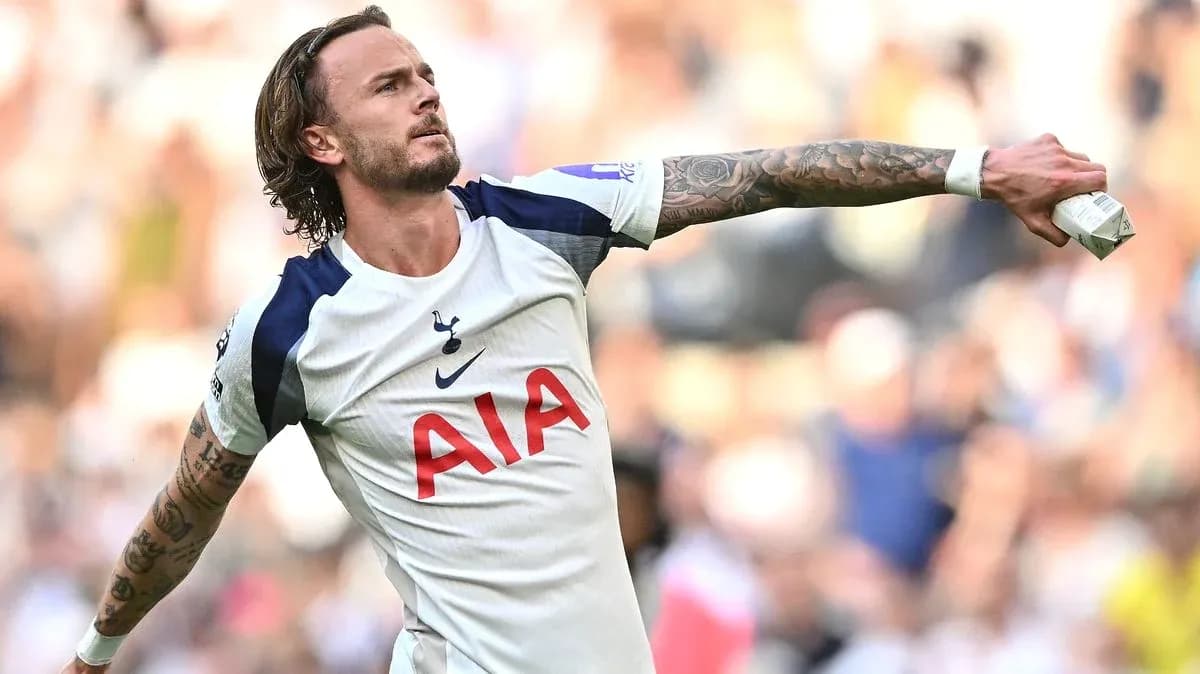
James Maddison, only just back after his partially torn ACL finally gave way last summer, voiced the frustration that had been simmering in the dressing room.
“Our situation with the injuries has been worse than any other club,” he said after the win over Everton. “People try and say ‘Oh, but we’ve got this and that’, but ours is astronomical, and we need to look at why that is.”
That “why” has become the obsession at Hotspur Way.
Lewindon arrives and finds a mess
The man charged with answering it is Dan Lewindon, the new performance director. He arrived from City Football Group in February, walked through the doors at Hotspur Way the day before Thomas Frank departed, and immediately found a department in flux.
For years Spurs had stability under Geoff Scott, the long-serving head of medicine and sports science. Scott left in 2024 after more than two decades and is now at Nottingham Forest. His departure opened the floodgates.
Adam Brett, director of performance services, and Nick Davies, head of sports science, both exited after just a year in post. Nick Stubbings came in last summer from Brentford as the men’s medical lead, part of a quiet migration from west to north London that also included Frank and other former Bees.
But the real pivot is Lewindon. With a background spanning football, tennis and rugby at elite level, he has been given licence to rip up the old model. Spurs believe he is the figure who can finally drag them away from the cycle of double-figure absentee lists that have haunted the last three seasons.
De Zerbi and the new medical alliance
De Zerbi has wasted no time forging an alliance with Lewindon. The pair speak regularly about how to reshape the performance and medical departments so they look and behave like those at the very top of the European game.
Inside the building, De Zerbi has impressed staff by refusing to gamble recklessly on players’ fitness, even under intense pressure for results. He has insisted on clear communication, demanded detailed feedback and, crucially, backed the medical calls when they have urged caution.
Those who have sat in meetings with him talk of an Italian who sees himself partly as a psychologist, constantly looking to rebuild fragile confidence. During the late-season run that saved Spurs, he held frequent one-on-ones, used video packages of players’ best moments – at Tottenham and previous clubs – and hammered home the idea that individuals came before short-term wins.
It has not gone unnoticed in the treatment room.
The pitch under suspicion
The investigation has gone deeper than training loads and recovery windows. Even the ground beneath the players’ boots is under scrutiny.
Tottenham are examining whether the retractable pitch at the Tottenham Hotspur Stadium has contributed to a spate of ACL injuries. The surface slides under the South Stand to allow NFL games and concerts, and there have been five ACLs at Spurs in recent years. Inside the club there is a frank acceptance: that number is too high.
Real Madrid, who also use a retractable system, have endured their own injury crises. The parallel has not been ignored.
Early independent tests on matchdays have so far found no difference in bounce or spring between the stadium pitch and the training turf at Hotspur Way, but that is just the start. More detailed analysis will follow, designed to rule out – or confirm – any hidden risks.
Some injuries, the club stress, are simply cruel luck. Xavi Simons and Wilson Odobert fall into that category. The handling of Simons’ injury at Molineux has already been reviewed internally; physios allowed him to try to continue, as he wanted, but took him off when it was clear he could not go on. Spurs are satisfied that no extra damage was done.
Still, coincidence alone is no longer an acceptable answer.
Fighting the ‘Spursy’ label – with science and psychology
The physical rebuild is only half the story. Tottenham know the scars are mental too.
This is a club routinely mocked as ‘Spursy’, accused of folding when it matters most. That tag bites. Lewindon has been central to a push for a new lead psychologist to work full-time with players and staff, dealing head-on with the strain of elite football and the weight of that reputation.
De Zerbi has already taken on some of that work himself, but Spurs want a permanent specialist presence. The idea is not just to help players cope with pressure, but to harden them against the anxiety that comes with repeated injuries and constant managerial upheaval.
Pods, not production lines
One of Lewindon’s most significant planned changes is structural. Tottenham are moving towards a pod-based model of care: small groups of four to six players surrounded by a dedicated physio and sports scientist.
Instead of staff spreading themselves thinly across the entire squad, each pod will receive tailored attention, with the specialists expected to understand not just the players’ physical profiles but their roles on the pitch and their personalities off it.
It is the medical equivalent of shrinking a classroom so the teacher actually knows every student. The hope is obvious: better information, better trust, better decisions on training loads and return-to-play timelines.
That approach dovetails neatly with De Zerbi’s insistence that the club must understand players as people – their family lives, their psychological triggers, their tactical demands – if they are to compete at the highest level.
Rebuilding trust in the treatment room
Trust has frayed. Too often, Spurs players have leaned on staff from former clubs or national teams, or turned to the growing army of private performance coaches that modern footballers employ.
Tottenham are not trying to fight that trend; no club can. Instead, they want to knit those external voices into a single, agreed plan for each player. The aim is to stop mixed messages, align all parties and make sure the player sits at the centre of a coherent strategy rather than being pulled in three directions.
Once Lewindon’s review is complete, changes behind the scenes are expected. New faces, fresh ideas, tighter integration between departments. Recruitment will also be shaped by the findings: Spurs want more robust profiles to withstand the demands of De Zerbi’s high-energy football.
The cost of chaos on the touchline
Inside the club there is also a blunt recognition that the revolving door in the dugout has taken a heavy toll on bodies.
Every new head coach arrives with new drills, new demands, new intensity. Players push themselves harder to impress. Sessions spike, workloads fluctuate, soft-tissue injuries follow. Tottenham’s recent history has been a case study in how instability at the top can ripple down into the treatment room.
The lesson has been learned the painful way.
A club out to prove this season was the nadir, not the norm
Tottenham know they cannot live through another campaign like this one. They have peered over the edge; the next step down is not a warning, it is relegation.
The fixes will not be instant. No one inside the club is expecting a magic cure by August. But the belief is that Lewindon’s overhaul – allied with De Zerbi’s clarity and the reshaping of the sporting structure – will, over time, cut the injury count and give the head coach something he barely had this year: a full squad to pick from.
If they get it right, the word ‘Spursy’ might finally start to feel outdated. If they get it wrong, the margin for error has already been measured. Two points.