.svg&w=384&q=75 "naujapitch logo")
Premier League Trophy: A Symbol of Glory
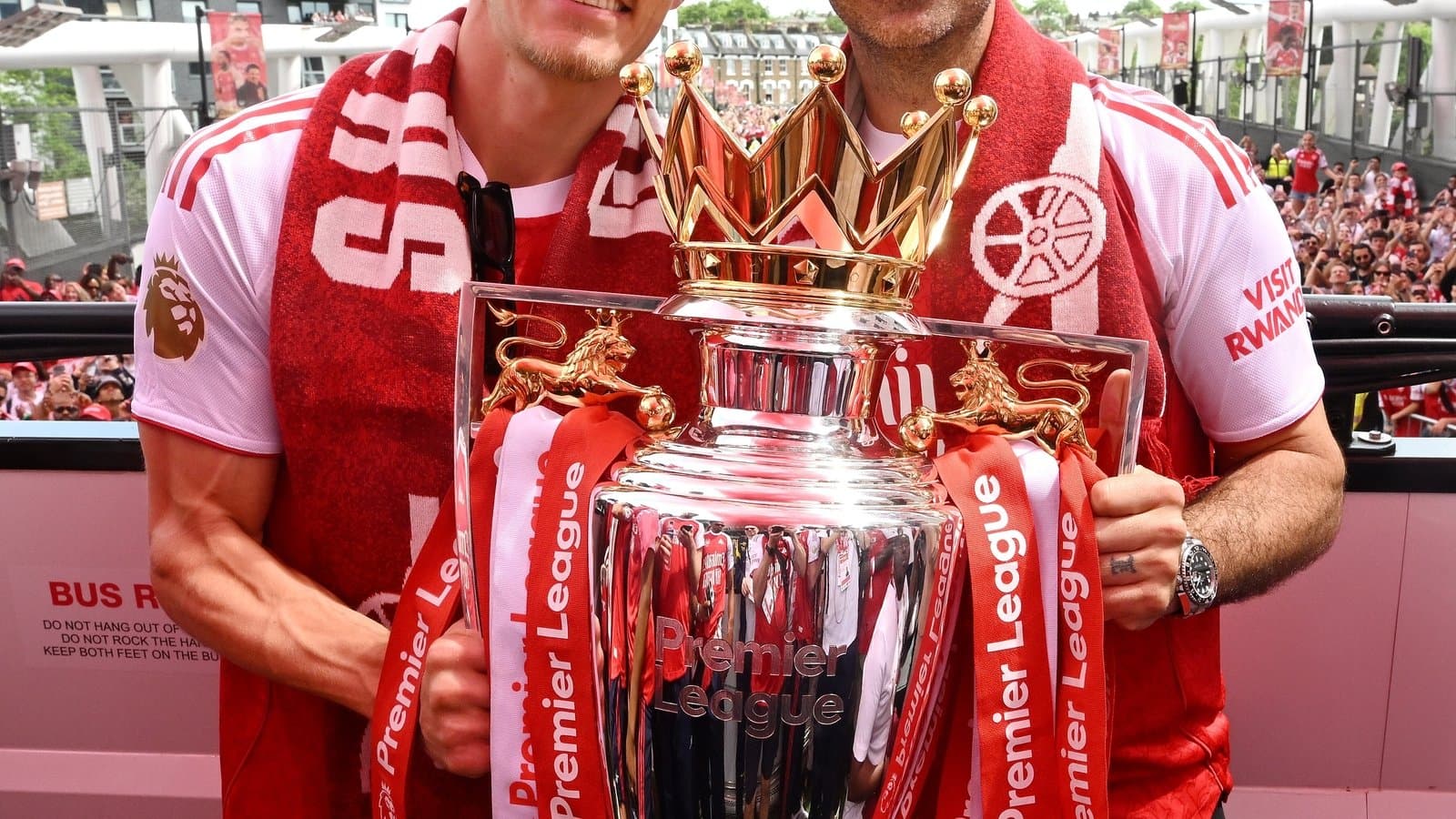
The Premier League trophy glinted under the Selhurst Park lights as Martin Ødegaard raised it high, a 22–year wait finally snapped in one cathartic moment. Weeks later, it rolled through a sea of colour and noise at a champions parade, the silver centrepiece of a season that rewrote a generation’s history.
Now it rests in the club’s cabinet. Heavy. Regal. Loaded with stories. And with a few quirks of its own.
A weight worthy of a season
Every player wanted a turn with it. Of course they did. But that triumphant lift comes with a surprising strain.
The main Premier League trophy weighs 9.5kg – around 1.4 stone. Enough to feel it in your shoulders when you hold it aloft, especially after 90 minutes and a season of running on fumes.
Add the engraved base, and the total jumps to 25.4kg, or 4 stone. That’s what the captain takes on when he steps up, grips the handles, and becomes the focal point of a club’s entire year in a single, roaring second.
A towering symbol
Up close, the trophy is bigger than it looks on television.
From the very bottom of the engraved base to the tip of the crown, it stands 104cm tall – about 3ft 5in. It stretches 61cm across, roughly 2ft wide, a broad, imposing piece of silverware that dominates any room it enters.
And there isn’t just one.
There are actually two identical Premier League trophies. Both carry the roll call of champions around the base, both built to the same exacting design, both ready to be the centre of the title story each season.
Built like a crown jewel
The detail runs deeper than shine and shape.
The base carries every winner from the inaugural 1992/93 season right through to the latest champions of 2025/26, a carved history lesson in English football dominance.
That base is made from malachite, a semi-precious stone sourced from Africa. Its rich green ring is not just decoration; it represents the field of play itself, a permanent nod to the pitch where titles are won and lost.
The main body is cast by Asprey London, the Crown Jewellers. It is formed from solid sterling silver, while the crowns are made from 24–carat silver gilt, giving the trophy its distinctive royal sheen.
The design follows a clear theme: “The Three Lions of English Football”. Two golden lions stand on either side of the trophy. When the captain grasps the handles and lifts it into the air, he becomes the third lion, completing the image that has come to define English title glory.
How long does it stay?
For now, one version of the trophy lives with the champions, a daily reminder of the standard they’ve set. The other remains with the Premier League, used for official duties and logistics throughout the campaign.
But the silver celebration is on loan, not permanent.
The club must return its trophy to the Premier League at least three weeks before the final round of league fixtures. From there, the cycle begins again, the silverware readied for the next chase, the next captain, the next lion ready to take his place beneath the crown.