.svg&w=384&q=75 "naujapitch logo")
Morgan Gibbs-White's Message After World Cup Omission
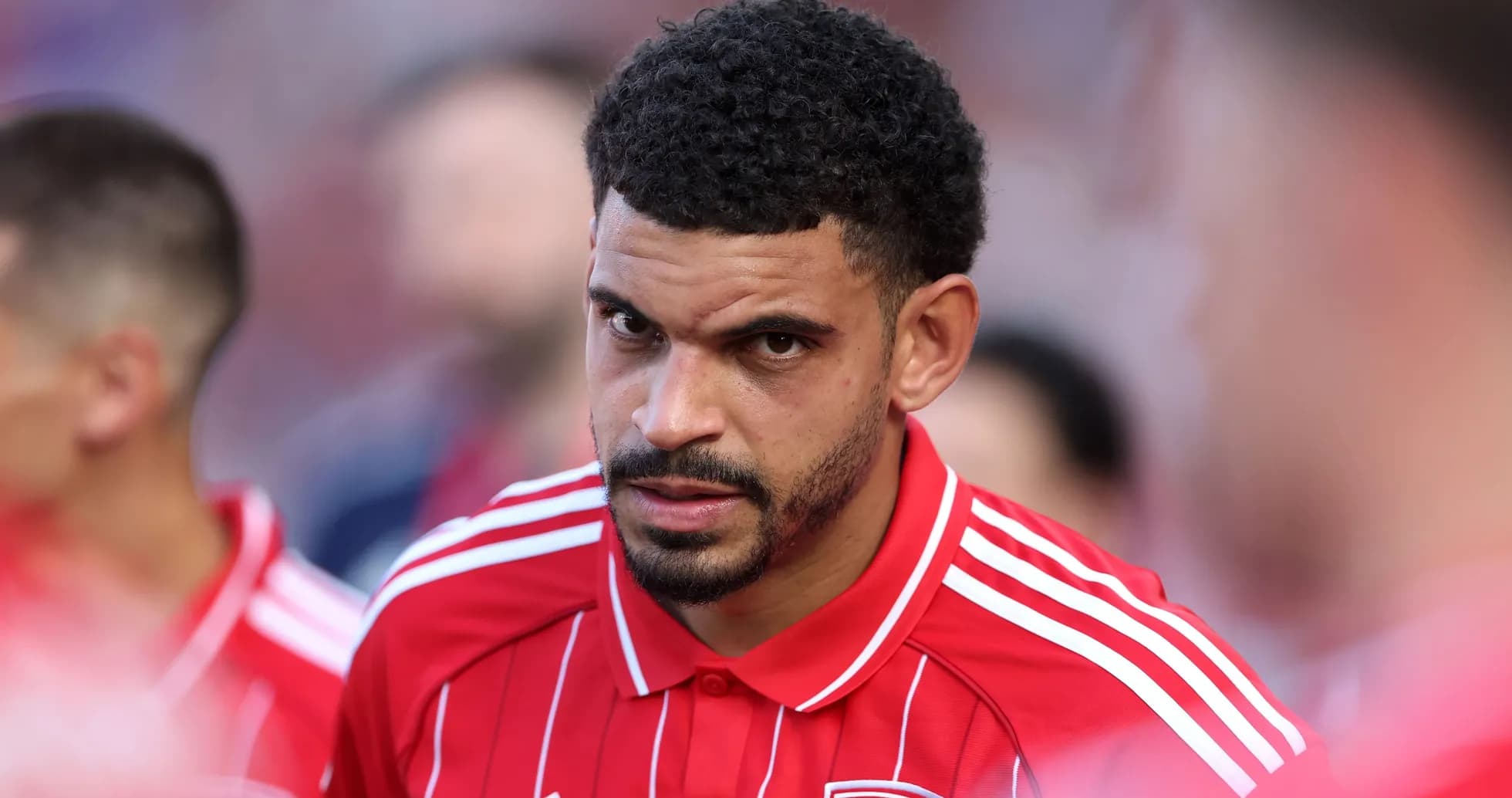
Morgan Gibbs-White walked off the City Ground pitch with 18 goals for the season, a point for Nottingham Forest, and a point to prove.
Three days after learning from Thomas Tuchel that he would not be going to the 2026 World Cup, the playmaker answered in the most public way possible: a whipped, vicious free-kick in a 1-1 draw with Bournemouth, followed by a celebration that left nobody guessing what it meant.
He turned to the Trent End, jabbed his fingers and pointed to the name on his back. Not subtle. Very deliberate. A message to the England manager, and maybe to anyone else who still doubts what he brings.
Left out, fired up
Gibbs-White’s omission from Tuchel’s squad was one of the headline calls of a divisive selection. Twenty-five goal contributions across the campaign, a talisman for Forest, and still not on the plane.
The news came via a phone call on Thursday evening. No statement, no intermediary. Tuchel rang him himself.
“I know myself that I have done more than enough to be in the squad. I got on the wrong side of someone’s opinion,” Gibbs-White said after the game. There was no self-pity, only a familiar edge. “I have been on the wrong side of people’s opinions throughout my career, so I’m only going to bounce back.”
He described the conversation with Tuchel as “good” and made a point of respecting the manager for delivering the decision personally. “I agreed with what he had to say,” he added, before drawing a line under a long domestic season. “I’m glad the season is behind us now, I’m going to concentrate on the summer.”
The crowd were less diplomatic. From early on, chants aimed squarely at the England manager rolled around the ground. Every touch from Gibbs-White felt loaded. Every set piece felt like an audition he shouldn’t have needed.
When the free-kick flew in, the reaction was volcanic. The home support knew the subtext. So did the player.
Tuchel’s hard line on balance
Tuchel has stood firmly by his decisions. He has framed this England squad not as a collection of the biggest names, but as a carefully weighted group built on “positional balance” and “hunger”.
That stance has left several established stars watching the tournament from home. Gibbs-White joins Phil Foden and Cole Palmer among the most high-profile absentees, a cluster of creative No 10s deemed surplus to requirements in the final cut.
“Does this mean that the other guys that you mentioned did anything wrong? No,” Tuchel said, defending the omissions. For him, the issue is structural. “For some of them, it's just a positional thing that we also tried to have a balanced squad and not to bring five number 10s and make them play out of position because whom would we do a favour with? The player or ourselves? I don't think so.”
He has made his bet: fewer playmakers, more versatility, a group selected on what he believes they can do for his system now rather than on reputation or raw numbers. The backlash has been fierce, but Tuchel has not flinched.
Gibbs-White, for his part, cannot change the call. What he can change is the narrative around his name. Performances like this one, in the emotional aftermath of rejection, tend to linger in the minds of supporters and scouts alike.
Anderson in the shop window
While Gibbs-White processes disappointment, another Forest midfielder finds himself at the centre of a very different story.
Elliot Anderson has surged into Tuchel’s plans and is on course to start England’s opener against Croatia. His stock has risen sharply, and so has the noise around his future.
Forest have placed a £100m valuation on him, a figure that has not scared off Manchester City or Manchester United. Interest from both has been widely reported, and the summer promises to test the club’s resolve.
Vítor Pereira did not attempt to hide Anderson’s quality after the final game of the season, but he did try to draw a line around the club’s ambitions.
“If you ask me if he deserves the best clubs in the world, he deserves,” the Forest boss said. “He has a lot of quality, he is a talent, but he is our player and I am very happy with him.”
Then came the reality check every manager at a selling club knows too well. “The market is the market, I cannot predict the market. I know we want to keep the same players, to bring two or three players to help us balance the squad. In the end, we’ll see.”
Forest stand at an intriguing crossroads. One star creator left out of a World Cup squad, burning to prove a point. Another on the brink of using that same tournament as a launchpad to the very top.
For Gibbs-White, the World Cup will be watched from afar. For Anderson, it could change everything. For Forest, the question is blunt: can they hold this group together long enough to see how far it might actually take them?