.svg&w=384&q=75 "naujapitch logo")
Martin O’Neill Returns to Celtic: A New Era Begins
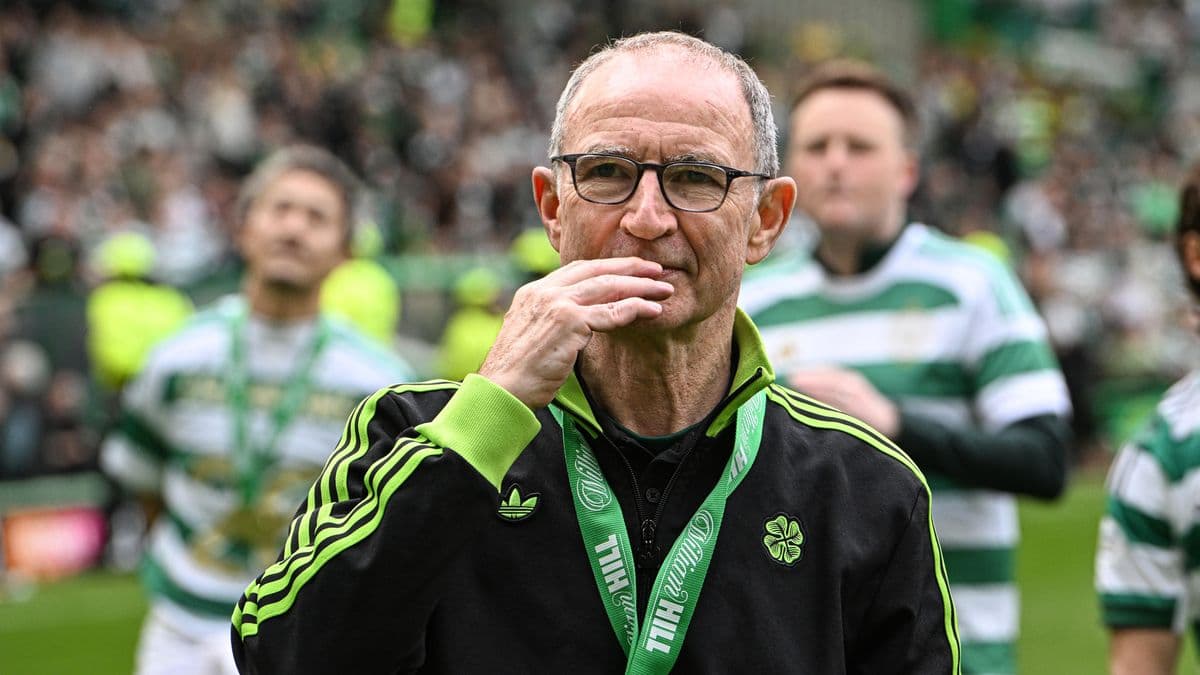
Martin O’Neill is back. Not as a fire-fighting stopgap this time, but as Celtic’s man for the future – however long a 12‑month contract at Parkhead ends up lasting.
The 74-year-old has agreed to take the reins on a permanent basis for a second spell, having walked back into a club in turmoil last season and walked out of it with a domestic Double. In the wreckage of Wilfried Nancy’s short and chaotic tenure, O’Neill steadied the dressing room, re‑energised the stands and dragged Celtic to the Premiership title and the Scottish Cup.
That kind of salvage job tends to carry weight in Glasgow. So does his history.
O’Neill wins the derby for the dugout
Celtic’s hierarchy spoke to other candidates. Robbie Keane, once the fans’ darling as a loan striker, emerged as the most serious rival for the job and held talks about taking over. On paper, it was a romantic option: a former Celt, ambitious, hungry, a fresh face in the technical area.
Reality cut through the nostalgia. Keane’s controversial spell in Israel triggered a fierce backlash among a support already angered by recent missteps from the board. The reaction was loud, organised and unforgiving. In a city where optics matter almost as much as results, that noise was impossible to ignore.
Dermot Desmond, the club’s majority investor, met O’Neill to thrash out what a longer-term arrangement would look like. Those conversations have now produced a one-year deal, a compromise between sentiment and pragmatism. Celtic get the authority and experience they trust. O’Neill gets the freedom to shape the club’s next move without being tied to a long, inflexible contract.
Backroom rebuilt, structure still in flux
O’Neill did not come alone when he returned last season. He pulled Shaun Maloney and Mark Fotheringham into his staff and elevated Stephen McManus into a more senior coaching role, rebuilding a core that understood both the club and the league.
That group is expected to remain central to his plans. The question now is what happens above them.
The Head of Football Operations post has sat empty since Paul Tisdale followed Nancy out of the door in January. It left a gap at the heart of Celtic’s football structure just as the club prepared for a pivotal summer. O’Neill is in discussions about stepping into a newly defined role within the football and recruitment department, a move that would give him greater influence over the direction of the squad beyond the touchline.
If agreed, it would mark a subtle but significant shift: the manager not only picking the team, but helping to set the club’s transfer priorities and long-term profile.
Rebuild, resist, or both?
With the dugout settled, attention swings to the dressing room. The champions are braced for a summer of offers and decisions.
On one side of the ledger sit potential arrivals. Celtic have been linked with several targets, among them Rodez wide man Taïryk Arconte, who played a key role in propelling the French club into the Ligue 1 play-offs. A profile like his fits a familiar Parkhead pattern: young, energetic, resale value, scope to develop under the glare of title races and European nights.
On the other side, the vultures are already circling. Daizen Maeda, Arne Engels and Benjamin Nygren are all attracting interest. Nygren, signed only last year, has already admitted he could be open to a move after just one season in Glasgow’s East End. That kind of honesty will sharpen minds in the boardroom and in the stands. Lose too much quality and the Double feels like a peak. Keep the core and add wisely, and it becomes a platform.
O’Neill’s challenge is clear. He has 12 months on paper, possibly more in practice, to turn a rescue mission into a renewed era. He has the medals, the backing of Desmond and, crucially, the trust of a support that saw him rescue a season that looked ready to implode.
Now comes the hard part: can a 74‑year‑old who has already conquered Celtic once build a side that can do it again in a league that never stands still?