.svg&w=384&q=75 "naujapitch logo")
Liverpool's Goalkeeping Dilemma: The Future of Alisson
Liverpool have spent the last six years sleeping soundly knowing Alisson was at the door.
Since arriving from Roma in 2018, the Brazilian has turned a problem position into a pillar of a title-winning era. He has played 333 times, lifted two Premier League trophies and added the Champions League, FA Cup and League Cup to a CV that already glitters. For a club that once cycled through goalkeepers with a sense of unease, he became the calm at the heart of the storm.
Now comes the uncomfortable part.
Alisson is 33. His contract has just 12 months left to run. That combination, at a club that prides itself on being ruthless in the market, brings an obvious question: do Liverpool cash in while they still can, or cling to a goalkeeper who has defined their modern success?
Interest from Italy has been noted. Big clubs, big wages, a slower league that tends to be kinder to ageing legs. Liverpool, if they chose to listen, could still command a serious fee. But the size of the hole he would leave is hard to overstate.
Brad Friedel, a former Liverpool goalkeeper and lifelong supporter, did not sugarcoat it when speaking to GOAL in association with MrQ. Asked whether losing Alisson would hurt more than seeing Mohamed Salah go, he went straight to the heart of the new regime.
“From Arne Slot’s perspective, possibly, because I don’t think Arne Slot and Salah were seeing eye to eye. That was starting to become a little bit like oil and water,” Friedel said. Salah, the “Egyptian King” with 257 Liverpool goals to his name, has defined a decade. His departure, whenever it comes, will be seismic. But Friedel’s point was clear: on the pitch, in this moment, the goalkeeper might be even harder to replace.
“Alisson would be one of the hardest goalkeepers to replace in global football if he were to go. I think it’d be very difficult for Liverpool to replace him.”
This is not sentimentality talking. It is the cold reality of elite recruitment.
Alisson has been almost flawless in how he has represented the club. No scandals, no distractions. When he has made the odd mistake, he has owned it. Crucially, those errors have been rare. His reputation as one of the finest 1v1 goalkeepers the game has seen is not hyperbole; it is borne out week after week in the way he stands up, waits, and suffocates chances that should be goals.
Friedel believes that profile ages well. “Those types of goalkeepers, even as they decline in their age, even with maybe a couple of injuries, are still better than almost everyone in the world. I think that replacing him would be tough, really tough.”
Tough is one word. Risky is another.
If Liverpool are forced into that corner – if Alisson decides to move on or the club decide they cannot lose him for nothing – the next question is brutal: who on earth comes in?
Names will be thrown around. They always are. One suggestion is James Trafford, the 23-year-old England international currently stuck behind Gianluigi Donnarumma at Manchester City. Young, talented, homegrown. On paper, it ticks boxes.
Friedel is cautious.
“Possibly,” he admitted, when asked if Trafford could be an option. Then he laid out the reality of the role. “You need someone with a skin of leather, you need someone who’s going to be able to play in all the big matches. You need someone who expects to win the Champions League, not just play in it. Expects to win the Champions League, win the Premier League, win the FA Cup, and win the League Cup.”
That is the Alisson standard. Not simply competing, but walking into every competition assuming the trophy will end up in your hands. It is a mentality as much as a technical skillset, and Friedel knows how rare that combination is.
“It’s a different type of mentality that you need when you’re a goalkeeper at these top clubs,” he said. “And it’s not easy to find, you know, and Trafford’s a really good goalkeeper. I like him a lot, but that’s also a lot to load onto him.”
The message is stark: this is not a position for a prospect. This is a job for someone who can shoulder the weight of a global institution from day one.
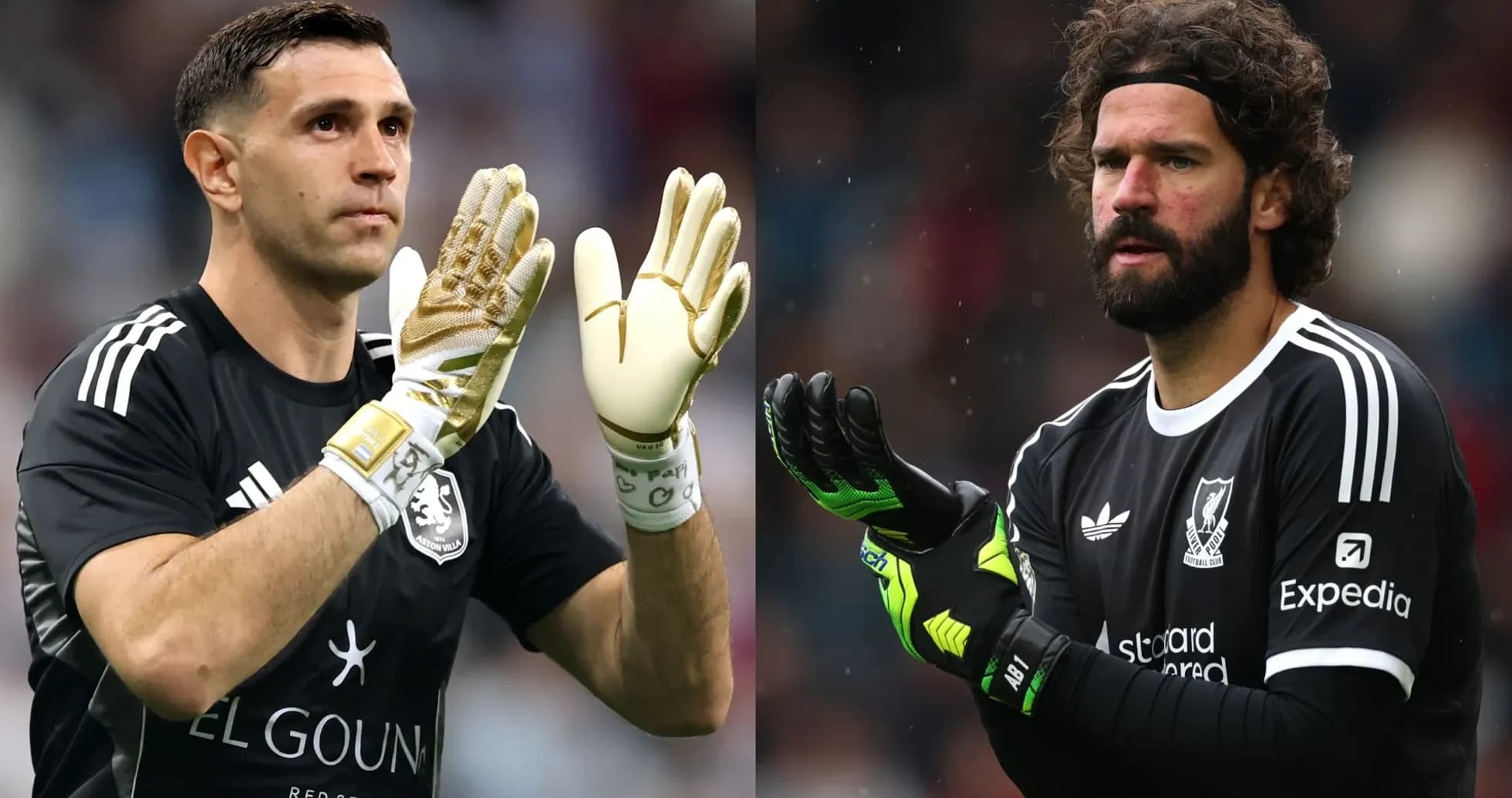
Friedel floated one such profile. “Maybe the likes of an Emi Martínez, someone like that, that can take all the games all the time, any criticism, any plaudits, and they know how to deal with it.” The Aston Villa and Argentina goalkeeper is battle-hardened, brash, and has lived through the glare of major finals. He fits the description of a keeper who does not just survive pressure, but seems to thrive on it.
Even then, Friedel circled back to the scale of the task. “There aren’t many out there that you can just pinpoint and say: ‘He’s our guy’. That’s a hard decision.”
This is where Liverpool now stand. A new head coach in Arne Slot, a squad in transition, and the possibility that the most stable part of the entire structure could soon be up for debate. Lose Salah and you lose goals, stardust, a symbol. Lose Alisson and you rip out the safety net.
Liverpool have built a modern era on certainty between the posts. If they allow that certainty to walk away, they had better be absolutely sure of the man who follows.