.svg&w=384&q=75 "naujapitch logo")
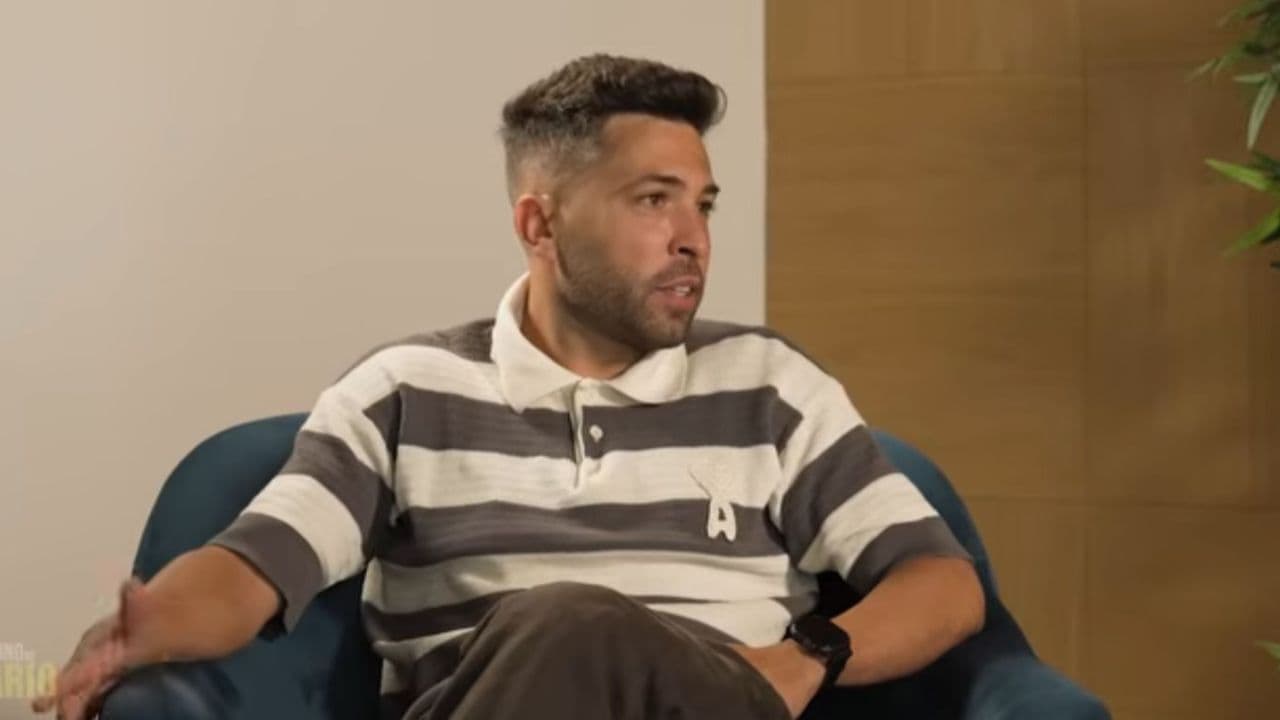
Jordi Alba: From Barcelona Glory to Emotional Exit
Jordi Alba has lived the full spectrum of elite football – titles, tears, and the kind of dressing-room politics that never make the highlight reels. On Mario Suarez’s podcast, El Camino de Mario, the former Barcelona left-back peeled back the curtain on a career that veered from invincible nights in Berlin to a brutal goodbye in Barcelona.
Emery, the conversion and a career-changing gamble
Alba did not grow up dreaming of tracking wingers. He was one. The defensive reinvention that turned him into one of the best full-backs of his generation, he says, came down to one man.
“I owe my career to Unai Emery. I was playing as a winger until Unai converted me,” Alba admitted. The change did not feel natural at first. He struggled with the role, the demands, the positioning. But Emery persisted.
“Initially, I didn't take to the full-back role particularly well, but Emery is world-class. He has a knack for extracting the absolute best from his players at every club he leads.”
From that decision came the modern Jordi Alba: the perpetual overlap, the late runs, the telepathic link with Lionel Messi. A tactical tweak that became a career-defining pivot.
“It was stolen”: the title that still stings
Not every memory carries a medal. Some still carry anger.
Reflecting on the 2014 La Liga title race, when Atlético Madrid came to Camp Nou and left as champions, Alba did not bother with diplomacy.
“It was stolen!” he snapped. “Mateu Lahoz was the official that day, wasn't he? My word…”
That afternoon remains one of the most surreal scenes in recent La Liga history: Barcelona watching another team lift the trophy on their own pitch. For Alba, the sense of injustice has clearly not faded with time.
Luis Enrique, the architect of a juggernaut
If Emery reshaped Alba’s position, Luis Enrique shaped his peak. The defender’s voice softened when the conversation turned to the Asturian coach who oversaw the 2015 treble.
“For me, Luis Enrique is the standout,” Alba said. “He ensures every player is pulling in the same direction, even those on the fringes. You feel a genuine sense of joy for your teammates and the collective. Not many managers can foster that environment; in that sense, he's a genius.”
That dressing room, that front three, that sense of inevitability. For Alba, 2015 stands alone.
“2015, when we secured the Champions League under Luis Enrique, was the only year I felt we were truly untouchable. Before the final, I told my agents: ‘Relax, we're going to win.’ It wasn't arrogance; it was pure conviction. We were invincible.”
He was not exaggerating. Barcelona swept through Europe with a ruthless calm, and Alba played like a man who knew he was in the right place at the right time, under the right coach.
Xavi and a turbulent handover
The story shifts when Xavi Hernández enters. Different era, different context, same club under a very different kind of pressure.
“Xavi Hernandez inherited the reins during a very turbulent period,” Alba recalled. “He stepped up to the plate and did a fantastic job. We secured La Liga and the Supercopa against Real Madrid, and he managed the dressing room expertly during my time there.”
No Neymar, no prime Messi, no peak MSN. Instead, financial chaos, squad rebuilds, and the expectation that Xavi would somehow restore order overnight. Alba’s praise lands as a defence of a former teammate who walked into a storm and still delivered a league title.
Anfield, 2019: the night that won’t go away
Then comes Anfield. The night that still haunts an entire generation of Barcelona players.
Alba did not hide from his part in the collapse against Liverpool in the 2019 Champions League semi-final second leg.
“I made a mistake with a header back for the opening goal. It was a golden opportunity to reach the final, and I'm certain we would have won it.”
That error opened the door. Liverpool barged through it. The 3–0 lead from the first leg vanished in a whirlwind of noise, pressure, and disbelief.
Stories later emerged that Alba had broken down at half-time. He moved to correct the narrative.
“People claimed I was in tears at half-time, but that wasn't the case. I just felt physically sick.”
The distinction matters to him. Not because the pain was any less, but because that night has become shorthand for fragility. Alba, all these years on, still carries the weight of that first goal.
A brutal goodbye: “With 24 hours left…”
For all the trophies and all the nights under the lights, Alba’s Barcelona exit came with no romance attached.
“With only 24 hours left in the transfer window, they informed me I had to go on loan to Inter Miami,” he revealed. “Without any prior warning, and with my children already settled in school... it was a deeply difficult moment.”
No grand farewell tour. No slow fade. Just a late call, a demand to leave, and a family already rooted in the city.
“I eventually terminated my Barcelona contract without having another move lined up,” he said. That decision, stripping away the security of a contract at his boyhood club, underlined how sour the end had turned.
He stepped away, unsure of the next step. Football, as it often does, found him on holiday.
“I went on holiday with Busquets, who had already committed to Inter Miami. In Ibiza, I met with Jorge Mas, the club's owner, and he quickly sold me on the project. At that stage, we still had no idea Messi was joining too.”
From a forced exit to a new project in MLS, and then the unexpected reunion with Messi and Busquets. The story twisted again, but the bitterness of how Barcelona handled his departure still lingers between the lines.
COVID, cuts and scapegoats
Alba also addressed one of the most contentious chapters of Barcelona’s recent history: the financial crisis during the COVID-19 pandemic and the perception that players resisted wage cuts.
“The captains deferred our salaries and waived earnings of our own volition,” he insisted. That version clashes sharply with the public narrative that painted senior players as obstacles to the club's financial recovery.
“A campaign of misinformation was leaked to tarnish our reputations. It felt as though the captains were being scapegoated for the club's financial troubles.”
Those are heavy words. They speak to a fracture between dressing room and boardroom that has defined much of Barcelona’s recent turmoil. Alba’s account is not about tactics or titles; it is about trust, and how quickly it evaporated.
From Emery’s gamble to Luis Enrique’s juggernaut, from Anfield’s agony to a last-minute push out of the door, Jordi Alba’s story is not a neat arc. It is jagged, emotional, and, at times, raw. Just like the club that shaped him – and, in the end, pushed him away.