.svg&w=384&q=75 "naujapitch logo")
Harry Kane: Bayern Munich's Best Signing Ever
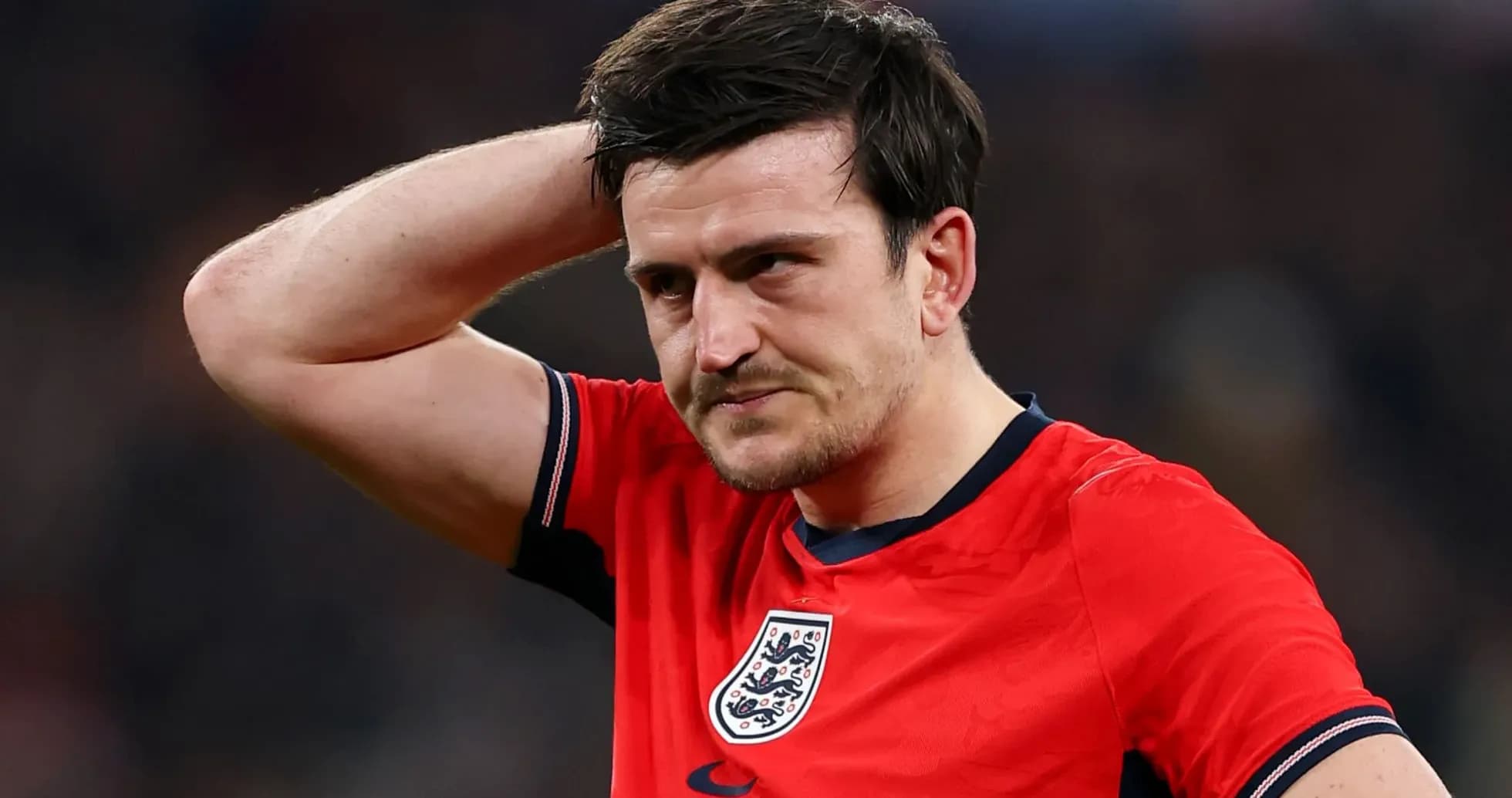
Uli Hoeness has never been shy with a superlative. The Bayern Munich president has spent a lifetime dealing in big statements and bigger personalities, so when he walked out of the DFB-Pokal final and declared Harry Kane the best signing the club had ever made, it sounded like another flourish from a man who enjoys turning the volume up to 11.
A month later, with the champagne flat and the confetti swept away, nobody at Bayern is rolling their eyes. The line has stuck. Inside the club, it is repeated without a smile. “He absolutely is the best we’ve had,” says one senior figure. This time, Hoeness’s hyperbole feels more like a simple statement of fact.
A reputation rebuilt
Kane’s reinvention in Munich is not just about goals, though there are plenty of those. It is about perception. For years he carried the tag of the nearly man: the striker who scored relentlessly for Tottenham, who lifted Golden Boots and individual awards, but whose trophy cabinet stayed stubbornly bare.
Euro 2024 seemed to confirm the narrative of a player on the slide. He still had no major honour to his name. His Golden Boot at Russia 2018 was picked apart in France and elsewhere – “top goalscorer despite not having scored from the quarter-finals on,” sniffed Le Journal du Dimanche – as if even his most celebrated achievement needed an asterisk. Six peak years were at risk of being remembered as a noble, exhausting, ultimately futile effort.
Then came Bayern. Then came silverware. Then, crucially, came the sense that Kane had finally forced his way to the sport’s top table, not as a curiosity from England but as a fully paid-up member of the elite.
When Time selected the faces of this World Cup, the roll call read like a pantheon: Lionel Messi, Cristiano Ronaldo, Neymar, Kylian Mbappé, Lamine Yamal, Jude Bellingham. Standing among them was Kane, no longer the outlier from a club that never quite got there, but the spearhead of a superpower.
“When we bought him for more than €100m, that was new territory for us and a crazy risk,” Hoeness admitted. “But he’s paid back every single euro. Not just because he scores so many goals, but because he is a role model in the dressing room.”
The quiet leader
Hoeness delights in the details. He tells stories of Kane putting an arm around younger players, of quiet words after training, of a senior star who behaves as if he is still fighting to make the squad. Language has not been a barrier. Kane’s contract obliges him to take German lessons and he does, diligently, but the club is so steeped in English that the dressing room runs largely in his mother tongue anyway. Vincent Kompany conducts much of his business in English. Plenty of Bayern’s big voices grew up with it.
What impresses Hoeness most is not the talk, but the way Kane keeps getting up. A World Cup winner in 1974, Hoeness has seen every trick and every bruise a centre-forward can collect. He watches Bundesliga defenders kick at Kane and sees no complaint, no theatrics, no retreat. “I think you’d have to cut off his head or his arm to stop him playing,” he says, only half joking.
Inside the dressing room, staff and players put Kane’s influence in rare company. Only Manuel Neuer and Thomas Müller, in his later years, are mentioned as having a similar weight. Neuer is the captain, Müller the embodiment of Bayern’s academy and culture. Kane walked in as the outsider and, somehow, ended up on the same shelf.
The stereotype of the homesick British player abroad has not materialised. When the Kane family initially delayed moving fully to Munich, there were mutterings that this might be another short-lived continental adventure. The old Ian Rush line about Juventus – misattributed though it was – hovered in the background.
Instead, Kane and his wife, Kate, have settled into a rural property once owned by Lucas Hernández, close to Grünwald’s manicured calm. Talk to Kane about life off the pitch and his focus drifts quickly to family. Ivy, 9, Vivienne, 7, Louis, 5, and Henry, 4, have thrown themselves into Bavarian life. They ski in winter. They explore the Alps. Kane, forbidden from the slopes by contract and common sense, still heads to Garmisch to soak in the mountains.
A Bavarian by adoption
If there was any doubt about how far he was prepared to go to embed himself in the region, a fan day in Kirchweidach settled it. In a village of 2,000 people near the Austrian border, Kane stood over a steaming pot, seasoning soup in a local wedding tradition meant to symbolise his union with Bavaria. He played a form of skittles using litre beer steins instead of bowling balls. He later called the whole thing “a bit crazy” with typical English understatement, but he never flinched. He leaned into it.
On the pitch, Bayern expected excellence. What they have witnessed is domination. They knew they were signing a world-class striker; they did not expect him to bend the shape of their entire team.
Since finally breaking his trophy drought with the Bundesliga title in 2025 – and adding another league crown and a DFB-Pokal since – Kane has somehow looked leaner, sharper, more ruthless. At 32, he appears to be moving into the best football of his life.
There is a growing catalogue of goals to prove it. The strike against Atalanta in the Champions League stands out: a drag-back and turn that erased two defenders, followed by the sort of crisp, low finish that has become his signature. His second goal in the DFB-Pokal final, the one that effectively killed the contest on 80 minutes, told an even richer story. Kane took aim from distance, unleashed a vicious curling effort that crashed off the bar, then reacted first when the ball dropped. Another drag-back, another swivel into space, another finish. A classic No 9, playing like a No 10, finishing like both.
Numbers that echo giants
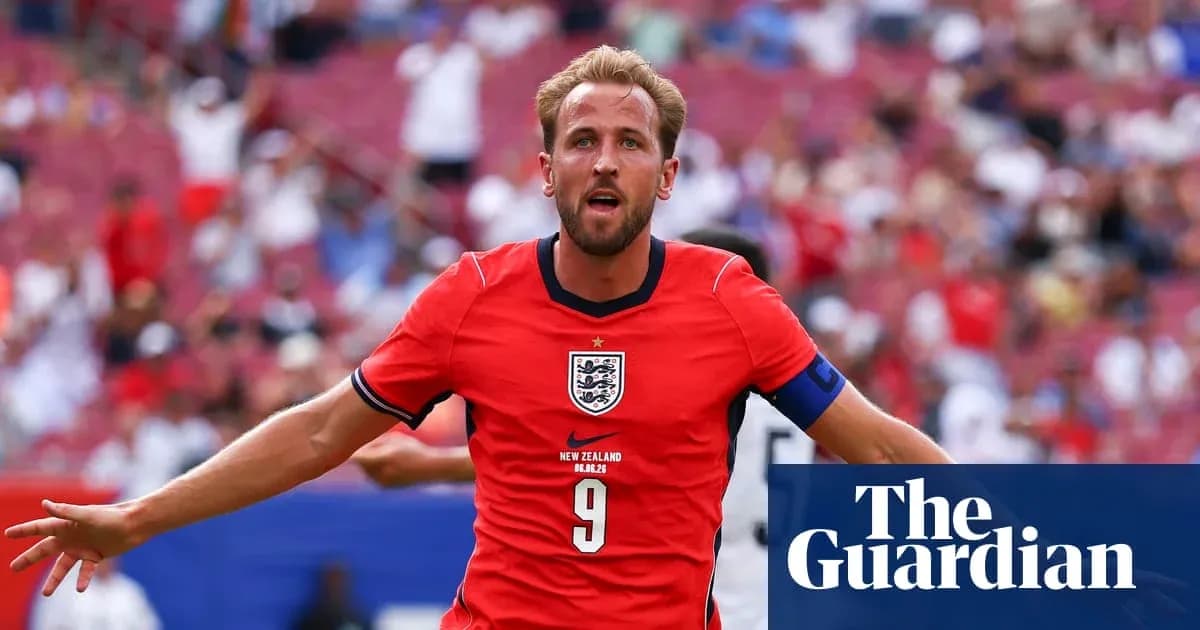
The numbers now place him in rare air. With 61 goals for Bayern, he is the only player in Europe’s major leagues matching the absurd scoring rhythms once reserved for Messi and Ronaldo, with only Erling Haaland even close to the same neighbourhood. Ronaldo hit 66 in a season, Messi 73. After the weekend’s game against New Zealand in Tampa, Kane sits on 67.
Yet he is not just a penalty-box predator. At Bayern he often drops so deep that, out of possession, he finds himself in a No 6 position, collecting the ball and dictating play. His passing range has become almost as feared as his finishing. The assist for Luis Díaz in the Champions League semi-final first leg against Paris Saint-Germain – a perfectly weighted ball that sliced through the defence – underlined that evolution. It is little wonder Thomas Tuchel is expected to mirror elements of Bayern’s plan for Kane at the World Cup.
This is a player who once stood outside the Ballon d’Or conversation, looking in. At Tottenham he never reached the late stages of the Champions League often enough, never lifted the trophies that tend to sway voters. Now, with medals around his neck and deep European runs behind him, his name has joined the list of contenders. How far he climbs depends heavily on what happens at this World Cup.
You could frame his story as football’s slow-burn epic. The late developer who was never the quickest, never the flashiest, who kept walking while others sprinted, and somehow reached the summit after most thought the window had closed. In the race that defines elite football, Kane has always been tortoise rather than hare. The tortoise, for once, is closing in on the finish line first.
From cast-off to cornerstone
Those who knew him as a teenager still sound faintly bemused. Spurs youth coaches recall a boy who, by the brutal standards of elite academies, looked ordinary. Slightly overweight. Not especially fast. Not the cleanest technician. “You would never have thought that he would be what he is now,” says one. The turning point came around 14, when a growth spurt coincided with technical improvement. His striking of the ball, always clean, suddenly became lethal. More importantly, his mind absorbed everything. Any instruction – in the gym, on the training pitch, in front of goal – needed saying only once.
The early loans did little to announce a future superstar. Norwich was a low point. His debut brought an ugly, high-profile miss against West Ham. His final game came in an FA Cup defeat to non-league Luton, where he was dragged off at half-time. Between those two moments he was demoted to the under-21s. They would not even let him take penalties. He was not considered good enough.
At Leicester, he shared a bench with Jamie Vardy for both legs of the 2013 Championship playoff semi-final against Watford. Neither man had yet become the striker he would be. Both watched, waited, and wondered.
Even back at Spurs, the doubts lingered. Maurico Pochettino did not immediately see a future world-beater when he assessed Kane after pre-season in 2014. Kane remembers the numbers. “We had our body fat test done and I was the highest in the team, something like 18%,” he recalls. He went to see Pochettino. The Argentine did not sugarcoat it. He told Kane his body fat was too high, that he was not working as hard as he could. Then he dropped a line that sounded, at the time, like a motivational poster: “You can be the best striker in the world.”
Back then, it felt like a stretch, a manager inflating a young player’s confidence. Just as Hoeness’s declaration in Berlin sounded like a president enjoying his own rhetoric.
Years on, with medals around his neck, records in his sights and Bayern building around him, the exaggerations no longer look exaggerated. They read like early drafts of a reality that Kane, stubbornly and relentlessly, has forced into being.