.svg&w=384&q=75 "naujapitch logo")
Anthony Gordon's Move to Barcelona: A New Chapter
Anthony Gordon is on the brink of a move that would have sounded fanciful not long ago. From Goodison Park hopeful to St James’ Park talisman, he now stands a medical and a signature away from becoming Barcelona’s next marquee arrival in a deal worth around €80 million (£69.3 million, $93.2 million).
For Newcastle, it is a sale that underlines their new reality under financial pressure. For Barça, it is a statement that they still intend to shop at the top end of the market. For Gordon, it is the leap every ambitious winger dreams of: Camp Nou, the Champions League lights, and the weight of a giant’s shirt on his back.
From No. 70 to centre stage
Gordon’s journey can be traced through the numbers on his back. Each change has marked a step up, a fresh challenge, a new version of himself.
He emerged at Everton as No. 70 in the 2017–18 season, a teenager thrown into the chaos of a club searching for direction. Two years later he had already climbed the ladder to No. 42, a sign that he was no longer just a promising academy name but a genuine first-team option.
Then came the twist. In 2020–21, he flipped the digits and took No. 24 for the first half of the campaign. It was a small detail, but it coincided with a player pushing harder for minutes, for responsibility, for a bigger role. When he moved to Preston North End on loan later that season, he slipped back into No. 42, a reminder that progress is rarely a straight line.
The real statement arrived when he claimed the No. 10 shirt at Everton. That number carries a different kind of burden at any club, never mind one steeped in attacking tradition. Gordon wore it in his final season at Goodison, a period that convinced Newcastle United to gamble big on his ceiling.
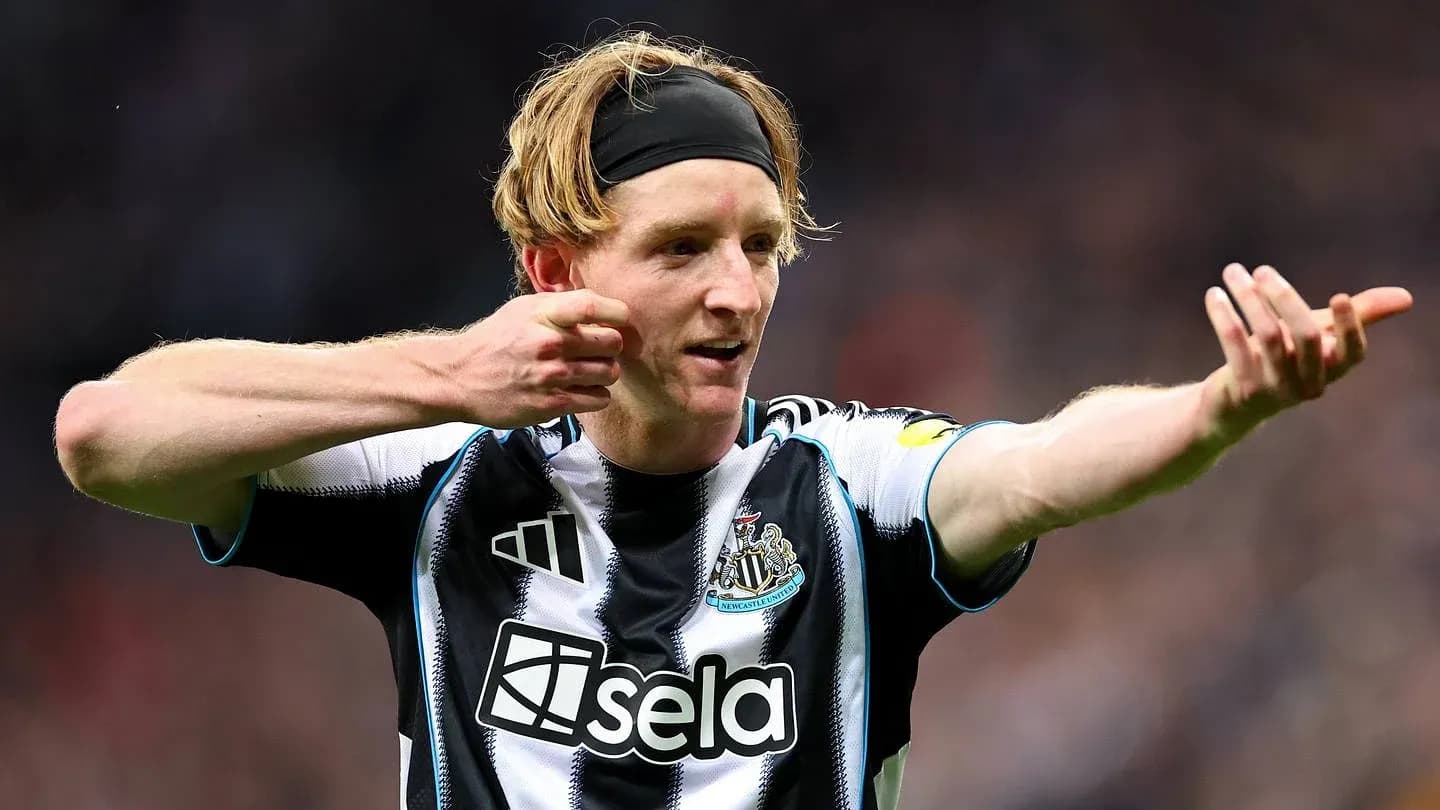
At St James’ Park, he had to bide his time. His first campaign on Tyneside saw him in the No. 8 jersey, waiting patiently for Allan Saint-Maximin to vacate his preferred number. When the Frenchman moved on, Gordon stepped into the iconic No. 10 again, this time as one of the faces of Newcastle’s new era.
For England, there has been no such fixed identity. International football rarely offers the same continuity, and Gordon has bounced between No. 18, 17, 11 and 7. Each call-up has brought a different role, a different shirt, but the same impression: a winger on the rise, forcing his way into Gareth Southgate’s plans ahead of the 2026 World Cup.
A rare English chapter in Barça’s story
Now he prepares to write a chapter very few English players have ever attempted. Gordon is set to become only the third Englishman to pull on the famous Barcelona colours, a select group in a club history dominated by homegrown icons and South American superstars.
The attraction is obvious. Camp Nou – or its temporary home while the stadium is redeveloped – still exerts a pull that Bayern Munich, Arsenal and Liverpool could not match in this chase. The style, the stage, the chance to test himself in La Liga: for Gordon, the move always felt irresistible once Barcelona’s interest hardened.
His future is expected to be resolved before he heads off with England in the coming weeks. By the time the World Cup countdown truly begins, he could already be settled in Catalonia, learning a new league and a new language, carrying a new number.
The shirt that will define him in Catalonia
At Barcelona, numbers are never just numbers. They are heirlooms.
One stands out immediately: No. 9. Robert Lewandowski’s impending departure as a free agent will free up one of the most storied shirts in football. It is the number of Luis Suárez, Zlatan Ibrahimović, Samuel Eto’o, Ronaldo. A centre-forward’s badge of honour, a goalscorer’s target on his back.
Yet that history cuts both ways. With Barça actively pursuing a new striker this summer, the club hierarchy are expected to keep No. 9 vacant until a central figure for the attack arrives. Handing it to a winger, even one as dynamic as Gordon, would jar with the tradition they so carefully curate.
So his options shift elsewhere.
No. 12 is open. So is No. 14, a shirt that carries its own resonance in Barcelona folklore and was most recently worn by Marcus Rashford during his loan spell in Catalonia. For a wide forward who thrives cutting in, linking play and driving at defenders, 14 feels like a natural fit – modern yet steeped in attacking history.
There could be more movement. If Ferran Torres leaves, No. 7 comes into play, a classic winger’s number with all the swagger that implies. Should Andreas Christensen depart, No. 15 would also become available, a more understated choice but one that has quietly belonged to several key squad players over the years.
Then there is the wildcard: No. 2. João Cancelo’s loan expiry will free up the defender’s shirt. It is an unconventional pick for an attacker, but football’s relationship with numbers has loosened in recent seasons. A winger in a full-back’s shirt would certainly stand out, though it would be a break from Gordon’s own history of attacking numbers.
La Liga rules keep first-team squads between 1 and 25, so there is no scope for the high, academy-style numbers he once wore at Everton. This choice will stick. It will be the number on the shirts in the club shop, on the back of every child in Catalonia who decides Gordon is their new favourite.
The transfer fee will grab the headlines. The competition beaten to his signature will feed the debate. But when Anthony Gordon walks out for Barcelona for the first time, it is the number on his back that will quietly tell you how the club see him – and how big a role they expect him to play in the next era of La Blaugrana.